
Industrial Rotary Oven Maintenance Checklist: Professional Guide 2026
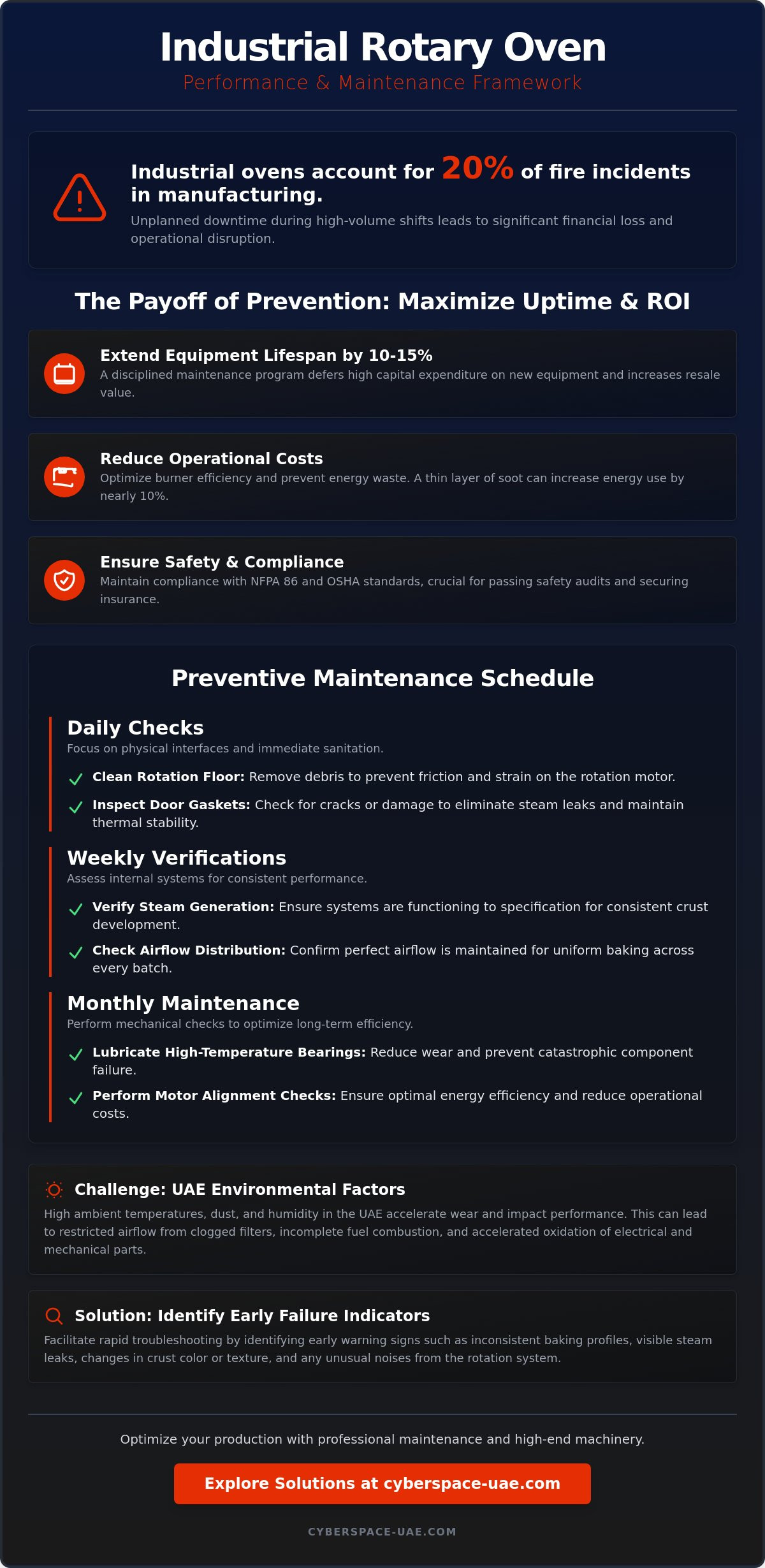
Industrial ovens account for approximately 20% of fire incidents related to manufacturing processes. For high-capacity bakeries in the UAE, this risk is compounded by the intense operational demands of 24/7 production cycles. Maintaining peak performance starts with a deep understanding of rotary oven installation requirements and the technical specifications of your combustion system. It's clear that unplanned downtime during a high-volume shift isn't just a delay; it's a significant financial loss that impacts your bottom line.
You need equipment that delivers consistent results without the burden of rising energy costs or thermal instability. This guide provides a comprehensive technical framework for the 2026 operational year, focusing on mechanical precision and compliance with NFPA 86 and OSHA standards. We'll examine a modular maintenance checklist designed to extend equipment lifespan, optimize burner efficiency, and ensure your rotation systems maintain perfect airflow for every batch. This approach prioritizes operational uptime and long-term reliability for professional-grade facilities.
Key Takeaways
- Establish a proactive preventive maintenance schedule to mitigate catastrophic component failure and ensure continuous high-volume production.
- Implement daily inspection protocols for rotation floors and door gaskets to eliminate steam leaks and maintain thermal stability.
- Review technical rotary oven installation requirements to ensure precise mechanical alignment and compliance with industrial safety standards.
- Execute monthly lubrication of high-temperature bearings and motor alignment checks to optimize energy efficiency and reduce operational costs.
- Identify early indicators of airflow and steam system failures to facilitate rapid troubleshooting and maintain consistent baking profiles.
The Role of Preventive Maintenance in Industrial Rotary Oven Performance
Preventive maintenance is a proactive technical strategy designed to mitigate catastrophic component failure before it disrupts production. In high-capacity industrial bakeries, this involves scheduled inspections of rotation assemblies, burner systems, and thermal seals. Adhering to strict rotary oven installation requirements during the initial setup ensures the equipment operates within its designed mechanical tolerances. This foundation allows for a maintenance cycle that preserves the specific baking profile of the oven. It ensures crust color and internal crumb texture remain consistent across thousands of units. Consistency is the primary metric of quality in industrial baking; any deviation in rotation speed or airflow directly degrades the final product.
In the United Arab Emirates, environmental factors significantly impact machinery performance. High ambient temperatures and airborne dust particles lead to rapid accumulation in air intake filters and burner nozzles. This debris restricts airflow. It causes incomplete combustion and increased fuel consumption. Additionally, high humidity levels accelerate the oxidation of electrical contacts and mechanical fasteners. Regular cleaning of heat exchangers is essential. A thin layer of soot or scale can increase energy consumption by nearly 10% in industrial systems. This inefficiency adds thousands of AED to annual utility bills. Maintaining clean surfaces ensures maximum heat transfer efficiency and reduces the operational cost per batch.
When environmental factors lead to significant surface degradation or component wear, The Solution provides specialized damage repair and restoration services to help maintain the mechanical integrity of your industrial assets.
Maximizing ROI Through Equipment Longevity
A disciplined maintenance program typically results in a 10-15% increase in the operational lifespan of a rotary oven. This extension directly impacts bakery profitability by deferring the high capital expenditure required for replacement. Scheduled maintenance windows are significantly more cost-effective than unplanned downtime. Breakdowns often occur during peak production shifts when the machinery is under maximum thermal stress. It's cheaper to replace a drive belt during a scheduled lull than to halt a production line during a high-volume order. Beyond operational savings, well-maintained machinery retains a higher resale value. Documented service logs provide verifiable proof of equipment condition to potential buyers.
Compliance with Industrial Safety Standards
Industrial safety requirements for gas and electric rotary ovens are non-negotiable for commercial operations. Systems must comply with NFPA 86 standards, specifically regarding fire suppression integration and proper ventilation. Ensuring that rotary oven installation requirements are met regarding clearance and exhaust ducting prevents the accumulation of combustible gases. Maintaining these systems is crucial for passing industrial safety audits and securing insurance coverage. Precise documentation of every service interval is required to demonstrate compliance with national safety regulations and avoid regulatory penalties. This documentation serves as a critical asset during annual facility inspections and risk assessments.
Daily and Weekly Rotary Oven Operational Checklists
Operational efficiency in high-output bakeries depends on the immediate detection of mechanical friction or thermal leakage. Daily protocols focus on the physical interface between the oven and the rack system. Meeting the initial rotary oven installation requirements is only the first step in maintaining mechanical precision; the daily environment of a busy bakery introduces variables that can shift alignment. Flour dust, seeds, and carbonized residue accumulate quickly in 24/7 production cycles. These materials create friction points that strain the rotation motor and degrade the quality of the bake.
Daily inspections must include a thorough check of the door gaskets. These silicone or fiberglass seals prevent steam loss and maintain internal pressure. A compromised seal leads to inconsistent crust development and forces the burner to work harder to compensate for heat loss. Weekly tasks shift toward the internal systems that aren't visible during standard operation. Steam generation and airflow distribution require technical verification to ensure the oven's baking profile remains within the manufacturer's specifications. For facilities looking to upgrade their production line, browsing a catalog of professional rotary ovens can provide insights into modern maintenance-friendly designs.
Essential Daily Sanitation Protocols
Clean the rotation floor before every morning shift. Debris trapped under the turntable creates uneven resistance, which can lead to a snapped drive belt. Use a vacuum to remove fine flour dust from the rack-lifting hook and the rotation tracks. Carbonized residue on the interior floor should be removed with a scraper to prevent smoke and off-flavors. When cleaning the stainless steel surfaces, use only food-safe degreasers. Avoid abrasive pads or harsh chemicals that can strip the protective finish of the oven's interior walls.
Weekly Functional Assessments
Perform a test bake with a full rack once per week to identify cold spots. If the browning on the loaves is uneven, inspect the air distribution baffles. These adjustable metal plates control the velocity and direction of the hot air. Over time, vibration can cause them to shift out of position. Additionally, check the steam generation system for mineral buildup. The water in the UAE often has a high mineral content, which can clog nozzles and reduce steam density. Finally, verify the integrity of the door latch and the emergency internal release handle. This is a critical safety requirement for industrial environments to ensure staff can exit the chamber in an emergency.
Monthly and Quarterly Mechanical and Burner Maintenance Protocols
Monthly and quarterly intervals represent the technical core of industrial maintenance. These protocols address internal wear that surface cleaning cannot mitigate. Adherence to these schedules ensures the machinery maintains the performance standards established by the initial rotary oven installation requirements. Neglecting these deeper mechanical checks leads to cumulative damage and increased energy consumption. Professional maintenance at this level focuses on mechanical precision and thermal accuracy.
Lubrication of high-temperature bearings is a primary monthly task. Use only synthetic grease rated for 300°C or higher; standard lubricants will liquefy and leak at baking temperatures. Check drive belt tension during this window. Excessive slack causes slippage and inconsistent rotation, while over-tensioning leads to premature motor bearing failure. Verify motor alignment using a laser tool or straight edge to minimize vibration. Proper burner calibration also ensures the unit continues to meet the safety and efficiency standards mandated by the rotary oven installation requirements for industrial facilities.
Quarterly cycles focus on thermal accuracy and combustion safety. Calibrate digital temperature controllers against independent thermocouple probes. Internal sensors often drift due to constant thermal cycling. A variance of even 5°C impacts crumb structure and crust development. These technical adjustments preserve the oven's baking profile and ensure operational safety. This is also the time to inspect electrical contactors for signs of pitting or arcing, which can lead to sudden control board failure.
Mechanical Rotation and Drive Systems
Lubricate the top-mounted rotation motor and gearbox. Follow manufacturer specifications for oil viscosity and volume. Inspect the rack-lifting mechanism for metal fatigue, stress fractures, or misalignment. Test the soft-start and soft-stop functions of the rotation drive. These electronic ramps reduce mechanical stress on the drive train during high-volume production cycles. If the rack jerks during startup, it's an indicator that the drive parameters or the lifting hook alignment need adjustment.
Burner Efficiency and Heat Exchanger Integrity
Examine the burner flame during operation. A stable blue flame indicates an optimal oxygen-to-fuel ratio. A yellow or orange flame signifies incomplete combustion and immediate soot accumulation. Clean the heat exchanger tubes to maintain thermal transfer efficiency. Soot acts as an insulator, forcing the burner to run longer to reach target temperatures. Check the exhaust flue for obstructions and verify draft pressure. Proper ventilation remains a critical safety requirement for gas-fired industrial ovens to prevent carbon monoxide buildup in the bakery.
Troubleshooting Common Rotary Oven Failures and Component Wear
Troubleshooting is a technical necessity that preserves the mechanical integrity established by the initial rotary oven installation requirements. When baking results vary, the cause is usually a deviation in airflow or rotation speed. Staff often find technical diagnostics intimidating. However, most failures provide clear visual or auditory signals before a total shutdown occurs. Early identification of these signs prevents expensive component replacement and keeps production lines moving. Diagnostics don't have to be complex; they require a methodical approach to identifying mechanical and thermal shifts.
Uneven baking is the most frequent operational complaint. If the product on the left side of the rack is darker than the right, the airflow baffles have likely shifted. Verify that the rack is rotating at the correct RPM. A slow rotation speed leads to hot spots. Steam system failures often manifest as a lack of crust shine or volume. This is typically caused by a seized solenoid valve or nozzle clogging due to mineral deposits. Monitoring the water filtration system is a simple way for staff to prevent these issues. If you need to replace failing units or source high-performance rotary ovens for your facility, ensure the new equipment matches your facility's electrical capacity.
Motor strain is another critical failure point. If the rotation motor sounds louder than usual, it's likely fighting friction in the lifting mechanism or the turntable. Section 2 of this guide detailed the importance of cleaning these areas, but mechanical wear in the bearings can also cause this noise. In some cases, this strain is electrical. A phase imbalance in the power supply can cause the motor to overheat without a mechanical obstruction. Checking for these signs during the monthly protocols mentioned in Section 3 will catch these issues before the motor burns out.
Thermal Instability and Airflow Calibration
Adjust the interior baffles to correct top-to-bottom baking variances. These plates regulate how much heat reaches each level of the rack. If the top trays are over-baked, close the upper baffles slightly. Inspect the circulation fan for vibration. Dust accumulation on the blades causes imbalance, which leads to bearing failure. Verify thermocouple accuracy using a secondary probe. Faulty sensors provide incorrect data to the control board, leading to thermal runaway or under-heating. This calibration ensures the unit continues to meet the rotary oven installation requirements for precision baking.
Electrical and Control System Diagnostics
Inspect electrical contactors and relays for pitting or signs of overheating. In the UAE's high-ambient temperatures, electrical components are under constant thermal stress. Dust buildup on control panel cooling fans is a major cause of processor overheating. Clean these fans weekly to prevent the digital display from freezing or resetting during a bake. Regularly update digital control parameters. This ensures that automated baking programs remain optimized for the current mechanical state of the oven and prevents software-related production delays.
Optimizing Production with Professional Maintenance and High-End Machinery
Operational excellence in industrial baking depends on the technical synergy between high-performance machinery and disciplined maintenance. While daily and weekly tasks preserve basic functionality, long-term profitability requires a focus on component integrity and system optimization. Sourcing genuine spare parts is a critical factor in this process. Non-OEM components often fail to meet the thermal tolerances required by high-capacity burners. Using third-party parts can lead to premature failure of the heat exchangers or rotation gears, ultimately voiding equipment warranties and increasing the total cost of ownership. Meeting the initial rotary oven installation requirements is a baseline, but sustained output requires using parts designed for the specific mechanical stresses of your unit.
Transitioning from in-house maintenance to professional industrial servicing is necessary when equipment complexity exceeds staff training. Professional technicians utilize specialized diagnostic tools to identify electrical phase imbalances or microscopic stress fractures in the rotation assembly. For large-scale facilities in the UAE, this transition often occurs when production volumes reach a level where any unplanned downtime results in thousands of AED in lost product. Integrating rotary ovens with other specialized systems, such as automated provers or spiral mixers, creates a streamlined workflow that maximizes the ROI of your capital investment. Modern, high-efficiency ovens offer better insulation and faster recovery times, which can reduce energy consumption by up to 25% compared to older models.
Strategic Equipment Procurement
Selecting the right machinery involves evaluating serviceability alongside performance specifications. Look for ovens with easy-access maintenance panels. These designs reduce the time required for quarterly burner inspections and motor lubrication. Working with a national supplier ensures you have access to localized technical support and a ready inventory of critical spares. When expanding your facility, it's helpful to compare the specific maintenance requirements of rotary ovens vs deck ovens to determine which configuration best suits your production volume and staff capabilities. This strategic approach ensures your facility remains compliant with all rotary oven installation requirements during every phase of growth.
Professional Service Partnerships
Annual service contracts provide a predictable framework for maintaining industrial equipment. These agreements ensure that technicians certified for specific gas and electrical systems perform the high-level calibrations mentioned in previous sections. Professional partnerships mitigate the risk of catastrophic failure and provide the documented service history required for insurance audits and safety compliance. If you are looking to upgrade your facility with professional-grade tools, contact Cyberspace Kitchen & Bakery Equipment for professional machinery solutions. Investing in a reliable service partnership ensures your bakery maintains consistent quality and operational uptime in the competitive UAE market.
Securing Long-Term Reliability for Industrial Baking Lines
Operational excellence in high-volume bakeries is the result of technical discipline and a structured approach to mechanical care. Adhering to the tiered checklists provided ensures that your facility avoids the significant financial losses associated with unplanned downtime and inconsistent product quality. By integrating these proactive protocols with a rigorous understanding of rotary oven installation requirements, you establish a technical foundation for long-term equipment reliability and peak energy efficiency. Consistent maintenance isn't merely a task; it's a strategic investment in your facility's output capacity.
Cyberspace Kitchen & Bakery Equipment serves as an authorized distributor of premium industrial baking machinery, offering comprehensive national support for commercial facilities across the UAE. We specialize in high-capacity rotary and deck oven solutions engineered for the most demanding production cycles. Browse Professional Rotary Ovens for Industrial Baking to explore high-end tools that match your specific technical requirements. Achieving operational excellence is attainable through professional-grade equipment and a commitment to technical precision.
Frequently Asked Questions
How often should I lubricate the bearings on my rotary rack oven?
Lubricate rotation bearings every 30 days using synthetic grease rated for 300°C or higher. High-volume facilities operating 24/7 may require bi-weekly lubrication to prevent mechanical seizure under intense thermal loads. Standard lubricants fail under these conditions. Regular application maintains the mechanical tolerances established by the rotary oven installation requirements and prevents motor strain. Always clear old residue before applying fresh grease to ensure optimal component protection.
Why is my rotary oven baking unevenly despite the rack rotating?
Uneven baking usually indicates misaligned airflow baffles or a faulty circulation fan. Even with consistent rotation, the direction and velocity of hot air determine the bake profile. Check if any metal baffles have vibrated out of position. Inspect the fan blades for dust accumulation or damage that reduces air volume. Precise airflow calibration is a core technical requirement for achieving consistent crust color across the entire rack height.
What are the signs that my rotary oven burner needs professional calibration?
Visible soot accumulation and a yellow or orange flame signal the need for immediate burner calibration. A healthy burner produces a stable blue flame, indicating an efficient oxygen-to-fuel ratio. Other signs include increased fuel consumption and the oven failing to reach target temperatures within the standard pre-heat window. Professional calibration restores thermal efficiency and ensures the unit continues to meet the safety standards defined in the rotary oven installation requirements.
Can I use standard grease for the rotation motor and gearbox?
No, standard grease is unsuitable for industrial rotary ovens because it liquefies at baking temperatures. This leads to lubricant leakage and potential contamination of the baking chamber. You must use high-temperature synthetic grease specifically formulated for food-grade environments. These lubricants maintain their viscosity and protective properties under constant thermal stress, protecting the gearbox and rotation motor from premature mechanical wear and expensive replacement costs.
How do I descale the steam generator in a commercial rotary oven?
Descale the steam generator by injecting a food-safe descaling solution into the water intake line and flushing the system. In the UAE, high mineral content in the water supply leads to rapid calcium buildup in the generator and nozzles. Perform this procedure every three to six months depending on water hardness. Regular descaling ensures consistent steam density, which is essential for achieving the desired shine and volume in professional baking.
Is it necessary to clean the heat exchanger if the oven is electric?
Electric rotary ovens don't have a combustion heat exchanger, but they require regular cleaning of the heating element bank. While they don't produce soot, flour dust and grease accumulate on the elements over time. This buildup reduces heat transfer efficiency and increases energy consumption. Maintaining clean heating elements ensures rapid temperature recovery and prevents the smell of carbonized residue from affecting the flavor profiles of your baked goods.
What should I do if the rack-lifting mechanism fails during a bake cycle?
Activate the emergency stop immediately and use the manual internal release handle to retrieve the rack. Failure during a bake cycle is often caused by a sheared drive pin or a jammed lifting hook. Once the rack is removed, inspect the limit switches and the lifting motor's electrical contactors. Do not attempt to restart the rotation system until the mechanical obstruction is cleared and the lifting mechanism's alignment is verified.
How does dust in the national environment affect rotary oven control panels?
Fine dust particles in the UAE penetrate control panel housings, leading to processor overheating and short circuits. Dust acts as an insulator on sensitive electronic components, preventing cooling fans from dissipating heat effectively. This results in frozen digital displays or corrupted baking programs. Cleaning the control panel air filters weekly and using compressed air to clear internal dust prevents software-related failures and extends the functional lifespan of the electronics.