
Electric Deck Ovens for Professional Bakeries: A Technical Performance Guide
Did you know that electric units secured 58.4% of the global deck oven market by 2025? This data reflects a clear industry shift away from traditional gas infrastructure toward precision-engineered thermal stability. For professional bakeries in the UAE, the transition to electric power is a strategic move for operational control and simplified facility management.
You likely understand the frustration of inconsistent crust results or the high energy consumption typical of older industrial equipment. In many professional bakery settings, complex gas line installations are often restricted or prohibitively expensive. Selecting a high-performance bakery deck oven electric system allows for a streamlined setup while maintaining the precise temperature control needed for artisan-quality crumb and crust. You'll gain a technical analysis of thermal recovery times, moisture management, and the specific selection criteria for commercial environments. This guide, brought to you by Cyberspace Kitchen & Bakery Equipment, examines essential performance metrics, including the 76% cooking energy efficiency threshold required for modern certification and the long-term reliability of modular deck configurations designed for scalability.
Key Takeaways
- Analyze stone hearth thermal mass for consistent conduction baking and heat retention.
- Evaluate integrated steam injection systems in a bakery deck oven electric for superior crust caramelisation.
- Compare electrical infrastructure requirements against gas ventilation and piping installation complexities.
- Determine optimal deck configurations and tray capacities based on 3-phase power availability.
- Assess the reliability and warranty advantages of new industrial machinery over used equipment.
What is a Commercial Electric Deck Oven?
A commercial deck oven is a conduction-based baking system designed for high-density thermal transfer. Unlike convection units that rely on forced air, these Industrial ovens utilize stationary hearths where dough makes direct contact with a heated surface. This contact facilitates rapid heat transfer to the base of the product. It's essential for achieving specific crust characteristics and internal crumb structures. In the UAE market, the bakery deck oven electric configuration has become the standard for facilities requiring modularity and precise atmospheric control.
The stone hearth serves as the primary thermal reservoir. These decks are typically constructed from refractory materials that retain significant heat energy, often referred to as thermal mass. This mass ensures that temperature drops are minimized when cold dough is loaded into the chamber. Professional applications focus on artisan bread, high-hydration pastries, and traditional pizza production. While integrated rotary systems focus on high-volume uniformity through rack movement, modular electric decks prioritize individual chamber control and stackable capacity.
The Mechanism of Electric Heating in Baking
Electric decks operate through independent top and bottom heating elements. This dual-zone configuration allows bakers to calibrate the "push" from the hearth and the "color" from the ceiling separately. High-density electric coils are positioned to provide uniform heat distribution across the entire stone surface, which eliminates cold spots. Effective thermal insulation is a critical requirement for industrial-grade housing. High-spec mineral wool or ceramic fiber linings prevent heat loss to the external environment. This maintains a stable internal climate and reduces the cooling load on the bakery's HVAC system, which is a vital consideration for operations in the UAE heat.
Key Components of Professional Electric Decks
The build quality of a bakery deck oven electric unit determines its operational lifespan in high-volume settings. Standard components include:
- Refractory Stone Decks: Porous surfaces that absorb moisture from the dough for a crispier crust. Reinforced steel surfaces are an alternative but are generally reserved for specific pastry or tray-based products.
- Digital Control Panels: Advanced interfaces for multi-zone temperature management. These systems often feature programmable baking profiles and automated pre-heating cycles.
- Heavy-Duty Door Seals: Precision-engineered gaskets and tempered viewing windows. These components ensure maximum heat retention and allow for visual monitoring without compromising the internal temperature.
The integration of these components results in a stable, high-performance baking environment. Reliability is maintained through simplified electrical circuits. These systems avoid the mechanical complexities and maintenance requirements of gas burner assemblies and exhaust ducting.
Technical Performance and Steam Injection Systems
Steam is vital for professional artisan results. It prevents the crust from setting prematurely, which allows for maximum oven spring and volume. Integrated electric boilers generate high-pressure steam instantly upon command. This moisture saturation is necessary for effective crust caramelisation and the Maillard reaction. A high-quality bakery deck oven electric system ensures that steam is distributed evenly across the hearth, preventing dry spots that lead to uneven coloring.
Precise humidity management is the difference between industrial output and artisan quality. Baguettes require a high-volume steam burst at the start of the cycle to keep the surface flexible. Soft rolls or brioche require significantly less moisture to maintain their delicate structure. Modern systems allow operators to program steam duration and volume in precise increments. This ensures repeatable results across different shifts and prevents product loss. For technical specifications on modular units, view the available deck ovens in our current inventory.
Recovery time is a critical performance metric for commercial operations. When loading cold dough, the deck temperature naturally drops. Professional electric units feature rapid-response sensors and high-density elements. These components trigger immediately to return the chamber to set points within minutes. This prevents the "soggy bottom" effect often seen in underpowered equipment. It also maintains a high-volume production cadence without requiring long intervals between batches.
Independent Deck Control and Versatility
Modular decks offer extreme operational flexibility. You can bake sourdough at 240°C on the top deck while the middle deck handles pastries at 180°C. This eliminates the need for sequential baking and increases total throughput. Deactivating unused decks during off-peak hours reduces total energy consumption significantly. Many energy-efficient commercial ovens utilize this modular power management to lower monthly utility overheads. Programmable baking cycles further enhance consistency by storing specific steam and temperature transitions for up to 100 recipes.
Thermal Stability and Heat Retention
Deck thickness directly impacts heat storage and recovery capabilities. Thick refractory stones act as a thermal battery, releasing heat steadily into the dough. This reduces temperature fluctuations during high-volume loading cycles. In UAE climates, ambient temperatures often exceed 40°C, making external heat dissipation a concern. High-density mineral wool insulation is a mandatory feature. It keeps the heat energy inside the chamber and protects the kitchen environment from excessive heat gain. This reduces the strain on your facility's cooling systems and maintains a stable working environment for staff.
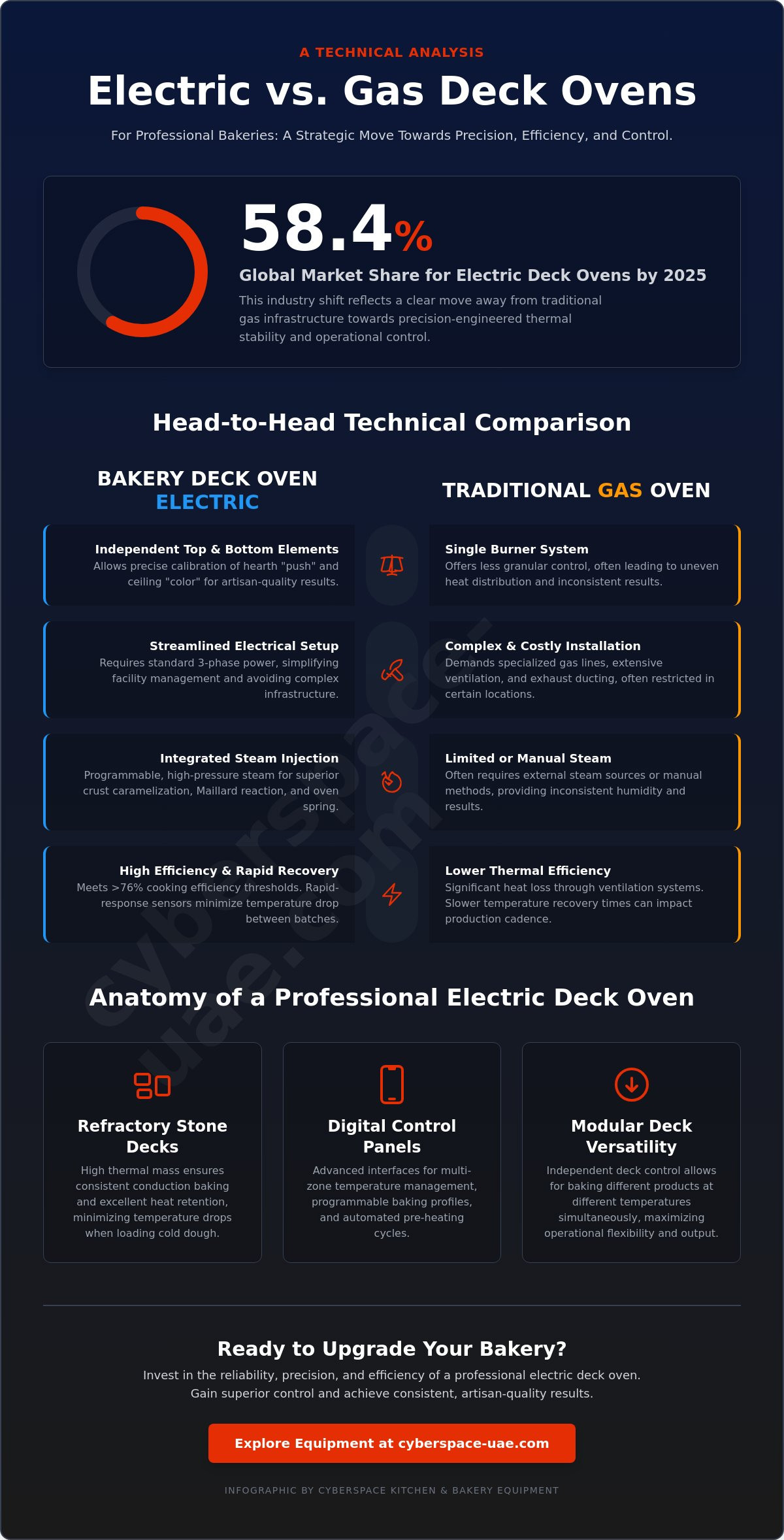
Electric vs. Gas Deck Ovens: Technical Comparison
Installation requirements for a bakery deck oven electric system are significantly less complex than gas alternatives. Gas ovens require heavy-duty ventilation systems, specialized exhaust ducting, and high-pressure piping to meet UAE safety regulations. In contrast, electric units only require a high-amperage 3-phase connection. This simplified infrastructure makes electric decks the preferred choice for bakeries located in shopping malls or high-rise commercial buildings where gas line installation is often restricted or technically impossible.
Temperature precision is a primary technical differentiator. While gas burners operate with wider temperature swings during their ignition cycles, modern electric systems maintain tolerances within ±1°C. This level of accuracy is essential for high-end pastry work and consistent artisan bread production. The operational footprint also favors electric technology. Modular electric decks allow for vertical stacking, which increases production capacity without expanding the kitchen's floor footprint. This is a critical advantage in high-rent commercial zones across Dubai and Abu Dhabi.
Maintenance profiles further distinguish the two technologies. Electric ovens generally have maintenance costs approximately 20% lower than comparable gas models. This reduction is due to the absence of complex burner assemblies, gas valves, and exhaust systems that require frequent cleaning and safety inspections. Heating elements in professional electric decks are designed for high-volume longevity and are easily replaceable if a failure occurs, minimizing operational downtime.
Energy Efficiency and Operational Costs
Industrial baking requires high energy density and efficient power management. To qualify for ENERGY STAR certification as of 2026, electric ovens must achieve a minimum cooking energy efficiency of 76%. Gas ovens inherently lose energy through the flue, where combustion byproducts and heat exit the building. In the UAE, this flue heat adds to the facility's thermal load. Electric ovens emit less ambient heat into the kitchen, which reduces the electrical demand on your air conditioning systems. This creates a more stable working environment and lowers total utility overheads.
Product Quality and Crust Development
Product quality is directly influenced by the heat source. Gas combustion produces a moist heat that can negatively impact the final texture of certain crusts. Electric decks provide a dry, radiant heat that is highly predictable for sourdough and long-fermentation breads. Operators gain total control over top and bottom heat ratios, allowing them to calibrate the bake for different tray types or product heights. This precision ensures that the oven spring is maximized and the crust color is uniform across every deck in the stack.
Selection Criteria for Industrial Bakery Operations
Selecting a bakery deck oven electric system requires a technical audit of current production volume and projected scaling. Industrial facilities must prioritize equipment that balances tray capacity with available floor area. Standard configurations typically range from 2-tray to 4-tray decks. A 4-tray deck utilizing 600x400mm trays maximizes throughput per square meter. This is especially critical in high-density commercial zones where kitchen space is at a premium.
Electrical infrastructure is the primary constraint for high-performance units. Professional electric decks require a stable 3-phase power supply to maintain rapid recovery times. Before procurement, verify that your facility's distribution board can handle the total kilowatt load of a fully stacked system. Modular designs offer a significant advantage over fixed units. They allow for the addition of independent decks as production demands increase. This avoids the high capital expenditure of replacing an entire oven when capacity is reached.
Material specifications dictate the equipment's operational lifespan. High-grade AISI 304 stainless steel is the industrial standard for external housing and frame construction. This material provides superior resistance to corrosion and thermal warping in high-humidity environments. For operations requiring precise dough preparation before baking, ensure your selected oven dimensions align with your existing bakery equipment like provers and dough sheeters.
Capacity Planning and Throughput
Accurate throughput calculation prevents production bottlenecks. Determine the hourly loaf output by analyzing the total deck surface area against your specific bake times. For example, a three-deck system with 4-tray capacity can process up to 12 trays simultaneously. Stacking options allow bakeries to maximize vertical space, often reaching five decks high. Ensure tray size standards match your existing inventory to maintain a streamlined workflow from the prover to the oven.
Advanced Features for Modern Bakeries
Modern electric decks incorporate digital tools to enhance operational efficiency. Touchscreen interfaces allow for the storage of complex, multi-stage baking recipes. This ensures product consistency regardless of the operator's skill level. Automatic start-up timers are essential for early morning production cycles. They allow the oven to reach the set temperature before the staff arrives. Integrated extraction hoods with steam condensers are also available. These systems remove the need for external ducting, which simplifies installation in restricted urban locations across the UAE.
Investing in New Professional Equipment
Investment in a bakery deck oven electric configuration must prioritize long-term operational uptime and equipment longevity. High-volume environments in Dubai and Abu Dhabi demand 100% reliability during peak production hours. Refurbished equipment presents unacceptable risks in these settings. Used units often harbor hidden defects like micro-fractures in refractory stones or degraded internal wiring. These issues result in uneven heat distribution and catastrophic failure. Sourcing brand-new machinery from specialized national suppliers ensures that technical expertise and replacement parts remain accessible throughout the machine's lifecycle.
Cyberspace Kitchen & Bakery Equipment facilitates high-end bakery transitions by providing technically vetted equipment that meets the specific thermal and electrical requirements of the UAE market. We focus on industrial-grade solutions that eliminate the variables associated with second-hand machinery. Warranty coverage and manufacturer-backed technical support are essential safeguards for your capital investment. These protections ensure that any technical discrepancies are resolved without the high costs of independent contractors or third-party parts sourcing.
Why Brand-New Machinery Outperforms Used Units
Modern 2026 models offer superior energy efficiency compared to units manufactured just five years ago. Current designs comply with the 76% cooking energy efficiency threshold, which significantly lowers monthly utility overheads. Food safety is another critical factor. Brand-new equipment adheres to the updated NSF/ANSI 2-2025 standards for food handling equipment. This simplifies HACCP compliance and internal sanitation audits. Older decks often accumulate hidden costs through frequent repairs and increased energy waste. A single day of production downtime in a commercial bakery can exceed the price gap between a used unit and a new, reliable system.
Next Steps for Professional Kitchen Upgrades
Successful installation begins with a technical consultation on facility requirements. Assessing the total electrical load for multi-deck setups prevents breaker trips and protects sensitive digital control panels. Coordinating logistics across the UAE requires professional handling to protect internal refractory components during transit. Specialist teams manage the delivery, positioning, and calibration of each deck to ensure immediate production readiness. This methodical approach minimizes the transition period and secures your production schedule. To begin your facility upgrade, view our professional deck oven range at Cyberspace Kitchen & Bakery Equipment.
Optimizing Production with Advanced Electric Hearth Technology
Transitioning to a high-performance bakery deck oven electric system secures your facility against the complexities of gas infrastructure while providing superior thermal precision. Modular configurations and integrated steam boilers drive artisan quality and operational flexibility. Investing in brand-new industrial machinery ensures compliance with 2026 energy standards and eliminates the maintenance risks associated with used equipment. These technical advantages translate directly into lower utility overheads and consistent product output.
Cyberspace is a specialized national supplier of brand-new industrial machinery with expertise in high-capacity commercial baking solutions. We provide nationwide delivery and professional support across the UAE to ensure your equipment operates at peak performance. Our streamlined procurement process focuses on functional clarity and technical reliability for serious business partners. Selecting the right hearth technology is a critical step in scaling your professional baking operations efficiently.
Browse our high-performance electric deck ovens and secure the technical foundation for your bakery's long-term success.
Frequently Asked Questions
How many decks can I stack in a modular electric oven system?
Most modular systems allow for a maximum stack of five independent decks. This vertical expansion depends on your facility's ceiling height and the weight-bearing capacity of the floor. Professional bakeries in the UAE typically utilize three or four decks to maintain ergonomic loading heights for operators while maximizing production throughput per square meter.
Does an electric deck oven require a specialized ventilation hood?
Yes, an extraction hood is necessary to manage heat discharge and steam release. While electric units don't produce gas combustion byproducts, they emit significant moisture during the steam injection cycle. Local health and safety regulations in Dubai and Abu Dhabi mandate ventilation to prevent humidity buildup and maintain a stable ambient temperature in commercial kitchens.
What is the typical power requirement for a 3-deck electric oven?
A standard 3-deck bakery deck oven electric configuration requires a 3-phase power supply with a loading capacity between 18kW and 30kW. The specific requirements vary based on the tray capacity per deck and the power draw of integrated steam generators. It's essential to verify your facility's total amperage capacity before installing multi-deck industrial equipment.
Can I bake pizza and bread in the same electric deck oven?
You can bake different products simultaneously if the unit features independent deck temperature controls. This allows you to set the top deck to 300°C for pizza while the lower decks operate at 240°C for artisan bread. The refractory stone hearths provide the consistent conduction required for both high-heat pizza crusts and traditional sourdough loaves.
How long does a professional electric deck take to reach 250°C?
Most professional electric decks reach 250°C within 30 to 45 minutes. This pre-heating duration depends on the thickness of the refractory stone and the density of the thermal insulation. Utilizing programmable start-up timers ensures the oven reaches target temperatures before the morning shift begins, which eliminates idle time for your baking team.
What maintenance is required for electric heating elements?
Maintenance is minimal and focuses on periodic inspections of electrical contacts and element integrity. Unlike gas systems, there are no burners to clean or gas valves to calibrate. In the UAE, it's critical to monitor the steam injection system for scale buildup caused by water mineral content, as this can eventually impact the efficiency of the heating coils.
Is a stone deck necessary for all types of bakery products?
Stone decks are mandatory for products requiring direct conduction and moisture absorption, such as artisan breads and pizzas. For tray-based pastries or soft rolls, reinforced steel surfaces are an alternative. However, most commercial operations prefer refractory stones for their superior thermal mass, which prevents significant temperature drops during high-volume loading cycles.
Can electric deck ovens be integrated with existing provers?
Yes, electric decks are designed for modular integration with matching provers located at the base of the stack. This configuration optimizes vertical space and creates a streamlined workflow from fermentation to baking. Ensure that the tray dimensions of your bakery deck oven electric match your existing prover racks to maintain consistent production speeds without requiring tray transfers.