
Energy Efficient Commercial Oven: Industrial Efficiency Trends 2026
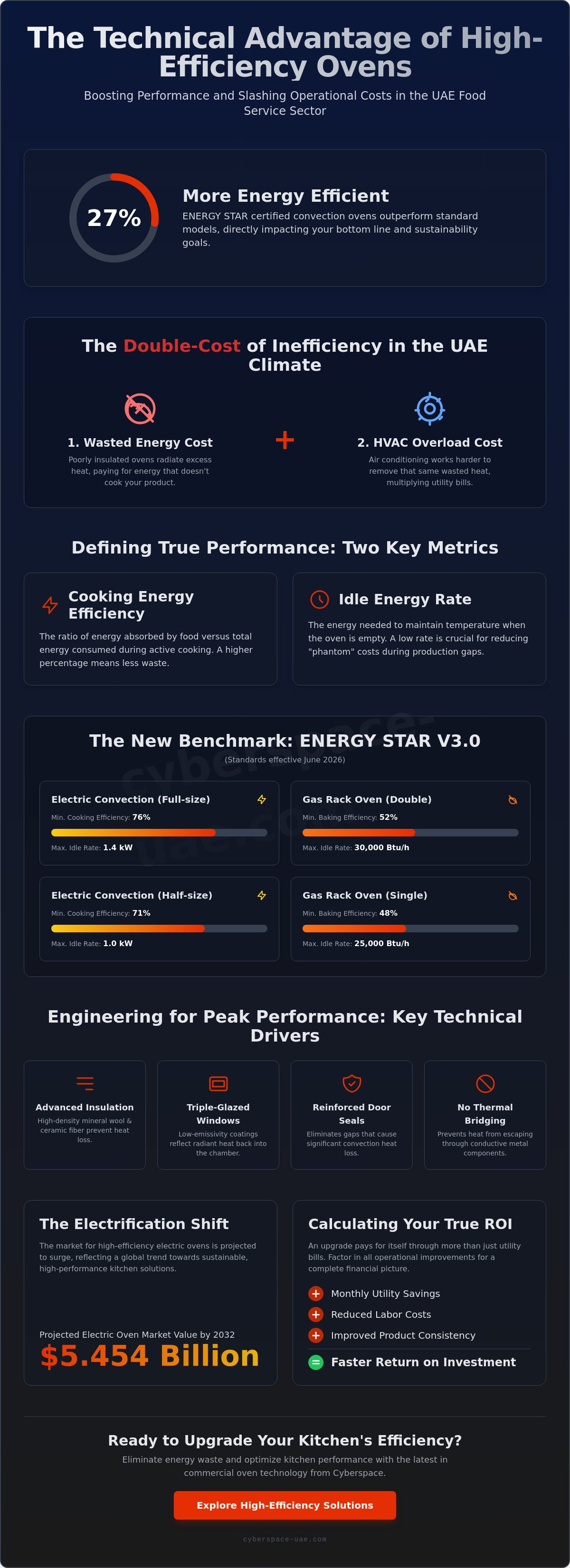
ENERGY STAR certified gas and electric convection ovens are, on average, 27% more energy efficient than standard industrial models. In the UAE's high-volume food service sector, this isn't just a sustainability metric; it's a requirement for maintaining thin margins. Operating an energy efficient commercial oven helps mitigate the excessive heat dissipation that strains local climate control systems. You need equipment that delivers consistent results without the overhead of outdated, inefficient machinery.
We agree that rising utility costs and technical inconsistencies shouldn't dictate your production capacity. This article analyzes the technical advancements and ROI drivers of high-efficiency industrial baking and cooking systems through 2026. We'll examine how IoT integration, adaptive power modulation, and the latest ENERGY STAR Version 3.0 standards directly impact your operational costs. You'll get a technical overview of how modular deck ovens, rotary ovens, and advanced combi oven systems like Rational optimize throughput while meeting modern sustainability benchmarks. We'll also cover the shift toward electrification and how high-efficiency electric models are projected to reach a market value of $5.454 billion by 2032.
Key Takeaways
- Differentiate between cooking energy efficiency and idle energy rates to identify true operational performance in industrial settings.
- Evaluate the role of advanced thermal insulation and heat recovery systems in maintaining stable internal temperatures and reducing heat dissipation.
- Compare the energy-per-tray ratios of a rotary oven, deck oven, and combi oven to select the most energy efficient commercial oven for specific production volumes.
- Calculate total ROI by analyzing monthly utility savings alongside reduced labor costs and improved product consistency.
- Align equipment capacity with specific throughput requirements to eliminate energy waste and optimize kitchen performance in the UAE climate.
Defining Energy Efficiency in Industrial Baking Systems
Industrial efficiency is a technical calculation of energy transfer. It measures how effectively an energy efficient commercial oven converts fuel or electricity into heat absorbed by the product. This performance is defined by two primary metrics: cooking energy efficiency and the idle energy rate. In high-volume environments, these figures determine the long-term viability and profit margins of food service operations.
Cooking Energy Efficiency vs. Idle Rates
Cooking energy efficiency is the ratio of energy absorbed by the food versus the total energy consumed by the equipment during the baking process. Idle rates measure the energy required to maintain a set temperature when the oven is empty. For continuous bakery operations, low idle rates are essential to prevent "phantom" energy consumption during production gaps. According to ENERGY STAR Version 3.0 standards effective in June 2026, gas convection ovens must reach 49% efficiency. Electric models require 71% to 76% efficiency depending on pan capacity. Modern Oven technology focuses on precision power modulation to keep MMBTU and kWh consumption as low as possible during both active and idle states.
Thermal mass plays a critical role in professional Deck Ovens. Heavy stone soles act as heat reservoirs. They stabilize internal temperatures and allow for rapid heat recovery after door openings. This stored energy reduces the frequency of burner or element firing, which lowers overall energy input per batch. Without sufficient thermal mass, ovens experience temperature fluctuations that lead to inconsistent results and higher utility draws.
Utility Cost Drivers in UAE Commercial Kitchens
UAE industrial margins are heavily impacted by heat dissipation. High ambient temperatures already strain kitchen HVAC systems. An inefficient oven acts as a secondary heater, forcing air conditioning units to work harder. This creates a double-cost scenario where you pay for the wasted heat and then pay for the electricity to remove it from the room. Heat leakage is usually caused by thinning insulation or degraded door seals in older machinery. Modern Rotary Ovens and Combi ovens utilize high-density insulation and multi-pane glass to contain thermal energy. This containment is vital for maintaining thin profit margins in hot climates. Inefficient equipment doesn't just waste gas or electricity; it degrades the entire operational environment.
Standard benchmarks for industrial ovens in 2026 include:
- Gas Rack Ovens (Single): 48% minimum baking energy efficiency; 25,000 Btu/h max idle rate.
- Gas Rack Ovens (Double): 52% minimum baking energy efficiency; 30,000 Btu/h max idle rate.
- Electric Convection (Full-size): 76% cooking energy efficiency; 1.4 kW max idle rate.
- Electric Convection (Half-size): 71% cooking energy efficiency; 1.0 kW max idle rate.
Technical Drivers of Commercial Oven Efficiency
Modern efficiency relies on the integration of advanced hardware and intelligent energy management software. In an energy efficient commercial oven, every watt or BTU is directed toward the baking chamber rather than the kitchen environment. Technical advancements in 2026 focus on minimizing thermal escape and optimizing fuel combustion through high-precision components.
Insulation and Thermal Retention
High-density mineral wool and ceramic fiber insulation provide the primary barrier against heat loss in industrial systems. These materials maintain their structural integrity at high temperatures, preventing the sagging that causes cold spots in older equipment. Triple-glazed viewing windows are now a standard requirement for thermal retention. They utilize low-emissivity coatings to reflect heat back into the chamber while allowing visual monitoring. Thermal bridging occurs when conductive metal components create a direct path for heat to bypass insulation, which significantly degrades unit efficiency and increases exterior surface temperatures.
In the UAE, superior insulation is a functional necessity due to high ambient temperatures. Poorly insulated equipment forces facility HVAC systems to work harder, creating a secondary energy cost. Selecting units with reinforced door seals and minimal thermal bridging is essential for cost-effective procurement of commercial ovens in hot climates. For facilities looking to optimize their thermal footprint, reviewing technical specifications for high-performance industrial ovens is a critical step in the upgrade process.
Steam Recovery and Humidity Control
Steam injection in Deck Ovens is an energy-intensive process. Modern systems utilize automated dampers to retain moisture and latent heat, reducing the frequency of steam cycles. Precise humidity management in Provers also prevents energy waste by maintaining exact saturation levels without over-heating. These systems ensure that the energy used for moisture generation isn't immediately lost to the exhaust stack.
Heat Recovery and Smart Controls
Rotary Ovens now feature integrated heat exchangers that capture energy from exhaust gases to preheat incoming air. This significantly boosts burner efficiency in gas-fired industrial baking systems. Smart control algorithms further enhance this by modulating power based on the specific load weight and initial product temperature. Instead of simple on-off cycles, these controllers provide precise energy increments. This prevents temperature overshooting and reduces the idle energy rate during production gaps. In Rational systems and advanced Combi oven models, these sensors allow for real-time adjustments that protect both product quality and energy margins.
Efficiency Comparison: Rotary vs. Deck vs. Combi Ovens
Selecting an energy efficient commercial oven requires an analysis of the energy-per-tray ratio relative to your production volume. Different heating technologies offer distinct advantages based on the product type and throughput. While convection is often cited for versatility, heavy-duty industrial systems like rotary and deck ovens provide superior efficiency for high-volume baking. Understanding these technical differences is essential for optimizing your facility's utility consumption.
High-Capacity Rotary Oven Performance
Industrial rotary ovens utilize forced air convection to ensure uniform heat distribution across multiple trays. In a double rack rotary oven, the continuous rotation of the product ensures even baking without manual intervention. This constant air circulation reduces baking times by approximately 20% compared to static ovens, lowering the total energy input per batch. The energy distribution in these systems is optimized for high-capacity bread production, where the volume justifies the operational load of a large rotating rack. It's a methodical approach to high-throughput efficiency.
Modular Deck Oven Efficiency
Artisan bread production often requires the specific heat profile of a deck oven. These units excel in efficiency through stone sole heat retention. Once the stone decks reach the target temperature, their high thermal mass maintains heat with minimal energy pulses. For bakeries with fluctuating demand, modular deck ovens allow for independent deck control. You only power the decks currently in use. This prevents the energy waste associated with heating an entire large-capacity chamber for a small batch. For a detailed breakdown of how these systems compare for specific baked goods, refer to our analysis on Rotary Oven vs Deck Oven for Pastry. Procurement managers should also consult the Professional Baking Deck Oven Suppliers guide for technical specifications on modular efficiency.
Combi Oven Multi-Functionality
The Combi oven represents a shift toward multi-functional kitchen efficiency. By combining steam and convection, these units replace multiple appliances, reducing the total energy footprint and floor space requirements. Rational systems, specifically the iCombi Pro, utilize intelligent sensors to adjust energy output based on the load. This technology minimizes water and electricity consumption by optimizing the climate inside the chamber for every cooking cycle. It's a high-performance solution for kitchens requiring versatility without sacrificing margins. Detailed procurement data is available in our Rational Combi Oven for Bakery guide.
ROI Analysis: The Cost of Upgrading to High-Efficiency
Calculating the payback period for an energy efficient commercial oven requires a multi-variable formula. It isn't a simple comparison of acquisition costs. Technical buyers must evaluate the total cost of ownership (TCO) by factoring in utility reductions, labor optimization, and the secondary impact on facility climate control. In high-volume UAE bakeries, the initial premium for high-performance machinery is often recovered through operational savings within the first 18 to 24 months of service.
Utility Bill Reduction Framework
Monthly kWh consumption is the most visible metric in the ROI calculation. Standard industrial ovens often suffer from significant heat leakage and inefficient burner cycles. In contrast, ENERGY STAR certified models are approximately 27% more efficient. When you apply UAE commercial utility tariffs to these consumption gaps, the savings are substantial. Reducing energy consumption by 20% effectively increases annual net profit by lowering fixed operational overhead across every production cycle. These savings scale directly with production volume; the more you bake, the faster the equipment pays for itself.
Maintenance savings also contribute to the ROI. Modern, high-performance machinery utilizes advanced sensors and self-diagnostic tools. These systems prevent the catastrophic failures common in older, unregulated equipment. By identifying minor calibration issues before they lead to downtime, you protect your throughput and reduce emergency repair expenses.
Indirect Efficiency Gains
Operational efficiency extends beyond the power meter. Superior temperature stability in Deck Ovens and Rotary Ovens significantly reduces product waste. Inconsistent heat in older machinery leads to uneven browning and rejected batches, which is a direct loss of raw materials and labor. Programmable baking cycles in advanced Rational and Combi oven systems further optimize labor. Staff can manage multiple units with minimal oversight, ensuring consistent results regardless of skill level.
- Reduced HVAC Load: Efficient insulation keeps heat inside the chamber, lowering the electricity required to cool the kitchen.
- Production Chain Integration: Using Blast Chillers alongside efficient ovens allows for rapid cooling and safer food handling, streamlining the entire workflow.
- Consistency: Automated humidity and temperature controls eliminate the "human error" variable in high-volume production.
The financial transition to modern equipment is a strategic move for long-term scalability. To evaluate specific technical configurations for your facility, you can view the full range of high-efficiency industrial ovens available for the UAE market. Investing in precision tools ensures that your margins remain protected against rising energy costs and operational inefficiencies.
Procurement Strategies for Energy-Efficient Ovens
Strategic procurement is the final stage in securing long-term operational efficiency. Selecting an energy efficient commercial oven requires technical alignment between equipment capabilities and facility infrastructure. In the UAE, ambient heat levels demand specific insulation ratings to prevent cooling system overload. Brand-new equipment is the standard for efficiency. Refurbished units often suffer from degraded thermal barriers and outdated burner technology that fails to meet 2026 ENERGY STAR standards. Investing in new, high-performance machinery ensures that your facility remains compliant with modern sustainability benchmarks from day one.
Capacity Planning and Sizing
Over-sizing equipment is a primary cause of energy waste in industrial kitchens. An oven running at half-capacity consumes nearly the same idle energy as a full load. To optimize the workflow, you must match oven tray capacity to the output of your Spiral Mixers and Dough Sheeters. This technical synchronization ensures a continuous production cycle where the oven spends less time in an idle state. Provers also play a critical role here; they must be sized to keep the oven supplied with ready-to-bake product. This prevents the "gap" periods that bleed heat and increase monthly utility draws.
Selecting Industrial Partners
Reliability depends on technical support for high-efficiency burners and digital control systems. When finalizing a procurement list for industrial bakery startups, you must verify manufacturer efficiency claims against verified industrial data rather than marketing summaries. Look for partners who provide detailed consumption metrics for Rotary Ovens, Deck Ovens, and Rational systems. Comprehensive technical references, such as the Industrial Rotary Baking Oven: Professional Procurement Guide 2026, offer the specific data points needed for objective decision-making.
Final procurement should focus on a balanced mix of high-performance tools, such as the specialized pizza and restaurant equipment from Southern Select Equipment. Integrating Blast Chillers and Planetary Mixers into a unified, efficient production line reduces the total energy footprint of the facility. Prioritize equipment with modular controls and high-density insulation to ensure long-term ROI in the competitive UAE market. Direct coordination with suppliers who understand the technical realities of the local climate will protect your margins against rising energy costs and operational inefficiencies.
Future-Proofing Industrial Baking Operations
Adopting high-performance machinery is a technical requirement for maintaining profitability in the UAE's industrial food sector. Technical factors such as idle energy rates and thermal retention directly influence monthly overhead. By selecting an energy efficient commercial oven, you mitigate the impact of rising utility tariffs and reduce the strain on facility cooling systems. The integration of advanced sensors and superior insulation ensures consistent output with minimal energy waste across every production cycle. These advancements represent a shift toward precise, data-driven kitchen management.
We are a specialized supplier of Rational and high-end Deck ovens with deep expertise in UAE industrial baking requirements. Our comprehensive range of new, high-performance machinery is engineered for operational excellence and long-term durability. We focus on providing tools that deliver measurable ROI through reduced utility consumption and optimized labor cycles. Explore our range of high-efficiency industrial ovens to upgrade your facility's technical capabilities and secure a competitive advantage in the 2026 market. Professional-grade equipment is the foundation of a scalable and sustainable industrial operation.
Frequently Asked Questions
What is the average energy saving of an ENERGY STAR commercial oven?
ENERGY STAR certified gas and electric convection ovens provide an average energy saving of 27% compared to standard industrial models. This efficiency gain applies to both active cooking cycles and idle energy rates. Utilizing an energy efficient commercial oven directly reduces the fixed operational costs of high-volume food service facilities.
How does a rotary oven save more energy than a standard convection oven?
A rotary oven utilizes a rotating rack system and high-velocity air circulation to ensure uniform heat transfer across all trays. This technical configuration reduces baking times by approximately 20% compared to static convection systems. Shorter cycle times result in lower total energy consumption per batch, which optimizes the energy-to-output ratio for large-scale bread production.
Are electric deck ovens more energy efficient than gas models in the UAE?
Electric deck ovens often achieve higher cooking energy efficiency ratings, with some models reaching up to 76% efficiency. Gas models are common but frequently have higher idle energy rates and greater heat dissipation. In the UAE's climate, electric units are often preferred because they release less heat into the kitchen, which reduces the electrical load on facility HVAC systems.
What role does insulation play in commercial oven energy efficiency?
High-density insulation materials, such as mineral wool and ceramic fiber, act as the primary barrier against thermal escape. This containment is essential for maintaining stable internal temperatures and reducing the frequency of burner or element firing. Superior insulation also prevents heat from leaking into the kitchen environment, which is a critical factor for maintaining profit margins in hot climates.
Can smart cooking programs actually reduce my utility bills?
Smart cooking programs utilize AI-driven sensors to modulate power based on the specific load weight and initial product temperature. Instead of simple on-off cycles, these systems provide precise energy increments to prevent temperature overshooting. Advanced systems like Rational use these algorithms to minimize energy waste during production gaps, directly lowering monthly electricity and gas consumption.
How often should an energy-efficient oven be serviced to maintain performance?
Industrial baking equipment requires professional servicing at least twice per year to maintain peak technical efficiency. Technicians must verify burner calibration, sensor accuracy, and the integrity of door seals. Degraded seals or misaligned components cause significant energy leakage and inconsistent baking results, which negates the benefits of an energy efficient commercial oven.
Does a combi oven use more energy because of the steam function?
Combi ovens are engineered to be highly efficient because steam is a more effective heat transfer medium than dry air. This allows for faster cooking at lower temperatures, often resulting in lower total energy consumption per cycle. Modern units also feature automated dampers that retain latent heat and moisture, ensuring that the energy used for steam generation is not immediately lost to the exhaust.
Is it worth upgrading to a high-efficiency oven if my current one still works?
Upgrading is a strategic financial decision based on the total cost of ownership rather than equipment failure. Older, inefficient machinery can inflate monthly utility bills by 20% to 30% due to degraded insulation and outdated burner technology. The utility savings and reduced product waste from a new high-performance oven typically result in a full ROI within 18 to 24 months of operation.