
Spiral Mixer vs Planetary Mixer for Dough: Industrial Comparison Guide 2026
Selecting a planetary mixer for its versatility often leads to catastrophic motor failure when handling stiff, high-protein doughs. In high-volume UAE bakeries, the debate of spiral mixer vs planetary mixer for dough centers on mechanical efficiency rather than mere convenience. You likely understand the frustration of excessive heat friction damaging dough elasticity or inconsistent gluten development across large batches. These operational hurdles often stem from using a mixing system that isn't engineered for the specific resistance levels of heavy industrial dough loads.
This technical analysis explores the mechanics of dough hydration and aeration to identify the optimal system for your facility. We provide a direct comparison of motor torque, bowl rotation speeds, and friction coefficients. You'll learn how to achieve consistent elasticity and extend equipment longevity under continuous industrial operation. This guide reviews essential performance metrics for 2026 standards, including compliance with updated energy efficiency regulations. We examine how specific configurations reduce thermal transfer to ensure your production cycle remains optimized and your motor remains protected during peak demand.
Key Takeaways
- Evaluate technical differences between rotating bowl systems and orbital agitators to determine optimal kneading intensity for specific bakery outputs.
- Analyze the impact of mechanical friction on dough temperature to prevent premature fermentation and maintain gluten integrity during heavy-duty cycles.
- Compare spiral mixer vs planetary mixer for dough based on ingredient viscosity, focusing on high-torque requirements for stiff doughs versus the versatility needed for pastry.
- Identify critical procurement specifications, including gear-driven versus belt-driven transmissions, to maximize equipment longevity and operational efficiency in UAE industrial settings.
- Determine necessary motor horsepower and torque ratings to handle 80kg+ batches without risking motor burnout or inconsistent hydration.
What is the Difference Between Spiral and Planetary Mixers?
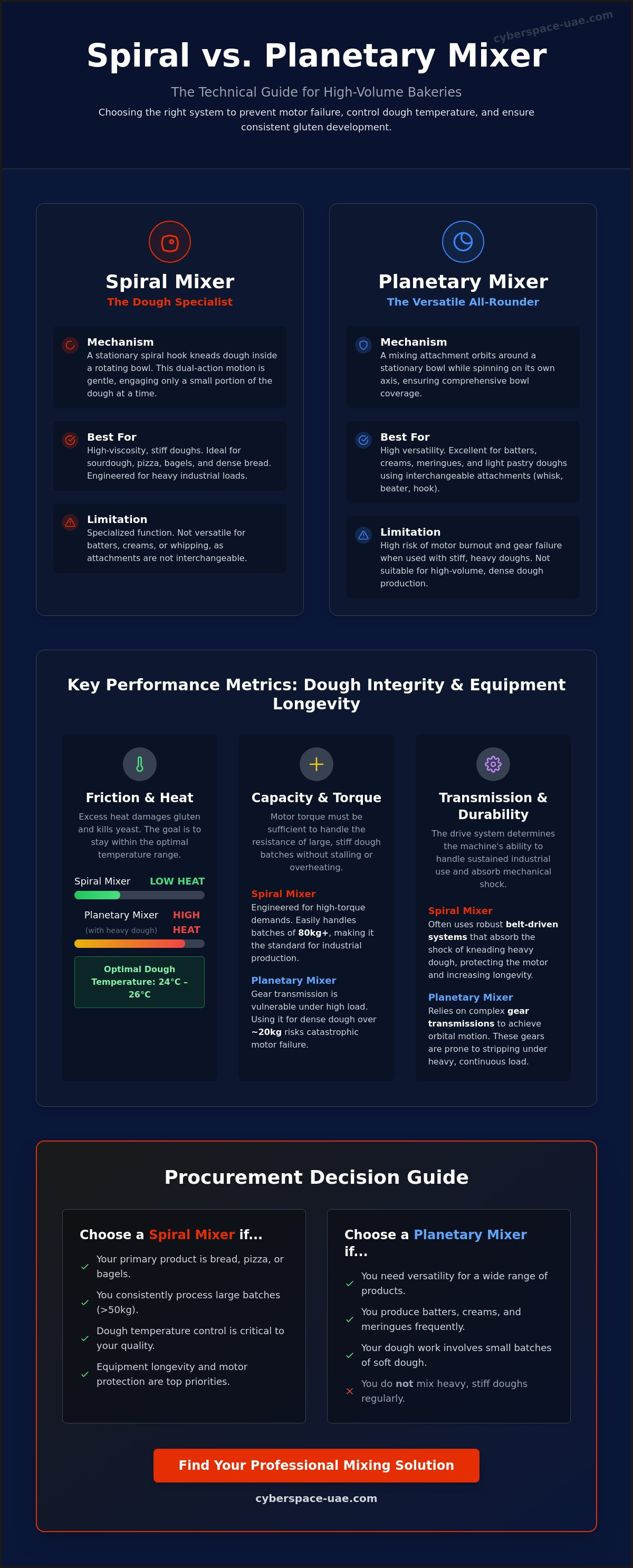
The fundamental distinction in the spiral mixer vs planetary mixer for dough debate lies in the movement of the mixing vessel and the agitator. An industrial Mixer (appliance) is categorized by its mechanical transmission and rotational axis. Spiral mixers utilize a rotating bowl paired with a stationary spiral hook. Planetary mixers employ a stationary bowl where the agitator moves in an orbital path. This mechanical divergence dictates the machine's capacity for torque, heat management, and ingredient versatility. Choosing the wrong system often results in inconsistent product quality or premature equipment failure.
The Mechanics of Spiral Mixing
Spiral mixers operate through synchronized rotation. The bowl and the spiral hook rotate simultaneously. This dual action ensures the hook only engages a small portion of the dough mass at any given time. This localized contact reduces friction and prevents temperature spikes that could damage yeast activity. A central breaker bar remains stationary. It forces the dough through the spiral's path to ensure consistent hydration and gluten alignment. This configuration is the primary choice for high-viscosity products like sourdough, pizza, and bagel doughs. It handles large batches, often exceeding 80kg, without stressing the motor or the transmission.
The Mechanics of Planetary Mixing
The planetary system utilizes a fixed bowl. The agitator moves around the interior circumference while rotating on its own axis. This movement resembles a planet's orbit. This dual-axis movement provides comprehensive coverage of the bowl's volume. It's ideal for aeration and blending. Because the bowl is stationary, these systems allow for interchangeable attachments. Operators switch between whisks, beaters, and dough hooks. However, the orbital transmission faces significant mechanical stress when handling stiff doughs. High resistance can lead to motor burnout or gear failure in industrial settings. It's better suited for batters, creams, and light pastry doughs.
Mechanical durability differs significantly between the two. Spiral mixers often use belt-driven systems to absorb the shock of heavy kneading. Planetary mixers rely on complex gear transmissions to maintain the orbital path. In the UAE market, where high ambient temperatures can impact dough chemistry, the spiral's low-friction design is a critical advantage. It maintains a lower friction factor than its planetary counterpart. This ensures the dough temperature stays within the professional range of 24°C to 26°C during the final stages of mixing. Selecting the correct unit depends entirely on your primary product's viscosity and your required daily volume.
Dough Development: Friction, Heat, and Gluten Structure
Mechanical energy is the catalyst for gluten development. It transforms flour proteins into a structured network capable of gas retention. The efficiency of this process depends on how kinetic energy is applied to the dough mass. In the technical evaluation of a spiral mixer vs planetary mixer for dough, the primary variable is the method of protein alignment. Spiral systems utilize a gentle stretching action. Planetary systems rely on higher shear forces. For industrial bakeries in the UAE, selecting the wrong mechanical action leads to compromised crumb structures and reduced loaf volume.
Batch consistency remains a priority for high-volume operations. When processing 50kg or larger cycles, uniformity is difficult to maintain if heat is not controlled. Spiral mixers excel here by engaging only a fraction of the dough at once. This localized kneading prevents the entire mass from absorbing excessive energy simultaneously. It ensures that every kilogram of dough receives identical hydration and mechanical treatment. This level of precision is mandatory for meeting the strict quality standards of the regional hospitality sector.
Friction Management in High-Volume Production
Heat gain is the inevitable byproduct of mechanical work. During an intensive 15-minute mixing cycle, dough temperatures can rise rapidly. The friction factor is the temperature increase caused by mechanical action during mixing. Spiral mixers minimize this factor by using a synchronized bowl-to-hook speed ratio. This reduces the friction generated between the dough and the bowl surface. Lower temperatures allow for higher hydration levels, often exceeding 75%, without the risk of over-kneading or thermal damage to the yeast. For facilities requiring precise temperature control, exploring professional spiral mixers ensures consistent results across multiple shifts.
Aeration and Emulsification in Planetary Systems
Planetary mixers prioritize air entrapment over gluten stretching. The orbital movement pattern creates a continuous vortex that pulls air into the mixture. This physics of air entrapment is essential for achieving the correct specific gravity in sponge cakes and confectionery batters. High-fat ingredients require stable emulsification to prevent separation during baking. The planetary beater provides the mechanical shear necessary to distribute fats evenly throughout the aqueous phase. This results in a stable, uniform emulsion that produces a fine, consistent crumb in delicate pastries. While less efficient for stiff bread doughs, the planetary system is the industrial standard for high-aeration products.
Choosing between these systems requires an analysis of your ingredient viscosity and final product requirements. Bread and pizza production demands the low-friction, high-torque capabilities of a spiral unit. Confectionery and pastry production requires the aeration and attachment versatility of a planetary unit. Understanding these mechanical principles allows for better equipment procurement and optimized production workflows.
Application Analysis: Choosing Based on Ingredient Viscosity
Deciding on a spiral mixer vs planetary mixer for dough requires a technical assessment of ingredient viscosity. Viscosity determines the resistance encountered by the motor and transmission. High-resistance mixtures require constant torque. Low-resistance mixtures require high-velocity aeration. Industrial facilities in the UAE often prioritize throughput. Matching the equipment to the specific viscosity profile of the product prevents mechanical failure and optimizes production timelines. Using a machine outside its intended viscosity range leads to inefficient cycles and increased maintenance costs.
Spiral Mixers for Stiff Dough Production
Stiff doughs, such as those used for bagels and traditional sourdough, typically feature hydration levels below 55%. These low-moisture formulations create significant mechanical resistance. Spiral mixers handle these loads by maintaining a constant rotation speed regardless of dough stiffness. The spiral hook is engineered for continuous heavy-duty resistance. It doesn't flex or strain under pressure. This mechanical rigidity allows high-volume pizzerias to operate continuous 24-hour cycles without risking motor burnout. Efficiency is maximized because the machine processes large batches with minimal heat transfer, maintaining dough stability in the UAE's high-ambient temperature environments.
Planetary Mixers for Confectionery and Pastry
Confectionery production relies on variable speed control. Delicate ingredients like whipped egg whites or buttercreams require precise RPM adjustments to maintain structural integrity. Planetary mixers excel here. They allow operators to switch between whisks for aeration and beaters for emulsification. This versatility is essential for multi-stage cake production where different textures are required within a single recipe. The orbital motion ensures that fats and sugars are creamed to the correct specific gravity before flour is folded in. For large-scale operations, pairing these mixers with an industrial rotary baking oven ensures that high-volume pastry output remains consistent from mixing to final bake.
Multi-product industrial bakeries rarely rely on a single system. A production line producing both artisan bread and delicate pastries requires a bifurcated approach. Using a planetary mixer for stiff bread dough leads to gear stripping. Conversely, using a spiral mixer for sponge cake results in poor aeration. Successful UAE operations typically deploy spiral units for primary dough development and planetary units for finishing, fillings, and light batters. This strategic allocation of machinery protects capital investment and ensures product quality across the entire SKU range. It's the most efficient path to scaling production without compromising the technical requirements of individual recipes.
Industrial Procurement Criteria: Power, Capacity, and Standards
Procurement for industrial facilities requires an analysis of mechanical endurance. When evaluating a spiral mixer vs planetary mixer for dough, motor horsepower and torque ratings are the primary indicators of performance. High-capacity units designed for 80kg+ batches require robust electrical configurations. In the UAE, industrial mixers typically operate on 3-phase (400V) power to maintain consistent torque under heavy load. Single-phase units often fail to provide the necessary current for high-viscosity dough processing. This results in motor strain and inconsistent hydration levels during intensive cycles.
Transmission type determines the machine's maintenance profile. Gear-driven transmissions are preferred for high-torque dough mixing over belt-driven alternatives because they provide a direct, slip-free transfer of power under extreme resistance. While belt-driven systems offer quieter operation and easier shock absorption, they're prone to slipping when handling low-hydration doughs. For maximum longevity in continuous production environments, gear-based systems ensure the motor's full power is delivered to the hook or agitator without mechanical loss. This reliability is critical for maintaining tight production schedules in high-volume bakeries.
Technical Specifications for UAE Commercial Kitchens
Industrial motors should feature 2-speed or variable speed controls. Two-speed motors allow for an initial low-speed blending phase followed by high-speed gluten development. Safety features are non-negotiable for industrial compliance. These include emergency stop buttons, stainless steel bowl guards, and thermal overload protection. These systems prevent motor burnout during peak summer months when ambient temperatures in UAE kitchens place additional stress on equipment cooling systems. Ensuring these safety protocols are met protects both the operator and the capital investment.
Material Standards and Hygiene Compliance
Sanitation protocols dictate the use of AISI 304 stainless steel for all components in contact with food. This material resists corrosion from salt and acidic dough ferments common in sourdough production. Fixed-bowl spiral mixers require thorough manual cleaning, whereas many planetary mixers feature removable bowls that simplify the sanitation process. Integrating these units into a streamlined line with professional baking deck ovens ensures a seamless transition from mixing to baking. This workflow optimization reduces labor costs and maintains product throughput.
Choosing the right transmission and power rating is a long-term investment in operational stability. Facilities looking to upgrade their production capacity should view our industrial mixing solutions to ensure compliance with local electrical and safety standards. Selecting equipment based on verified mechanical specifications prevents unplanned downtime and ensures consistent product quality across every batch.
Professional Mixing Solutions from Cyberspace Kitchen & Bakery Equipment
Cyberspace provides high-performance industrial machinery across the UAE. Selecting a spiral mixer vs planetary mixer for dough requires precise technical alignment with your facility's output targets. We supply brand-new equipment engineered for the rigorous demands of large-scale food service. Our inventory focuses on mechanical durability and energy efficiency. We don't supply residential or refurbished units. Every machine meets industrial standards for continuous operation. Our goal is to provide tools that maintain quality under the most demanding production schedules.
Technical consultation is central to our procurement process. We analyze your production volume to determine the required motor torque and bowl capacity. This ensures your chosen mixer handles peak loads without mechanical strain. Our team matches specific gear ratios and transmission types to your recipe's viscosity. This precision protects your capital investment and prevents unplanned downtime. We help you navigate technical specifications to find the most efficient solution for your specific dough types.
Complete industrial lines require more than just a mixer. We facilitate the integration of mixing stations with professional baking equipment. This includes high-capacity setups featuring Rational combi ovens for bakery and industrial provers. A unified equipment strategy improves cycle times and ensures product consistency across all batches. We ensure every component of your line works in synchronization to maximize throughput.
The Cyberspace Advantage for B2B Clients
We serve the hospitality and large-scale food production sectors exclusively. Our focus is strictly on industrial-grade tools that withstand heavy use. We understand the technical requirements of specialized dough processing and high-torque mixing. Reliability is the core of our service. Clients receive equipment capable of continuous operation in high-ambient UAE temperatures. Our expertise ensures you receive the most efficient tools for your specific SKU list. We prioritize functional clarity and operational excellence in every client interaction.
Optimising Your Industrial Production Line
Efficiency depends on seamless workflow planning. We assist in mapping the journey from the mixing bowl to final storage. This includes integrating commercial blast chiller technology for rapid cooling and food safety compliance. Technical support for equipment calibration is available to maximize operational efficiency. Contact Cyberspace for detailed technical specifications and industrial quotes. We provide the data necessary for informed procurement decisions and long-term facility success.
Optimizing Your 2026 Bakery Production Line
Selecting between a spiral mixer vs planetary mixer for dough depends on your specific viscosity targets and throughput requirements. Spiral systems remain the industrial standard for low-friction hydration in heavy bread and pizza production. Planetary units provide the essential aeration and attachment versatility required for high-volume confectionery and pastry lines. Success in the competitive UAE market requires equipment that meets 3-phase electrical standards and maintains batch consistency under high-ambient temperatures. It's critical that your motor horsepower and transmission type align with your batch weights to prevent premature failure and optimize production cycle times.
Cyberspace Kitchen & Bakery Equipment is a specialized supplier of brand-new industrial machinery. We provide technical expertise in UAE commercial kitchen standards to ensure your facility remains compliant and efficient. Our comprehensive range of high-capacity baking solutions includes gear-driven systems engineered for longevity and mechanical precision. View Industrial Dough Mixing Equipment at Cyberspace Kitchen & Bakery Equipment to optimize your production workflow. Invest in the mechanical reliability your bakery requires for sustained operational success.
Frequently Asked Questions
What is the primary difference between a spiral and a planetary mixer?
The primary difference lies in the mechanical movement of the bowl and the agitator. Spiral mixers utilize a rotating bowl paired with a stationary hook to knead dough. Planetary mixers use a fixed bowl where the agitator moves in an orbital path. This distinction determines the machine's ability to handle high-torque resistance and maintain precise dough temperatures during intensive cycles.
Can I use a planetary mixer for heavy bread dough?
You can use a planetary mixer for small batches of light bread dough. However, processing heavy, high-protein doughs in large quantities often leads to gear failure and motor burnout. The orbital transmission isn't engineered for the sustained resistance of stiff dough. For high-volume bread production, a spiral mixer is the technically superior choice for long-term durability.
Which mixer is better for high-volume pizza production?
A spiral mixer is the optimal choice for high-volume pizza production. It handles the high-torque requirements of stiff pizza dough without excessive heat transfer. This keeps the dough at the correct fermentation temperature. In the context of spiral mixer vs planetary mixer for dough, the spiral's rotating bowl ensures consistent hydration for batches exceeding 50kg.
What are the benefits of a gear-driven mixer for industrial use?
Gear-driven mixers provide a direct, slip-free transfer of power from the motor to the agitator. This is essential for maintaining constant torque when mixing high-viscosity doughs. Unlike belt-driven systems, gears don't slip under heavy resistance. This results in greater mechanical longevity and lower long-term maintenance costs in industrial settings where equipment runs continuously.
How do I calculate the required bowl capacity for my bakery?
Calculate bowl capacity based on your largest batch weight and a 75% fill factor. Overfilling a mixer causes motor strain and inconsistent gluten development. For example, an 80kg batch of dough typically requires a mixer with at least a 100-liter bowl capacity. Always account for the mechanical expansion of the dough during the mixing and aeration process to prevent overflow.
Are spiral mixers more expensive to maintain than planetary mixers?
Spiral mixers generally have lower maintenance costs than planetary mixers in high-volume environments. Their mechanical design is simpler, featuring fewer gears in the transmission system. Planetary mixers require more frequent lubrication and gear inspections due to the complexity of the orbital movement. Selecting a spiral unit reduces the risk of expensive transmission repairs when handling heavy, consistent loads.
What electrical standards are required for industrial mixers in the UAE?
Industrial mixers in the UAE typically require a 3-phase, 400V electrical connection. This power configuration is necessary to maintain the torque required for large-scale dough processing. Single-phase 230V units are generally reserved for smaller countertop models. Ensure your facility's electrical infrastructure supports the high current draw of industrial-grade motors to prevent circuit overloads and ensure motor longevity.
How does a spiral mixer prevent dough from overheating?
A spiral mixer prevents overheating by engaging only a small portion of the dough mass at any given time. The rotating bowl moves the dough through the hook's path, reducing the total friction generated per revolution. This localized contact minimizes the friction factor. It keeps the dough temperature within the professional range, which is critical for consistent yeast activity in warm UAE climates.