
Combi Oven Ventilation Requirements UAE: Industrial Compliance Guide 2026
Installing a high-performance combi oven in the UAE is as much a matter of Civil Defence law as it is of culinary efficiency. Operators often find themselves caught between municipal hygiene codes and strict fire safety rules, where a single sizing error leads to inspection failure. Meeting the current combi oven ventilation requirements UAE regulators enforce demands a precise understanding of extraction volumes and heat load. It is not just about smoke; it is about managing high ambient heat to protect your equipment investment and ensure operational continuity.
You likely recognize that standard ventilation setups often struggle under the Gulf's environmental pressures. This technical breakdown provides the exact specifications for hood sizing, ducting heights, and grease filtration required for industrial compliance in 2026. We examine the mandatory integration of fire suppression systems and the specific extraction needs for Rational-grade hardware. By following these industrial standards, you ensure full regulatory alignment and optimize the longevity of your professional kitchen assets. The following sections outline the necessary steps for streamlined procurement and installation.
Key Takeaways
- Identify mandatory compliance points within the UAE Fire and Life Safety Code of Practice and local Municipality hygiene regulations.
- Analyze technical combi oven ventilation requirements UAE based on fuel source and tray capacity to determine precise extraction volumes.
- Compare performance metrics of wall-mounted canopies against dedicated condensation hoods for specialized equipment like Rational iCombi units.
- Implement environmental engineering strategies to manage high ambient humidity and the cooling of make-up air in industrial kitchen settings.
- Optimize procurement by aligning ventilation specifications with professional-grade hardware during the initial design and layout phase.
Regulatory Framework for Combi Oven Ventilation in the UAE
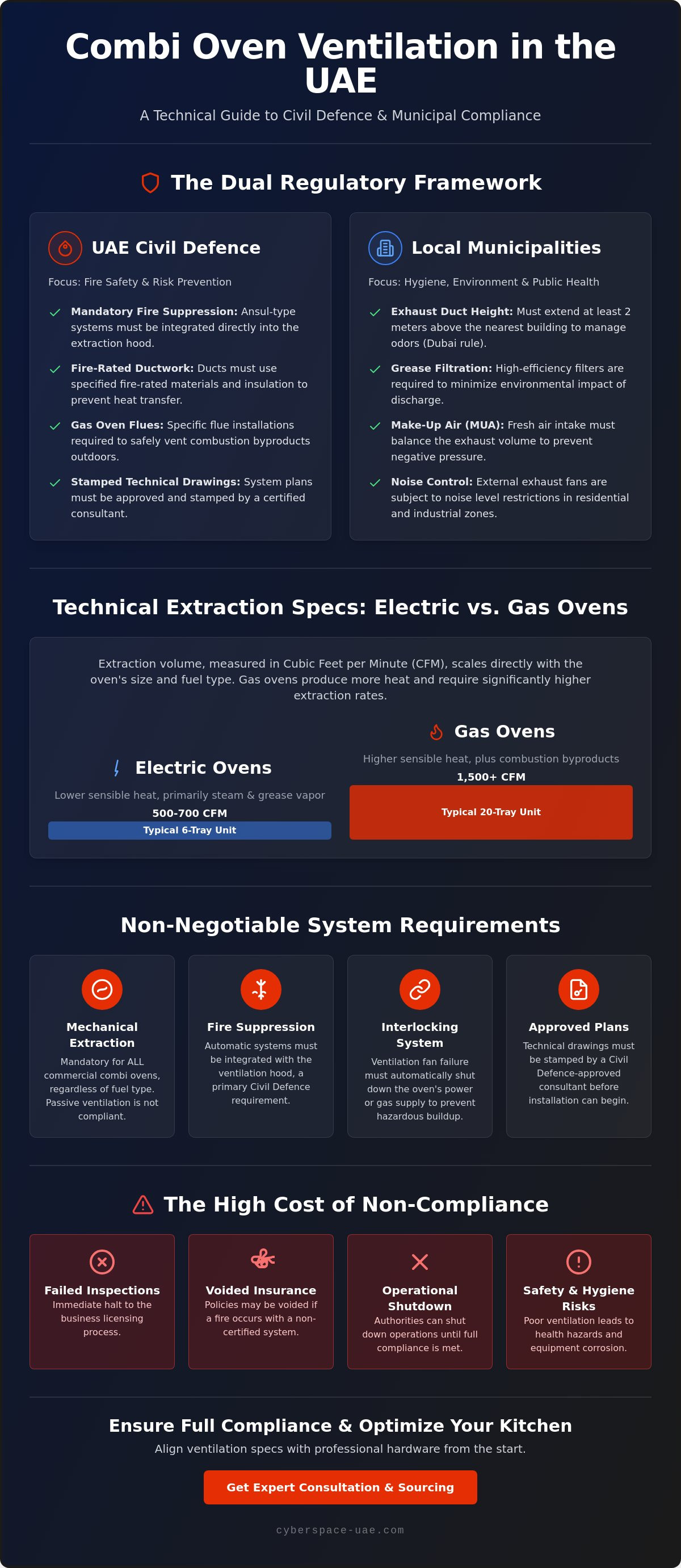
The regulatory landscape for kitchen ventilation systems in the UAE is divided between fire safety and public health. UAE Civil Defence manages fire risk, while local Municipalities handle hygiene and environmental impact. For commercial operators, meeting combi oven ventilation requirements UAE standards is a prerequisite for obtaining a trade license. It's not a suggestion. It's a legal mandate for industrial cooking units.
Mechanical extraction is mandatory for all commercial combi ovens. This applies regardless of whether the unit is electric or gas-powered. Passive ventilation or simple windows don't meet the code. Approval requires technical drawings stamped by a Civil Defence-approved consultant. These drawings must prove that the airflow and suppression systems match the equipment's heat output.
Non-compliance carries heavy operational risks. Food safety inspectors verify hood placement and extraction efficiency during pre-opening audits. A failed inspection halts the licensing process immediately. Insurance providers often void policies if a fire occurs in a duct system that lacks proper certification. Maintaining compliance protects your license and your liability.
UAE Civil Defence Fire Safety Codes
Civil Defence mandates automatic fire suppression for all commercial cooking lines. Systems like Ansul must integrate directly with the extraction hood. Gas-powered combi ovens require specific flue installations to safely vent combustion byproducts. Ductwork must utilize fire-rated materials and insulation. This prevents heat transfer to the building's structure. Grease-laden vapors are highly flammable. Duct integrity is a primary safety metric during annual inspections. You can't skip these material standards without risking a shutdown.
Municipal Hygiene and Environmental Standards
Local municipalities focus on environmental discharge and staff welfare. In Dubai, exhaust ducts must extend at least 2 meters above the nearest building height. This prevents odors from becoming a public nuisance. High-efficiency grease filtration is required in urban zones to minimize environmental impact. Fresh air intake, or make-up air (MUA), is equally critical. It must balance the air volume removed by the exhaust. Proper MUA ratios prevent negative pressure. This ensures a safe, breathable environment for staff working in high-heat conditions. Noise level restrictions also apply to external exhaust fans in residential and industrial zones.
Technical Extraction Specs: Electric vs. Gas Combi Ovens
Calculating the thermal load of your equipment is the first step in meeting the combi oven ventilation requirements UAE regulators expect. Gas and electric models differ significantly in their BTU output and emission profiles. A standard electric 6-tray combi oven generates less sensible heat than a 20-tray gas-powered floor model. However, both units require high-volume extraction to manage steam and grease. According to the NFPA 96 standard, ventilation systems must be sized to handle the specific grease-laden vapors produced during high-temperature roasting. CFM (Cubic Feet per Minute) requirements scale with tray capacity. A 6-tray unit typically requires 500 to 700 CFM, while a 20-tray unit often exceeds 1,500 CFM depending on the hood's height and overhang.
Interlocking systems are a non-negotiable technical specification in the UAE. Your ventilation must be electronically linked to the oven's power or gas supply. If the exhaust fan fails, the oven must automatically shut down or refuse to ignite. This prevents heat buildup and hazardous gas accumulation. For those planning a new facility, reviewing a professional combi oven catalog helps align equipment choice with existing extraction capabilities. High-moisture steam cycles also require advanced condensation management. Without it, moisture settles in the ductwork, leading to hygiene failures and structural corrosion over time.
Electric Combi Oven Ventilation Needs
Electric units primarily emit water vapour and heat. High-density baking operations require consistent extraction to maintain crust quality and prevent kitchen humidity spikes. In some UAE jurisdictions, ventless condensation hoods are permitted for electric models. These hoods use internal cooling systems to condense steam, which can eliminate the need for external ducting in low-grease applications. You must ensure your unit isn't placed directly under HVAC return vents. Doing so disrupts the building's climate control and pulls grease into the general air supply.
Gas Combi Oven Flue and Safety Mandates
Gas units present higher safety risks due to combustion byproducts. Direct flue venting is a common configuration, but many UAE installations prefer canopy extraction to capture both flue gases and cooking heat. A mandatory gas solenoid valve must be installed. This valve stays closed unless an airflow sensor confirms the exhaust fan is active. Carbon monoxide (CO) monitoring is essential in enclosed commercial spaces. These sensors provide real-time alerts and are often required for final Civil Defence approval. Proper gas pressure regulation is also vital to prevent incomplete combustion and excess soot in the filters.
Extraction System Categories: Hoods, Canopies, and Ventless Tech
Choosing the right extraction hardware is critical to meeting combi oven ventilation requirements UAE inspectors demand. Most industrial kitchens utilize either wall-mounted canopies or island extraction hoods. Wall-mounted units are generally more efficient. They leverage adjacent walls to funnel rising heat and steam directly into the filters. Island hoods require significantly higher extraction volumes. Because they're exposed on all sides, cross-currents can easily push heat into the kitchen workspace. This increases the load on your cooling systems.
Dedicated condensation hoods, such as those designed for Rational iCombi units, offer a modular alternative. These systems sit directly on top of the oven. They capture and condense steam before it enters the kitchen atmosphere. This reduces the immediate thermal impact on the room. However, these aren't always a substitute for a full canopy if your menu involves heavy grease production. You must evaluate your specific cooking processes before selecting a category.
Industrial Extraction Hood Specifications
UAE food safety codes prioritize hygiene and durability. Most municipalities require hoods constructed from Grade 304 stainless steel. It resists corrosion from high heat and harsh cleaning chemicals. Filter selection is equally important. Baffle filters are the standard for industrial cooking. They force grease-laden air through a series of turns, causing grease to drop into a collection trough. Mesh filters are prone to clogging. They pose a higher fire risk and require more frequent maintenance cycles.
Proper overhang is a technical requirement often missed during installation. A hood must extend at least 250mm to 300mm beyond the oven door on all open sides. This ensures that when the door opens, the sudden burst of steam is captured immediately. Without this overhang, steam bypasses the extraction zone. This leads to ceiling condensation and potential mold growth in the kitchen area.
Ventless Condensation Hoods: Pros and Cons
Ventless technology eliminates the need for expensive external ducting and roof penetrations. This is ideal for kiosks or malls where ductwork is structurally impossible. These units use a heat exchanger to cool and liquefy steam. It's a clean, efficient solution for a Rational combi oven for bakery application where the primary emission is water vapor. It simplifies the installation process significantly.
There are limitations. In the UAE's high-humidity climate, condensation hoods work harder to process air. They're less effective for high-temperature roasting of fatty meats. Heavy grease can overwhelm the internal filtration systems. Maintenance costs for filters in ventless units are typically higher than standard canopy filters. Always verify that a ventless setup meets local Civil Defence approval for your specific menu and fuel type before procurement.
Environmental Engineering: Managing UAE Heat and Humidity
Managing combi oven ventilation requirements UAE standards during peak summer requires more than standard fan sizing. Ambient temperatures frequently exceeding 45°C significantly impact the density of intake air. This reduces the mass flow rate of the extraction system. To compensate, engineers must specify fans with higher static pressure capabilities to maintain effective capture velocities. Energy recovery systems are increasingly utilized to pre-cool incoming make-up air (MUA) using the exhausted kitchen air. This reduces the sensible heat load on the primary HVAC system and lowers operational costs.
High latent heat from ambient humidity poses a secondary risk. When moist outside air meets cooler kitchen surfaces or ductwork, condensation occurs. This moisture creates a breeding ground for bacteria and mould. Ductwork must be properly insulated to prevent the dew point from being reached on external surfaces. Integrating a high-performance combi oven into a poorly engineered ventilation environment leads to premature component failure and inspection non-compliance.
Calculating Total Heat Load
Accurately determining the thermal footprint of a kitchen requires accounting for all active machinery. Radiant heat from nearby industrial rotary baking ovens or deck ovens adds to the sensible heat load. In high-rise or basement facilities, static pressure drops are more pronounced due to long vertical duct runs. These installations require precise CFM adjustments to overcome friction losses. High ambient temperatures reduce air density, requiring increased fan speeds to maintain the same mass flow rate for effective extraction.
Humidity Control and Duct Integrity
Humidity management is vital for maintaining hygiene standards. Ductwork should include accessible drainage points to remove accumulated condensation, especially near flue exits. Stagnant water in the system promotes mould growth and structural corrosion. Dubai Municipality and Civil Defence standards mandate regular duct cleaning to remove grease and moisture buildup. This is a primary fire prevention measure. Neglecting these maintenance intervals results in reduced airflow and higher fire risk. Proper drainage for condensation hoods must also be integrated into the kitchen's plumbing layout to prevent localized flooding or slip hazards.
Procurement and Implementation: Sourcing Compliant Hardware
Successful procurement of industrial cooking hardware depends on early-stage technical coordination. combi oven ventilation requirements UAE standards dictate that extraction capacity must be finalized before equipment delivery. Sourcing high-performance units like the Rational iCombi Pro requires a verified match between the oven's latent heat output and the facility's exhaust CFM. Professional installation is mandatory. It ensures that the manufacturer's warranty remains valid while meeting Civil Defence fire safety protocols. You don't just buy an oven; you buy a compliant system.
Evaluating the ROI of high-efficiency extraction involves calculating the reduction in cooling demand. Efficient hoods lower the sensible heat load, allowing for smaller, more cost-effective HVAC units. This is critical in the UAE, where energy costs for kitchen cooling are a significant operational expense. Integrated systems that manage both grease and heat reduce long-term maintenance costs for ductwork and external fans. A well-engineered system pays for itself through improved equipment longevity and reduced energy consumption. High-efficiency hardware minimizes the risk of inspection failure and the associated costs of retrofitting.
Selecting the Right Combi Oven Capacity
Choosing a unit involves matching extraction power to professional baking equipment in Dubai standards. Future-proofing is a strategic necessity. Design your ventilation with a 15-20% buffer in airflow capacity to allow for future cooking line expansions. Industrial resellers in the UAE provide technical support for integrating Rational hardware into existing ductwork. This ensures that the equipment operates within its specified environmental parameters. Technical support includes verifying that the gas supply and electrical connections align with the ventilation's interlocking safety controls. Proper capacity matching prevents the kitchen from becoming an unworkable high-heat environment.
Installation and Commissioning
Commissioning involves rigorous final testing. Airflow velocity and smoke capture tests are standard requirements for municipal approval. In Dubai, you must verify that exhaust ducts extend at least 2 meters higher than the nearest building to avoid nuisance citations. You must provide a comprehensive documentation package to local authorities. This includes technical data sheets, fire suppression certificates, and duct cleaning logs. These documents are essential for obtaining the final Civil Defence approval and the commercial operating license. Professional commissioning guarantees that the interlock system functions correctly, cutting off gas or power if airflow drops. View our range of Rational Combi Ovens and technical solutions to ensure your facility meets these industrial standards.
Achieving Operational Compliance and Efficiency
Aligning your facility with combi oven ventilation requirements UAE standards ensures long-term operational stability. It eliminates the risk of regulatory delays and high-heat equipment failure. Success depends on integrating Civil Defence fire safety rules with precise environmental engineering. Balancing CFM extraction with make-up air is essential for maintaining a safe workspace during the Gulf's peak summer months. Proper hood sizing and filter maintenance don't just pass inspections; they optimize the performance of your high-end machinery and reduce unnecessary energy expenditure.
We're an authorized supplier of Rational iCombi technology and specialize in UAE industrial kitchen compliance. Our expertise provides high-capacity solutions for national food service operations. We facilitate the procurement of hardware that meets all local extraction and safety mandates. Browse Professional Rational Combi Ovens and Industrial Equipment to secure reliable, professional-grade tools for your facility. Implementing these standards today protects your investment and streamlines your path to a fully compliant commercial kitchen. You're now equipped to manage the technical complexities of industrial ventilation with confidence.
Frequently Asked Questions
Do all commercial combi ovens in the UAE require a ventilation hood?
Yes, mechanical extraction is mandatory for all commercial cooking units under Dubai Municipality and Civil Defence codes. While some electric models support specialized ventless condensation hoods, these must still be approved as part of the formal kitchen ventilation plan. Passive ventilation or standard windows do not meet industrial compliance. Every unit must have a dedicated system to manage heat and steam emissions.
What is the minimum CFM requirement for a 10-tray combi oven?
A 10-tray unit typically requires between 800 and 1,200 CFM depending on the hood configuration and cooking intensity. This volume ensures the capture of radiant heat and sudden steam bursts when the door opens. Exact calculations must account for the hood's overhang and the unit's specific BTU or kW rating. Failure to meet these volumes leads to heat buildup and inspection failure.
Can I use a ventless hood for a gas combi oven in the UAE?
No, gas-powered combi ovens require direct or canopy extraction to safely vent combustion byproducts like carbon monoxide. Ventless condensation hoods are designed exclusively for electric models that emit only water vapour. Gas units must also feature a solenoid interlock. This safety device prevents oven operation if the exhaust system is inactive, ensuring no hazardous gases accumulate in the workspace.
What are the UAE Civil Defence requirements for kitchen fire suppression?
Civil Defence mandates an automatic fire suppression system, such as Ansul, installed over all industrial cooking equipment. This system must integrate directly with the extraction hood and include a manual pull station. It must also feature an automatic fuel shut-off for both gas and electric lines. These components are essential for passing the final safety inspection and maintaining commercial insurance coverage.
How often should commercial kitchen extraction filters be cleaned in the UAE?
Filters must be cleaned daily in high-volume kitchens to prevent flammable grease accumulation. Professional duct cleaning is required at least every six months as per the UAE Fire and Life Safety Code of Practice. Frequent cleaning is essential to maintain the airflow necessary for combi oven ventilation requirements UAE compliance. Neglecting this schedule increases fire risk and reduces the efficiency of the extraction fan.
Does a combi oven require a separate flue if installed under a canopy?
Gas combi ovens require a flue to direct exhaust gases into the canopy or directly to the exterior. Electric models don't require a flue but must be positioned so the canopy captures steam from both the vent and the door opening. The setup must ensure that no combustion gases or high-temperature vapours bypass the extraction zone. Proper flue alignment is a key metric for Civil Defence approval.
What is make-up air and why is it critical for UAE kitchens?
Make-up air (MUA) is the fresh air introduced into the kitchen to replace the air removed by the exhaust fan. It's critical for maintaining air balance and preventing negative pressure, which can cause doors to stick or exhaust fans to fail. In the UAE, MUA must be filtered and often pre-cooled. This manages the extreme ambient heat load and ensures a breathable environment for staff.
Are there specific noise regulations for kitchen exhaust fans in the UAE?
Yes, local municipalities enforce strict decibel limits for external exhaust fans, especially in mixed-use or residential zones. Silencers or acoustic lining may be required if the fan's noise level exceeds the permitted threshold for the specific zone. Compliance is verified during the final commissioning phase. Exceeding these limits can result in fines and the requirement for immediate hardware modifications.