
Commercial Dough Sheeter for Puff Pastry: An Industrial Technical Guide
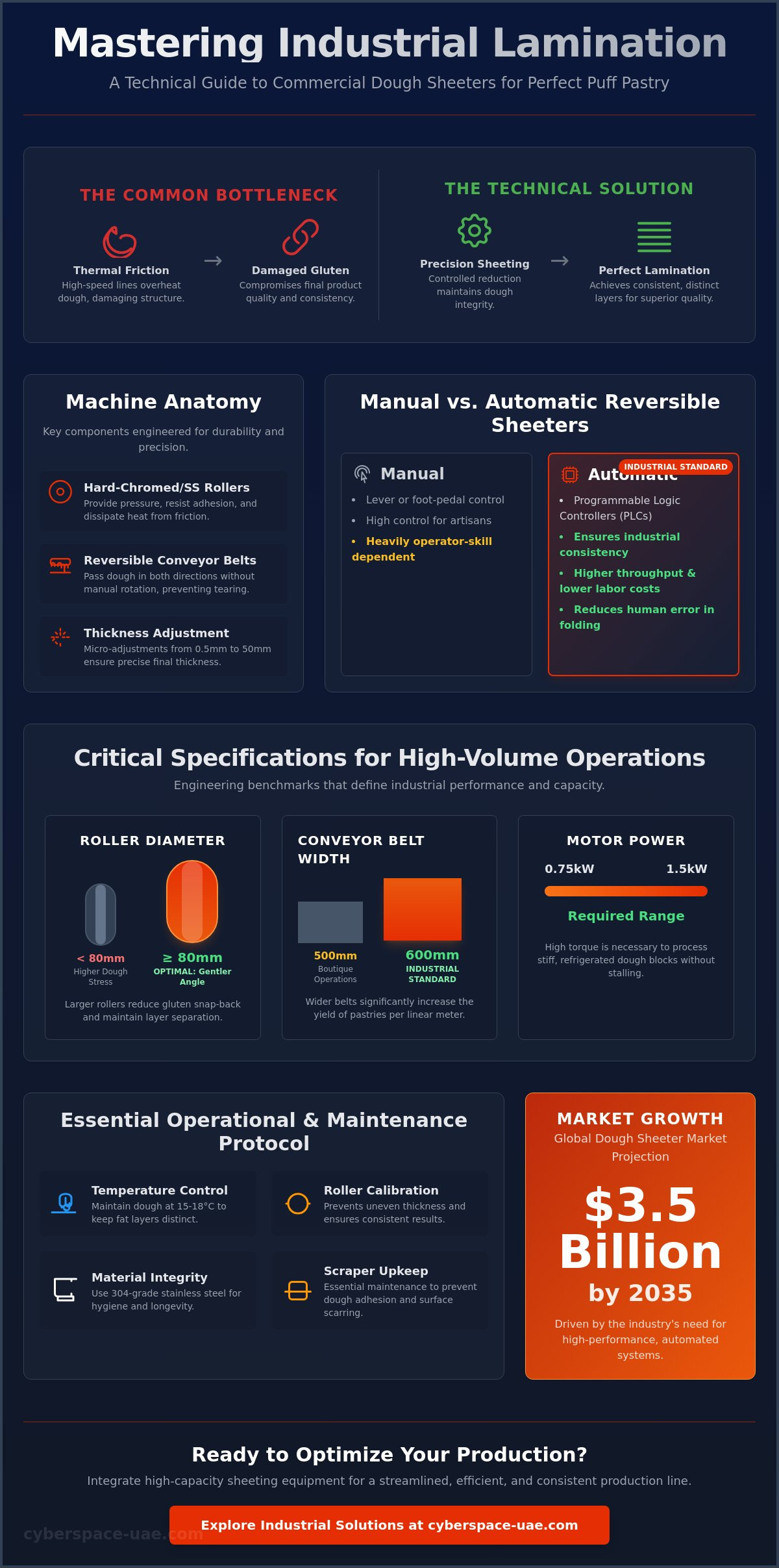
Your high-speed production line is likely destroying your puff pastry's delicate gluten structure through thermal friction. Precision lamination is a function of roller calibration and temperature control, not just machine speed. Selecting the right commercial dough sheeter for puff pastry is the only way to prevent dough fatigue while maintaining industrial throughput. Mechanical failure and inconsistent layer formation are common bottlenecks that compromise final product quality.
Consistent results require a shift from manual labor to automated precision. The global dough sheeter market is projected to grow to $3.5 billion by 2035, driven by the industry's need for these high-performance systems. This technical guide outlines the selection criteria and operational protocols necessary for mastering industrial lamination. We examine roller gap accuracy, belt speed synchronization, and thermal management strategies. You'll learn how to optimize your equipment for uniform thickness and maximum efficiency in high-volume croissant and puff pastry production. The objective is clear: achieve perfect lamination through technical excellence and reliable mechanical performance.
Key Takeaways
- Identify optimal roller diameters and belt width specifications to minimize gluten stress and maximize industrial output.
- Master the precise operational protocols for a commercial dough sheeter for puff pastry, focusing on temperature synchronization between dough and fat blocks.
- Implement essential maintenance routines for roller calibration and scraper upkeep to prevent uneven thickness and surface scarring.
- Evaluate industrial procurement strategies to integrate high-capacity sheeting equipment with professional deck ovens for a streamlined production line.
Understanding the Commercial Dough Sheeter for Puff Pastry
An industrial dough sheeter is a specialized mechanical system designed to reduce dough thickness through graduated compression rollers. In professional pastry production, this equipment is the primary tool for executing the Dough sheeting process with high repeatability. A commercial dough sheeter for puff pastry must utilize reversible conveyor belts. This feature allows the operator to pass the dough through the rollers in both directions without manual rotation. It prevents structural tearing and maintains the integrity of the fat layers. It's the only way to ensure the dough doesn't become overworked or elasticated during the folding stages.
The primary components of these machines are engineered for durability and precision. High-performance models feature:
- Hard-chromed or stainless steel rollers: These provide the necessary pressure while resisting dough adhesion and corrosion.
- Conveyor belts: Synthetic materials are standard for hygiene and durability under high tension. Belt speeds are often synchronized to prevent dough bunching.
- Thickness adjustment levers: These allow for micro-adjustments, often ranging from 0.5mm to 50mm. This ensures the dough reaches the final thickness required for cutting.
Industrial bakeries must choose between floor-standing and tabletop models based on throughput requirements. Floor-standing models are the industry standard for high-volume operations. They offer longer belts, often exceeding 1200mm, and higher motor torque for processing heavy dough blocks. Tabletop models serve smaller production environments where space is limited but professional-grade lamination is still required. These compact units typically feature shorter belts and are suitable for batches under 5kg.
The Role of Mechanical Sheeting in Lamination
Achieving the "thousand-layer" structure in puff pastry requires precise mechanical compression. Manual rolling often results in uneven fat distribution and dough overheating. Mechanical sheeters maintain strict fat-to-dough ratios by ensuring every pass is uniform. Roller material is critical. Stainless steel rollers help dissipate heat generated by friction. This keeps the dough at the required 15-18°C range during high-speed cycles. It prevents the fat block from melting into the flour, which would ruin the lamination. Proper temperature control ensures the fat remains a distinct layer between the dough sheets.
Manual vs. Automatic Reversible Sheeters
Manual reversible sheeters utilize a hand lever or foot pedal to control belt direction and roller gap. These systems offer high control for artisan production but depend heavily on operator skill. Automatic sheeters use programmable logic controllers (PLCs) to automate the reduction sequence. These units ensure industrial consistency across multiple shifts. For UAE commercial bakeries, automatic systems provide higher throughput and lower labor costs. High-capacity automatic models can process larger dough blocks. This significantly increases the volume of croissants and puff pastry produced per hour compared to manual units. The shift to automation reduces human error in the folding process.
Technical Specifications for High-Volume Pastry Operations
Industrial performance depends on specific engineering benchmarks. A commercial dough sheeter for puff pastry must handle the resistance of high-fat, chilled dough without mechanical strain. Roller diameter is a primary factor. Larger rollers, typically 80mm or greater, provide a gentler entry angle. This reduces dough stress and prevents gluten snap-back, which often occurs with smaller, less powerful rollers. It's essential for maintaining the precise layer separation required in professional lamination.
Belt width dictates production capacity. While 500mm belts suffice for boutique operations, 600mm widths are the industrial standard for high-volume output. This extra 100mm allows for wider dough sheets, significantly increasing the yield of croissants or pastries per linear meter. Power requirements are equally critical. High-volume operations require motors between 0.75kW and 1.5kW. These units provide the torque necessary to process stiff, refrigerated blocks without stalling or overheating during peak production hours.
Material standards prioritize hygiene and structural integrity. Frame and roller construction should utilize 304-grade stainless steel. This material resists the corrosive effects of flour dust and cleaning chemicals while ensuring a long service life in industrial facilities. For those scaling their production floor, selecting a high-torque dough sheeter ensures consistent output under heavy loads. Choosing equipment with these specifications reduces the risk of mechanical failure during high-demand cycles.
Roller Gap Precision and Adjustment
Precision in the roller gap is essential for maintaining the integrity of laminated layers. Industrial machines typically offer a range from 0.5mm to 40mm. Initial passes require wider gaps, while final lamination stages demand micro-adjustments in 1mm increments. Adjustment handles must be constructed from heavy-duty cast alloys. Plastic components often fail under the repetitive stress of high-volume shift work. Accurate calibration ensures that the dough thickness remains uniform across the entire width of the belt, preventing waste at the cutting stage.
Belt Speed and Motor Performance
Variable speed controls allow operators to adjust the pace based on dough consistency. Delicate, high-hydration doughs require slower speeds to prevent tearing. Conversely, firm puff pastry doughs can be processed faster to improve throughput. Motor torque must remain consistent across all speed settings to prevent uneven sheeting. Safety remains a priority in industrial settings. Professional-grade commercial dough sheeter for puff pastry models must include accessible emergency stop buttons and interlocked roller guards. These features prevent accidents and ensure compliance with international safety standards.
How to Use a Commercial Sheeter for Puff Pastry
Operational success with a commercial dough sheeter for puff pastry begins before the machine is powered. Lamination relies on the alternating layers of dough and fat. These components must possess identical plasticity to extend at the same rate. If the fat is too firm, it shatters under the rollers. If it's too soft, it bleeds into the dough, destroying the intended flaky structure. Precise temperature control is the only way to maintain this balance during high-volume production cycles.
Initial sheeting requires a graduated approach. Start with a wide roller gap, typically between 25mm and 30mm, depending on the initial block height. Pass the dough through the rollers to achieve a uniform rectangle. Reduce the gap by no more than 2mm to 4mm per pass. Aggressive reductions cause mechanical stress and gluten tearing. The result should be a smooth, even sheet ready for the first sequence of folds. Consistency at this stage prevents thin spots that lead to fat leakage during the bake.
Preparing the Beurrage and Détrempe
Matching dough and butter consistency is critical. The fat block should be pliable but cold. Set the initial roller gap to approximately 15mm to flatten the beurrage into a consistent sheet. The dough (détrempe) should be slightly thicker, around 20mm, to fully enclose the fat. Ensure the edges are sealed perfectly. This prevents the fat from escaping during the first lamination pass. Aim for a final thickness of 10mm to 12mm before starting the turn sequence.
Executing Precise Folds and Turns
Standard puff pastry typically requires six single turns or a combination of single and double turns. A single turn, or letter fold, involves folding the dough into thirds. For higher-end croissant production, double turns (book folds) provide a more complex internal structure. Managing large batches requires efficient prep. Operators should utilize the correct planetary mixer bowl capacity to ensure the initial dough is mixed thoroughly and chilled before it reaches the sheeting station. This ensures the dough maintains its structural integrity throughout the multiple passes.
Resting periods are mandatory. Refrigerate the dough for 30 to 60 minutes between sheeting sessions. This allows the gluten to relax and the fat to stabilize. Skipping this step leads to dough shrinkage and uneven layers. Industrial bakeries often use blast chillers to accelerate this process without compromising the dough's internal temperature. Proper resting ensures the final product achieves the desired height and flake density in the deck oven.
Operational Consistency and Machine Maintenance
Calibration is the foundation of uniform lamination. If the rollers deviate by even 0.5mm across their width, the dough sheet becomes wedge-shaped. This causes uneven rising and structural collapse during the baking process. Regular inspection using a feeler gauge ensures the commercial dough sheeter for puff pastry operates within strict technical tolerances. Maintenance staff should check parallelism weekly to prevent cumulative errors in the lamination stack.
Scraper maintenance is equally vital for surface integrity. Scrapers remove excess flour and dough from the rollers during operation. If these components become nicked or bent, they leave "scars" on the dough surface. This compromises the aesthetic and structural quality of the final pastry layers. Operators must replace scrapers immediately if surface defects appear. Clean rollers are essential for preventing dough buildup that causes uneven pressure points.
Flour dusting protocols require a precise balance. Excess flour alters the dough's hydration levels and creates a dry, tough crumb. Insufficient dusting leads to sticking, which causes tearing during high-speed passes. Maintain a climate-controlled environment of 18°C to 22°C for the equipment. High ambient temperatures cause the machine's metal components to warm. This heat transfers to the dough, potentially softening the fat layers before the next refrigeration cycle. For professional facilities requiring high-uptime equipment, browse our range of industrial dough sheeters to maintain peak production standards.
Daily Cleaning and Hygiene Protocols
Remove all dough debris at the end of every shift. Use plastic scrapers to avoid scratching the hard-chromed or stainless steel roller surfaces. Sanitize conveyor belts using food-grade, non-corrosive chemicals to prevent bacterial growth. Inspect the safety interlocks and roller guards daily. These systems must stop the motor instantly if a guard is lifted. Reliable hygiene practices prevent cross-contamination and ensure the longevity of the synthetic belt materials.
Preventative Mechanical Maintenance
Establish a weekly lubrication schedule for internal drive chains and gears. Use only food-grade lubricants to ensure compliance with safety standards. Monitor belt tension to ensure the reversing action remains responsive. Slack belts lead to slippage and inconsistent sheeting speeds. Listen for unusual motor noise or vibrations. These symptoms often indicate bearing wear or roller misalignment. Proactive mechanical care prevents costly downtime during peak production hours.
Procuring Industrial Dough Processing Equipment in 2026
Strategic procurement in 2026 requires a focus on full-line compatibility and long-term mechanical reliability. Selecting a commercial dough sheeter for puff pastry is no longer an isolated purchase. It's an investment in a synchronized production system. UAE industrial bakeries must evaluate machinery based on its ability to handle high-fat doughs without thermal degradation. High-capacity sheeters justify their initial cost by reducing manual handling and ensuring layer consistency across multi-ton batches. The global dough sheeter market is projected to reach $3.5 billion by 2035, reflecting a significant industry shift toward this type of high-performance automation.
Operational ROI depends on throughput efficiency. High-volume facilities should prioritize floor-standing models with 600mm belt widths to maximize sheet surface area. For multi-functional kitchens where floor space is at a premium, folding belt designs allow the equipment to be stored compactly when not in use. Cyberspace Kitchen & Bakery Equipment provides brand-new, professional-grade machinery designed for industrial rigorousness. The company doesn't offer used or refurbished units. This ensures that every component, from the motor to the synthetic belts, meets 2026 performance and hygiene standards from day one.
Integrating Sheeters into a Production Line
A streamlined workflow requires equipment that matches the pace of the entire facility. Operators must select sheeters that integrate seamlessly with baking deck oven suppliers to ensure a continuous product flow. Aligning sheeter output with industrial rotary baking oven capacity prevents bottlenecks at the loading stage. It's essential to match the sheeter's maximum width to standard baking tray sizes, typically 400x600mm or 600x800mm. This allows for direct cutting and traying, which minimizes dough scrap and reduces the time dough spends at room temperature before entering the prover or blast chiller.
After-Sales Support and Technical Services
Industrial dough processing units require a robust support network to maintain 24/7 uptime. Procuring through established channels ensures access to genuine spare parts, including replacement scrapers, belts, and calibrated roller handles. On-site technical support is a critical consideration for national commercial clients who can't afford extended downtime. Operator training is equally important. Professional training ensures that staff can operate the commercial dough sheeter for puff pastry safely and efficiently. This reduces the risk of mechanical damage caused by incorrect gap settings or improper cleaning techniques. Reliable technical services protect the machinery's lifespan and ensure consistent puff pastry quality over years of industrial use.
Optimizing Industrial Lamination Infrastructure
Achieving industrial-grade results requires a commitment to mechanical precision and consistent maintenance protocols. As established, the interaction between roller gap accuracy and dough temperature determines the quality of the final crumb. Utilizing a high-performance commercial dough sheeter for puff pastry allows for the exact layer separation necessary to meet professional bakery standards. Proper integration with existing deck ovens and provers ensures that the lamination remains stable throughout the entire production cycle without structural failure.
Cyberspace Kitchen & Bakery Equipment serves as an authorized UAE distributor for high-end industrial brands, specializing exclusively in brand-new, high-performance machinery. The company ensures that every unit is backed by national technical support and immediate parts availability to prevent operational downtime. This focused approach provides the mechanical reliability required for high-volume shift work in professional facilities. It's the most direct route to ensuring your facility maintains peak efficiency while producing superior laminated products.
View Our Professional Dough Sheeter Range to secure your production line's future. Maintain technical excellence in every batch.
Frequently Asked Questions
What is the ideal roller gap for the final pass of puff pastry?
The ideal roller gap for the final pass typically ranges between 2mm and 4mm. This setting depends on the specific product thickness required for cutting and baking. Reducing the gap too aggressively in the final stages can damage the laminated layers. Micro-adjustments ensure the dough achieves a uniform thickness across the entire sheet without tearing the internal fat distribution. Proper calibration at this stage is essential for consistent rising in the deck oven.
Can a commercial dough sheeter be used for pizza and fondant?
A commercial dough sheeter for puff pastry is highly versatile and capable of processing pizza dough and fondant. These machines handle various dough densities by adjusting the roller gap and pressure settings. While puff pastry requires precise temperature control, pizza dough benefits from the machine's ability to achieve consistent diameters. Fondant sheeting requires clean rollers to prevent surface imperfections. This versatility makes the equipment a valuable asset for multi-functional commercial kitchens.
How much flour dusting is required to prevent sticking without drying the dough?
Use the minimum amount of flour required to prevent the dough from adhering to the rollers or belts. Excessive dusting alters the dough's hydration and creates a dry, floury finish on the final pastry. Operators should apply a fine, even mist of flour rather than large clumps. This balance maintains the dough's elasticity while ensuring smooth passage through the mechanical sheeting system. Excess flour can also lead to buildup on the scrapers, causing surface scarring.
What are the electrical requirements for an industrial sheeter in the UAE?
Industrial sheeters in the UAE generally require either 220-240V single-phase or 380-415V three-phase power supplies. High-capacity floor models often utilize three-phase electricity to provide the necessary torque for processing heavy dough blocks. It's essential to verify the specific kW rating and plug configuration of the unit to ensure compatibility with your facility's electrical infrastructure. Proper grounding is also mandatory to ensure operator safety during high-volume production cycles.
How often should the conveyor belts on a dough sheeter be replaced?
Conveyor belts typically require replacement every two to five years depending on production volume and maintenance quality. Signs of wear include fraying edges, surface cracking, or persistent sticking despite proper cleaning. Regular sanitization with non-corrosive chemicals extends belt life significantly. Replacing belts promptly prevents dough contamination and ensures the reversing mechanism functions without slippage or mechanical lag. It's a critical part of preventative maintenance for any industrial bakery facility.
What is the difference between a floor-standing and a benchtop sheeter?
Floor-standing models offer longer conveyor belts and higher motor torque for large-scale industrial output. These units are designed for continuous use and can process dough blocks exceeding 10kg. Benchtop or tabletop sheeters are compact alternatives for kitchens with limited space. They feature shorter belts and lower processing capacities, making them suitable for smaller batches or boutique pastry production. The choice depends on your daily throughput requirements and available floor area.
Can I use a dough sheeter for high-hydration sourdough?
High-hydration sourdough can be processed using a commercial dough sheeter for puff pastry, provided the rollers are properly dusted. Sticky doughs require slower belt speeds and gradual gap reductions to prevent tearing the fragile gluten network. The precision of industrial rollers allows for consistent degassing and shaping of sourdough sheets, which is difficult to achieve through manual rolling. This mechanical approach ensures uniform results across every batch of artisan bread products.
How does dough temperature affect the sheeting process?
Dough temperature is the most critical factor in the sheeting process. Ideally, dough should remain between 15°C and 18°C during lamination. If the temperature rises, the fat layers soften and merge into the flour, destroying the flaky structure. Cold dough remains firm, allowing the rollers to compress the fat and dough into distinct, uniform layers without mechanical bleeding. Maintaining a climate-controlled environment for the sheeter helps stabilize these temperatures during operation.