
Commercial Dough Sheeter Price in UAE: Industrial Procurement Guide 2026
A single millimeter of variance in lamination thickness can compromise an entire production batch of five hundred croissants. In the high-demand industrial baking sector of the Emirates, inconsistent dough bands lead to wasted materials and increased labor costs. You know that equipment failure during a peak production cycle is more than a technical glitch; it's a significant operational risk. When analyzing the commercial dough sheeter price in UAE, the focus must shift from basic capital expenditure to the mechanical precision and motor duty cycles that define industrial-grade performance.
This technical guide breaks down the procurement standards for 2026, focusing on equipment longevity in high-temperature environments and the automation features required to reduce manual intervention. We'll examine the specific hardware configurations that ensure uniform output and the regulatory landscape, including HACCP compliance and UAE food safety systems. You'll gain a clear understanding of the specifications that justify industrial investment, moving beyond entry-level models to high-throughput solutions that maintain lamination integrity under continuous operation.
Key Takeaways
- Identify how reversible bi-directional conveyors maintain lamination integrity and cold fat layers for consistent pastry production.
- Analyze technical specifications, including roller diameter and motor output, that determine the commercial dough sheeter price in UAE.
- Select between floor-standing and tabletop models based on throughput capacity and kitchen space optimization.
- Establish preventative maintenance protocols for belt tensioning and roller cleaning to minimize operational downtime.
- Understand procurement standards for brand-new industrial equipment featuring heavy-duty stainless steel components.
The Role of Reversible Sheeters in Commercial Pastry Production
A reversible sheeter is a specialized industrial tool. It utilizes a bi-directional conveyor system to pass dough through rollers in both directions. This removes the manual labor required to rotate dough by hand between passes. For high-volume industrial bakeries, this mechanical efficiency is a primary driver of the commercial dough sheeter price in UAE. The ability to process large dough blocks without manual handling reduces labor costs and significantly increases hourly throughput. It's a fundamental requirement for any facility aiming for industrial-scale pastry output.
Versatility is another core advantage of the reversible design. These machines are essential for producing croissants, puff pastry, and danish dough. They also handle specialized flatbreads common in the regional market. By automating the thickness reduction process, bakeries achieve a level of consistency that manual rolling cannot match. The machine ensures that every dough band has a uniform thickness from end to end. This uniformity is vital for predictable baking times and standardized product quality across multiple batches.
Mechanics of Reversible Dough Processing
Industrial Dough sheeting technology relies on precise belt synchronization. Reversible conveyors eliminate dough stress by ensuring the input and output belts move at speeds that prevent pulling or bunching. This technical precision prevents gluten over-development; a common issue that results in tough, rubbery pastry. High-grade scrapers are integrated into the roller assembly. These components prevent flour buildup and maintain hygiene by continuously cleaning the rollers during operation. It's a simple yet vital mechanism for maintaining high-throughput production runs without frequent stops for cleaning.
Industrial Standards for Laminated Dough
Achieving a perfect honeycomb structure in croissants requires micron-level thickness control. Industrial sheeters allow operators to reduce dough thickness in small, incremental steps. This precision protects the delicate layers of fat between the dough bands. In the UAE, where ambient kitchen temperatures can often be high, speed is a critical performance metric. Rapid processing prevents butter from melting into the dough layers. If the butter melts, the lamination is destroyed, and the pastry won't rise correctly.
Consistency is the final requirement for commercial output. When scaling production for national distribution, every pastry must meet exact specifications. Industrial reversible models provide the stability and repeatable accuracy needed for these standards. They ensure that the first batch of the morning is identical to the last batch of the shift. This reliability makes them a cornerstone of modern industrial bakery operations.
Technical Specifications Influencing Commercial Dough Sheeter Price in UAE
Industrial machinery cost is determined by component durability and mechanical precision. In the high-ambient temperatures of the UAE, motor cooling and duty cycles are critical performance factors. A higher commercial dough sheeter price in UAE often reflects superior heat dissipation systems and higher torque motors capable of continuous operation. These technical specifications ensure the machine maintains performance during peak production hours without thermal shutdown.
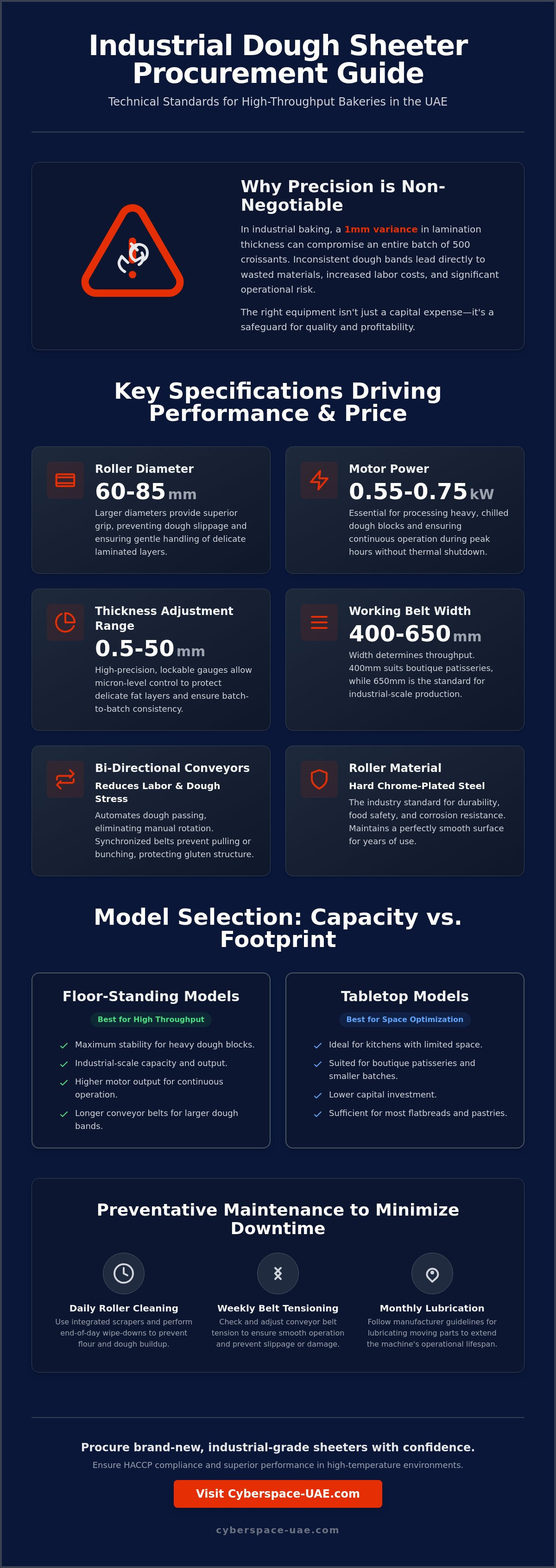
- Roller Diameter: Larger diameters, typically ranging from 60mm to 85mm, provide superior grip. This prevents dough slippage and ensures gentle handling of delicate laminated layers, which is vital for croissant production.
- Motor Power: Industrial requirements demand 0.55kW to 0.75kW motors. This power level is necessary for processing heavy, chilled dough blocks that offer high resistance during the initial reduction passes.
- Belt Dimensions: Working widths range from 400mm for boutique patisseries to 650mm for industrial bakeries. Belt length must also be considered to accommodate the maximum dough band extension.
- Thickness Adjustment: High-precision, lockable gauges are essential. These allow operators to set and maintain consistent thickness from 0.5mm to 50mm across multiple batches.
Roller and Belt Material Standards
Hard chrome-plated rollers are the industry standard for durability and food safety. They resist corrosion and maintain a perfectly smooth surface over years of intensive use. Stainless steel rollers are an alternative for environments with extreme hygiene requirements. Conveyor belts are typically available in synthetic or cotton materials. Synthetic belts offer superior traction and cleaning efficiency, which is critical when handling high-fat doughs that tend to stick. Premium models often feature non-stick coatings to prevent dough tearing during the final, thinnest passes.
Control Mechanisms: Manual Lever vs Foot Switch
Operational control directly impacts throughput and safety. Manual levers provide tactile feedback during the initial dough passes where thickness reduction is most aggressive. However, foot switches are advantageous for high-speed cycles. They enable hands-free operation, allowing the baker to manage the dough band as it exits the rollers. Ergonomics and safety are major considerations in 24/7 bakery environments. Compliance with OSHA bakery equipment standards ensures that emergency stops and safety guards are correctly integrated. For facilities prioritizing efficiency, brand-new industrial sheeters with dual control options offer the most flexibility for varied production schedules.
Floor-Standing vs Tabletop Reversible Models: Capacity and Stability
The choice between floor-standing and tabletop reversible models is a strategic decision for any bakery. It directly impacts the initial commercial dough sheeter price in UAE and the long-term operational efficiency of the facility. Floor-standing units are the standard for industrial bakeries requiring continuous, high-volume output. Tabletop models serve boutique patisseries where floor space is limited but mechanical precision remains a mandatory requirement. High-capacity floor units provide the necessary stability to handle heavy dough blocks without compromising lamination quality.
Structural stability is a primary differentiator. Floor-standing units feature heavy, cast-iron or reinforced steel bases designed to absorb the mechanical vibrations of high-speed processing. This prevents the machine from shifting during operation, which is critical for maintaining precise thickness across long dough bands. When scaling an industrial facility, these units must be integrated correctly with other professional baking equipment in the UAE. A streamlined production line requires equipment that matches the throughput of high-capacity deck and rotary ovens.
Floor-Standing Units for Industrial Volume
Industrial floor models offer extended belt lengths, often reaching 2400mm or more. This allows for processing significantly larger dough batches in a single pass, reducing the total number of cycles required. These units incorporate enhanced motor cooling systems designed for continuous operation in the UAE's specific climate conditions. The increased weight manages the torque generated by 0.75kW motors, ensuring the rollers don't deviate from their set calibration under heavy load. Analyzing the baking industry's economic impact shows that equipment reliability is a key factor in maintaining competitive margins for large-scale producers. Many floor models also feature foldable conveyors to save space during cleaning or downtime.
Tabletop Solutions for Boutique Outlets
Tabletop sheeters provide industrial-grade precision within a compact footprint. They typically feature 400mm to 500mm belt widths and are compatible with standard 220V single-phase power. This makes them ideal for smaller commercial outlets, hotel pastry kitchens, or specialized chocolate shops. While these units have lower throughput limits than floor models, they utilize the same high-precision roller technology. The commercial dough sheeter price in UAE for tabletop units is generally lower, reflecting their suitability for lower-volume production where space optimization is the primary constraint. They offer a portable solution for facilities that require automated sheeting but don't have the floor area for permanent, large-scale installations.
Operational Calibration and Preventative Maintenance for Industrial Output
Mechanical reliability is a direct result of consistent maintenance. Failing to maintain industrial equipment leads to premature component failure and increased operational costs. In the context of the commercial dough sheeter price in UAE, protecting your capital investment requires a rigorous preventative schedule. Daily protocols ensure that high-precision rollers continue to deliver uniform dough bands without unscheduled downtime. A well-maintained sheeter preserves its resale value and operational efficiency throughout its service life.
- Daily Cleaning: Scrapers must be removed and cleaned every shift to prevent dough buildup. Rollers require non-abrasive cleaning to maintain surface integrity and meet HACCP hygiene standards across the Emirates.
- Belt Tensioning: Belts must be checked for uniform tension. Loose belts cause dough stretching or tearing, while over-tightening puts unnecessary strain on drive bearings and motors.
- Drive Chain Lubrication: Reversing gears and drive chains require regular lubrication. This ensures smooth mechanical transitions when switching conveyor directions during rapid lamination cycles.
- Thickness Verification: Mechanical gauges can drift over time. Weekly verification against physical dough measurements is necessary for maintaining strict quality control standards.
Operational Calibration Procedures
Precision lamination requires micron-level accuracy. Operators must zero the thickness gauge at the start of each shift to ensure the rollers are perfectly aligned at the minimum setting. Identifying belt misalignment early prevents edge fraying and uneven dough tracking. To test roller parallelism, pass a small test dough strip through both ends of the rollers to verify uniform thickness across the entire working width. These steps eliminate variance before large-scale production begins, ensuring every croissant meets the required specification.
Preventative Maintenance for Industrial Motors
Industrial motors are susceptible to heat buildup during peak lamination cycles in warm kitchen environments. Monitoring motor temperature prevents thermal overload and winding damage. It's essential to ensure the facility provides a stable power supply within the UAE national commercial grid parameters to avoid voltage fluctuations. Integrating these steps into broader maintenance protocols for commercial machinery supports overall kitchen health. For facilities requiring high-uptime performance, procure industrial-grade components to ensure long-term mechanical stability.
Procurement of Brand-New Industrial Sheeters from Cyberspace
Cyberspace Kitchen & Bakery Equipment facilitates the procurement of high-performance, brand-new reversible dough sheeters for the UAE market. The focus remains strictly on industrial-grade hardware designed for the rigors of 24/7 production cycles. Every unit features heavy-duty construction utilizing high-grade stainless steel and reinforced mechanical components. This ensures equipment longevity and hygiene in high-volume environments. When evaluating the commercial dough sheeter price in UAE, industrial buyers must prioritize new machinery over refurbished alternatives. New equipment guarantees compliance with the unified national food safety system and provides predictable maintenance cycles that used units can't match.
Efficient production lines require integrated solutions. Cyberspace Kitchen & Bakery Equipment supports the synchronization of sheeters into complete dough processing systems. This includes alignment with a professional dough processing and mixing machinery guide to ensure throughput consistency from mixing to final lamination. National distribution networks ensure prompt delivery across all Emirates. Technical support is provided to maintain operational uptime for commercial food service businesses, ensuring that peak production periods remain uninterrupted.
The Cyberspace Kitchen & Bakery Equipment Advantage
Direct procurement through Cyberspace Kitchen & Bakery Equipment provides access to professional-grade tools tailored for high-end bakeries and industrial facilities. There's no compromise on quality; the inventory consists exclusively of brand-new units without refurbishment or secondary market parts. Expert consultation is available for operators scaling their industrial kitchens or establishing new production lines. This technical guidance helps in selecting equipment that matches specific production targets and motor duty cycle requirements. The brand persona is that of an efficient facilitator, positioning itself as a streamlined gateway to professional-grade solutions. It avoids the complexities of secondary markets by offering only high-performance industrial tools that meet 2026 standards.
Procurement and Consultation
Industrial buyers can request detailed technical specifications and quotes tailored to their specific production volumes. This ensures the hardware matches the duty cycle requirements of the facility and prevents premature motor wear under heavy load. Cyberspace Kitchen & Bakery Equipment coordinates national delivery and industrial setup for new bakery installations across the UAE. This end-to-end facilitation minimizes the transition time from procurement to production. For detailed information and technical pricing requests, contact Cyberspace Kitchen & Bakery Equipment for industrial dough sheeter specifications. The process is designed to be direct, professional, and optimized for business efficiency.
Optimizing Industrial Bakery Output for 2026
Industrial lamination requires precision mechanics and rigorous maintenance to ensure product consistency. Selecting the correct machinery involves a technical evaluation of roller diameters, motor duty cycles, and structural stability. While the commercial dough sheeter price in UAE varies based on these specific hardware configurations, the long-term ROI is found in equipment that maintains performance under continuous load. Brand-new hardware eliminates the risks associated with refurbished units and ensures full compliance with national food safety standards.
Cyberspace is a specialized supplier of Rational and industrial-grade baking machinery. With a focus on high-performance, brand-new equipment and national UAE distribution, we provide the tools required for industrial reliability. High-performance sheeters are essential for scaling production while reducing labor costs and material waste. Precision in procurement today ensures operational excellence for your facility tomorrow. We invite you to explore our technical specifications for your next facility upgrade.
View Industrial Dough Sheeters for Commercial Bakeries
Frequently Asked Questions
What is the primary advantage of a reversible dough sheeter for croissant production?
The primary advantage is the ability to achieve precise lamination without manual handling. By reversing the conveyor direction, operators reduce dough thickness incrementally while maintaining the integrity of fat layers. This speed is critical in the UAE climate to prevent butter from softening during the reduction process. It ensures the final product achieves the desired honeycomb structure.
How do I choose between a manual and an automatic dough sheeter for high-volume output?
Automatic sheeters are preferred for high-volume output because they utilize programmable thickness sequences. This ensures every batch is identical regardless of the operator. Manual models require constant physical adjustment of the lever. When considering the commercial dough sheeter price in UAE, industrial facilities invest in automation to reduce labor costs and eliminate human error in thickness calibration.
What width of conveyor belt is considered standard for commercial bakeries in the UAE?
Standard conveyor belt widths for industrial bakeries range from 500mm to 650mm. These dimensions accommodate large dough blocks and provide the throughput necessary for commercial deck and rotary ovens. Smaller boutique kitchens often utilize 400mm belts to optimize floor space. Selecting the correct width depends on the maximum width of the dough band required for your specific pastry products.
Can a reversible dough sheeter handle stiff doughs like pizza or artisan bread?
Reversible sheeters can process stiff doughs if equipped with high-torque motors and reinforced drive chains. Pizza and artisan bread doughs offer higher resistance than laminated pastry doughs. Industrial models with 0.75kW motors are recommended for these applications. Heavy-duty rollers with hard chrome plating prevent surface damage when processing low-hydration doughs that require significant pressure for thickness reduction.
How often should the rollers and scrapers be cleaned in a high-volume industrial setting?
Rollers and scrapers must be cleaned at the end of every production shift or every 8 hours of continuous operation. This frequency prevents flour and dough buildup that can cause sticking or tearing in subsequent batches. Regular cleaning is a mandatory requirement for maintaining HACCP compliance within UAE food safety regulations. It also extends the life of the scraper blades by preventing hardened dough from causing friction damage.
What are the electrical power requirements for industrial reversible sheeters in the UAE?
Industrial reversible sheeters in the UAE typically require 400V three-phase electrical connections. This power configuration supports the high-torque motors needed for continuous industrial output. Compact tabletop models are usually compatible with standard 220V single-phase power. It's essential to verify the facility's electrical capacity before procurement to ensure stable operation within national commercial grid parameters.
Is a floor-standing sheeter more durable than a tabletop model for 24/7 production?
Floor-standing models are significantly more durable for 24/7 production environments. They feature reinforced steel frames and cast-iron bases that provide superior vibration damping compared to tabletop units. This stability is critical when processing heavy dough blocks at high speeds. While tabletop models offer precision, they aren't designed for the mechanical stress of continuous industrial-scale manufacturing cycles common in large UAE bakeries.
How does roller diameter affect the quality and consistency of laminated dough?
Roller diameter directly influences the grip and the angle of attack on the dough block. Larger diameters, such as 80mm, provide a gentler reduction that prevents the dough from being crushed or torn. This is vital for maintaining the distinct layers in laminated doughs. Consistent roller pressure across the entire width ensures that the dough band maintains uniform thickness, which is a key performance metric for industrial output.