
Commercial Dough Sheeter Troubleshooting and Technical Maintenance Guide
Most commercial dough sheeter failures are symptoms of improper cleaning and calibration rather than terminal mechanical collapse. When production stops due to sticking or inconsistent thickness, the priority is rapid restoration of output. Effective commercial dough sheeter troubleshooting requires a systematic approach to identify mechanical, electrical, or hygiene-related issues. You understand that unplanned downtime and wasted ingredients represent significant operational risks to your bottom line.
We agree that maintaining equipment at peak performance is essential for high-volume pastry production. This guide outlines professional diagnostic protocols designed to resolve common industrial failures and ensure machinery meets strict HACCP hygiene standards. You'll learn to identify early warning signs of component wear and implement cleaning standards that prevent costly repairs. We provide a technical overview of maintenance procedures to extend equipment lifespan and ensure consistent product quality across every shift.
Key Takeaways
- Categorize equipment failures into mechanical, electrical, and operational groups to streamline the diagnostic process.
- Identify how roller misalignment and scraper blade wear contribute to inconsistent pastry thickness and dough wrapping.
- Apply professional commercial dough sheeter troubleshooting protocols to resolve dough tearing and sticking caused by ambient humidity or residue.
- Implement a tiered cleaning hierarchy including daily, weekly, and monthly tasks while strictly avoiding liquid cleaners on internal mechanical components.
- Determine the threshold for professional intervention and analyze the ROI of repairing aging machinery versus equipment replacement.
Technical Diagnostic Framework for Industrial Dough Sheeters
A commercial dough sheeter is a precision industrial tool. It's engineered for high-volume output and exact thickness control. It's not a simple mechanical roller; it's a calibrated system designed for repeatable results. When performance drops, a structured diagnostic path is required. Minor output variances often signal deeper mechanical or electrical fatigue. Understanding the fundamentals of Dough Sheeting Technology helps operators identify exactly where the process is failing.
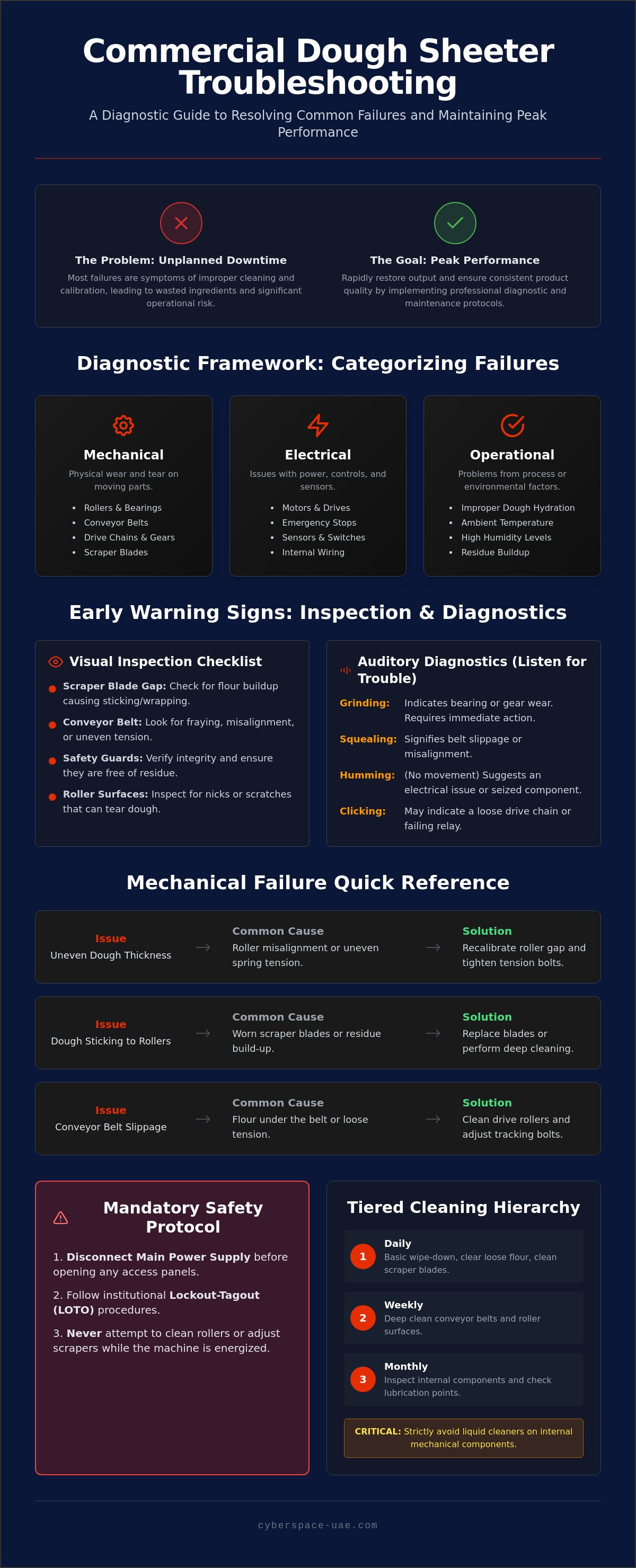
Effective commercial dough sheeter troubleshooting requires categorizing failures into three distinct groups. Mechanical failures involve rollers, conveyor belts, and drive chains. These are standard wear-and-tear components. Electrical failures focus on motors, emergency stops, sensors, and internal wiring. Operational failures usually stem from improper dough hydration, ambient temperature, or environmental humidity levels. Primary indicators of malfunction include unusual noise, excessive vibration, and variance in dough thickness. Even a 1mm variance can disrupt a high-speed production line.
Safety protocols are mandatory. Disconnect the main power supply before opening any access panels. Lockout-tagout procedures should be followed to prevent accidental activation during inspection. Never attempt to clean rollers or adjust scrapers while the machine is energized. Operational safety depends on strict adherence to these electrical isolation standards.
Visual Inspection Standards
Routine visual checks identify issues before they cause downtime. Inspect the gap between the scraper blades and rollers. Flour build-up here causes dough to stick or wrap around the cylinders. Examine the conveyor belt for fraying or misalignment. A belt that drifts to one side indicates uneven tension or worn drive rollers. Verify the integrity of all safety guards. Emergency stop switches must be responsive and free of dough residue. Check the roller surfaces for nicks or scratches. Even small imperfections can mar delicate pastry layers and cause tearing during the reduction process.
Auditory Diagnostics
Sound provides immediate data on machine health. Grinding noises typically indicate bearing or gear wear. This requires immediate lubrication or component replacement to avoid a total seize. Squealing sounds usually signify belt slippage or misalignment. This often happens when drive belts are stretched or contaminated with flour dust. Detect motor humming carefully. A steady hum without mechanical movement suggests an electrical phase issue or a seized drive component. Listen for clicking sounds which may indicate a loose drive chain or a failing relay. Address these auditory cues immediately to prevent total motor failure and extended production halts.
Mechanical Failure Points: Rollers and Conveyor Systems
Mechanical integrity directly dictates output quality. Roller misalignment is a frequent cause of uneven pastry layers. When one side of the roller assembly exerts more pressure than the other, the dough tapers. This inconsistency compromises product uniformity and bake times. Scraper blade wear represents another critical failure point. Worn or bent blades fail to cleanly peel dough from the roller surface. This results in the "dough wrapping" effect, where material cycles back into the intake. This leads to immediate jams and significant motor strain. High-volume environments require strict gear lubrication schedules. Use only certified food-grade lubricants to prevent metal-on-metal friction. Failure to maintain these components leads to catastrophic gear stripping. Following OSHA Bakery Equipment Standards ensures all mechanical maintenance occurs within a safe, regulated framework.
Mechanical Troubleshooting Reference
- Issue: Uneven dough thickness. Cause: Roller misalignment or uneven spring tension. Solution: Recalibrate roller gap and tighten tension bolts.
- Issue: Dough sticking to rollers. Cause: Worn scraper blades or residue build-up. Solution: Replace blades or perform deep cleaning.
- Issue: Belt slippage. Cause: Flour under the belt or loose tension. Solution: Clean drive rollers and adjust tracking bolts.
Roller Calibration and Gap Management
Precision calibration is essential. Verify handle accuracy against actual roller gap measurements using a feeler gauge. Don't rely solely on the external dial. Inspect rollers for pitting or scoring. These marks often come from foreign objects like metal scrapers. Such imperfections mar the dough surface and cause tearing. Adjust tension springs to ensure uniform pressure across the entire roller width. This is especially vital for laminated doughs where precision is paramount. If mechanical inconsistencies persist despite calibration, upgrading to professional-grade dough sheeters may be necessary for operational stability.
Conveyor Belt Maintenance
Conveyor belt tracking issues lead to edge fraying and potential contamination. Clean the underside of belts daily. Flour accumulation on the drive rollers causes slippage and inconsistent belt speed. Inspect belt lacing and seams for structural failure. Frayed edges are a clear sign the belt is striking the machine frame. Reset tracking bolts to center the belt during operation. Use small, incremental adjustments. Large turns can overcorrect and cause immediate belt damage. Maintain surface tension that prevents sagging without overloading the motor bearings.
Operational Inconsistencies: Dough Tearing and Sticking
Environmental conditions dictate machine settings. In high-humidity regions, flour absorbs moisture from the air, which increases surface tackiness. This requires recalibrating hydration levels to prevent sticking during the rolling process. Use the WBDG Food Preparation Equipment Standards to ensure your operational environment meets technical specifications for industrial kitchens. Sticking often occurs when scraper blade residue accumulates, creating friction that pulls at the dough surface. This buildup creates a feedback loop where more dough adheres to the roller, eventually causing a jam.
Tearing is frequently a result of aggressive reduction ratios. Attempting to reduce thickness too quickly stresses the gluten structure beyond its elastic limit. Over-chilled dough also lacks the flexibility needed for rapid compression. Effective commercial dough sheeter troubleshooting involves verifying that the reduction steps don't exceed a 2:1 ratio per pass. Additionally, flour dust accumulation on internal optical sensors can disrupt automated cycles. This leads to timing errors that snag the dough between the conveyor and the rollers. Keep sensor lenses clear to maintain precise belt synchronization.
Managing Dough Consistency in UAE Climates
High ambient temperatures in the UAE destabilize fats in laminated doughs. This leads to melting and immediate sticking to the rollers. Operators must use professional baking equipment to maintain precise dough temperatures throughout the sheeting process. Controlled hydration is critical. Reduce liquid input by 2% to 3% during peak humidity months to maintain dough structural integrity. Implement resting periods of 20 to 30 minutes between reduction stages. This allows the gluten to relax, which prevents tearing during the final passes.
Scraper Blade Optimization
Scraper blade optimization is a technical requirement for consistent output. Plastic blades are suitable for soft, high-hydration doughs, while brass blades offer higher durability for stiffer, low-hydration batches. Ensure blades are flush against the roller surface. Even a 0.5mm gap allows flour paste to build up, causing the dough to wrap. Replace blades immediately if they show nicks or uneven wear patterns. Scraper maintenance is the most cost-effective way to improve output consistency and prevent commercial dough sheeter troubleshooting escalations.
Technical Cleaning Protocols for Performance Recovery
Performance recovery depends on a rigorous cleaning hierarchy. Neglecting sanitation leads to flour compaction, which accounts for significant mechanical drag and motor strain. A structured schedule consisting of daily, weekly, and monthly deep dives is mandatory. This routine ensures compliance with HACCP hygiene standards and prevents cross-contamination. Most commercial dough sheeter troubleshooting scenarios originate from accumulated debris interfering with precision components. Establish these protocols as a baseline for operational excellence. Monthly inspections should include a full removal of conveyor belts to access the internal frame and drive rollers where flour often hides and ferments.
Strictly prohibit the use of water or liquid cleaners on internal mechanical parts. Moisture induces oxidation in bearings and electrical short circuits in control boards. Use only food-grade dry lubricants for all moving components. Unlike standard grease, dry lubricants don't attract flour dust. This prevents the formation of abrasive pastes that accelerate gear wear. Applying the wrong lubricant type is a primary cause of premature mechanical failure in high-volume bakeries. Technical literacy regarding lubricant compatibility is essential for maintenance staff.
Daily Dry Cleaning Procedure
Execute dry cleaning at the end of every shift. Use soft-bristled brushes and plastic scrapers to remove excess flour from rollers and conveyor surfaces. Avoid metal scrapers to prevent surface scoring. Vacuum flour dust from motor vents and cooling fans. Dust insulation causes heat buildup and reduces motor efficiency. Wipe external stainless steel surfaces with food-safe sanitizing cloths. Ensure the machine is fully disconnected from power before addressing areas near the scraper blades or drive assembly. This prevents accidental activation during manual cleaning cycles.
Deep Maintenance and Lubrication
Conduct deep maintenance weekly to address internal wear. Inspect drive chains for proper tension and apply food-grade lubricant. Chains that are too loose cause jerky movement and uneven dough reduction. Clean the internal drive rollers to ensure maximum belt grip. This prevents the slippage issues identified in previous sections. Check and tighten all mechanical fasteners and set screws. Continuous vibration from industrial use often loosens these components, leading to misalignment. Verify the integrity of the motor mounting bolts to ensure the drive assembly remains stable under heavy load. If your current equipment requires excessive maintenance, consider exploring high-performance dough sheeters designed for easier cleaning access.
Professional Service and Equipment Replacement Standards
Internal commercial dough sheeter troubleshooting has practical limits. While routine maintenance and cleaning resolve most operational issues, certain failures require professional technical intervention. Attempting to repair complex electrical systems or internal drive mechanisms without specialized tools often leads to secondary damage. Determine the threshold for service based on the severity of the malfunction and the potential for production downtime. A well-maintained industrial sheeter typically has an operational lifespan of 10 years. If the machine frequently requires intervention despite following the protocols outlined in previous sections, evaluate the total cost of ownership versus the cost of a new unit.
Analyze the ROI of repairing aging machinery versus procuring new equipment. Industry standards suggest that if repair costs approach 50% of the price of a new unit, replacement is the more efficient financial decision. Older models often lack modern safety features and energy-efficient motors found in current industrial standards. Upgrading to high-capacity industrial rotary baking ovens and new sheeting lines ensures a synchronized production flow. This integration reduces bottlenecks and minimizes the labor costs associated with manual adjustments on failing equipment.
When to Call a Service Technician
Contact a technician for persistent electrical faults or control board errors. These issues often stem from failing capacitors or circuit board oxidation that requires professional diagnostic equipment. Manage complex gearbox overhauls or motor replacements through certified providers to ensure correct torque settings and alignment. Resolve structural frame issues or severe roller damage immediately. A warped frame or deeply scored roller cannot be fixed through standard cleaning and will consistently produce sub-standard dough. Professional calibration is required to restore the machine to its original factory specifications.
Procuring High-Performance Replacements
Identify key specifications for new procurement to avoid future maintenance bottlenecks. Select sheeters with easy-access cleaning features that allow for rapid belt removal and scraper inspection. Prioritize models with heavy-duty stainless steel construction to withstand high-humidity environments and rigorous sanitation chemicals. Verify that the equipment meets current safety regulations, including emergency stop bars on hoppers and interlocked guards. Contact Cyberspace for dough processing equipment tailored to UAE production volumes. Selecting a partner that understands regional environmental challenges ensures long-term equipment reliability and consistent output quality.
Optimizing Production with Technical Precision
Maintaining a high-performance bakery requires more than basic cleaning. It demands a systematic technical diagnostic framework to identify component wear before it leads to terminal mechanical failure. Consistent commercial dough sheeter troubleshooting and strict adherence to tiered cleaning protocols ensure your machinery remains HACCP compliant and operationally efficient. Addressing mechanical alignment and environmental hydration factors protects your output consistency while minimizing ingredient waste. You now have the diagnostic tools to differentiate between minor calibration issues and terminal gear fatigue.
When internal maintenance no longer yields peak efficiency, professional-grade equipment replacement is the logical next step for your facility. Cyberspace is a specialized supplier of new, high-performance industrial solutions across the UAE. We provide comprehensive national coverage and technical support for a wide range of professional-grade baking machinery. View our range of industrial dough processing equipment to secure your facility's operational future. Implementing these technical standards today ensures reliable performance and maximum equipment lifespan for your production line.
Frequently Asked Questions
How often should I lubricate my commercial dough sheeter?
Lubricate drive chains weekly and internal gears monthly using food-grade dry lubricants. Daily application is unnecessary for most industrial models and can lead to flour paste buildup. Always verify the manufacturer's technical manual for specific lubrication points. This routine maintenance prevents metal-on-metal friction and extends the operational life of the drive assembly.
What is the most common cause of dough sticking to the rollers?
The primary cause is accumulated residue on the scraper blades or improper blade tension. When the blade doesn't sit flush against the roller, a thin film of dough remains and attracts more material. Environmental factors like high humidity also increase dough tackiness. Regular commercial dough sheeter troubleshooting should prioritize blade inspection to resolve sticking issues before they cause production jams.
Can I use water to clean the conveyor belts on my sheeter?
Direct application of water to conveyor belts is prohibited as it causes belt shrinkage and internal mechanical oxidation. Use soft brushes and plastic scrapers for dry debris removal. If sanitation is required, use food-safe sanitizing cloths that evaporate quickly. Moisture trapped under the belt leads to mold growth and drive roller slippage, which compromises belt tracking and hygiene standards.
Why is my dough sheeter making a high-pitched squealing noise?
A high-pitched squeal typically indicates a slipping drive belt or worn motor bearings. Flour dust accumulation on the belt surface reduces friction, causing it to slide against the pulley. Inspect the belt tension and surface condition immediately. If the noise persists after cleaning and tensioning, the bearings likely require replacement by a qualified technician to prevent a total motor seizure.
How do I know if my scraper blades need replacing?
Replace scraper blades if they show visible nicks, warping, or if dough consistently wraps around the rollers. Inspect the blade edge for a uniform seal against the cylinder. Even a 0.5mm gap allows flour paste to accumulate, which forces the blade away from the roller. Periodic replacement is a standard part of commercial dough sheeter troubleshooting to maintain consistent output quality.
What should I do if the sheeter motor is overheating?
De-energize the machine immediately and check the motor vents for flour dust blockages. Overheating often results from restricted airflow or excessive load caused by unrelaxed, cold dough. Clean the cooling fans and allow the motor to cool completely before restarting. If the motor continues to run hot under normal load, it may indicate an internal electrical fault or failing capacitors.
Is it possible to calibrate the thickness settings myself?
Operators can calibrate thickness settings by adjusting the tension bolts on the roller handle assembly. Use a feeler gauge to measure the actual gap between the rollers and compare it to the dial setting. Adjust the mechanical stops until the dial reflects the true measurement. This ensures that a 2mm setting produces a 2mm dough sheet across the entire roller width.
Why does the dough tear when passing through the rollers?
Tearing occurs when the reduction ratio is too aggressive or the dough is too cold. Attempting to reduce thickness by more than 50% in a single pass stresses the gluten structure beyond its elastic limit. Ensure dough has rested sufficiently and is at the correct temperature for processing. Gradually decrease the roller gap in smaller increments to maintain structural integrity and prevent surface marring.