
Cost to Equip a Small Bakery in Dubai: UAE Industrial Guide 2026
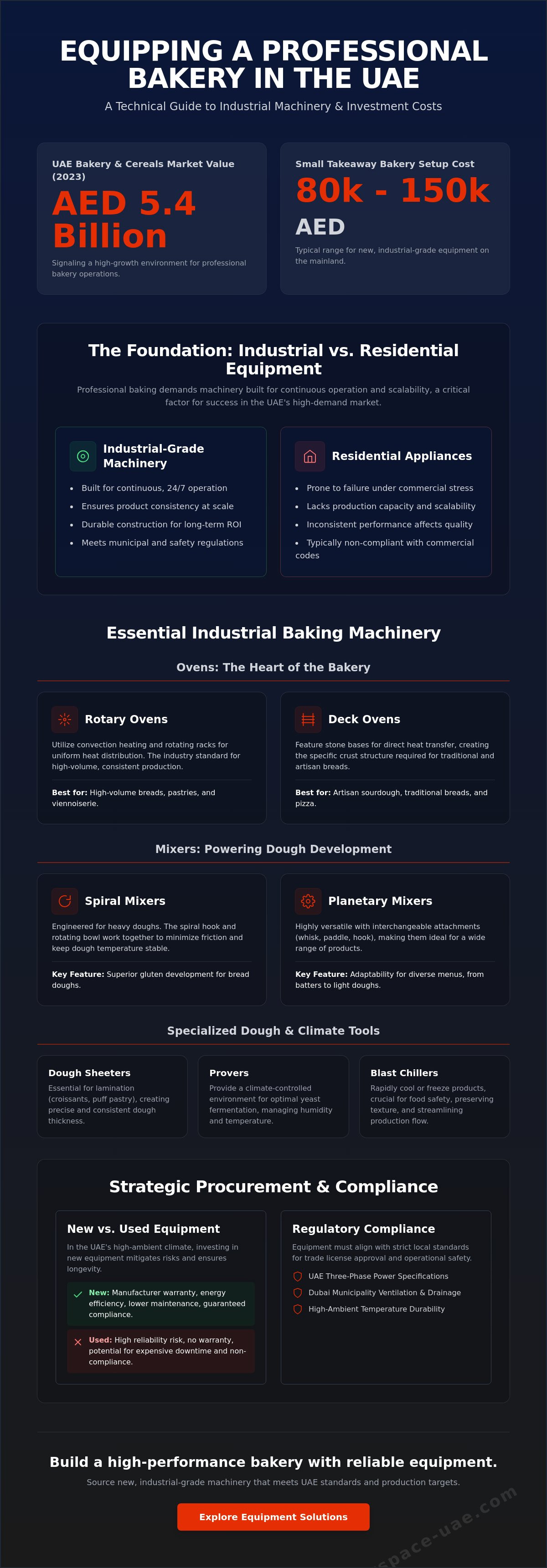
The UAE bakery and cereals industry reached a value of AED 5.4 billion in 2023, signaling a high-growth environment for professional operators. However, calculating the cost to equip a small bakery in Dubai involves more than simple retail estimates. It requires a precise analysis of industrial capital expenditure, specifically for machinery that meets UAE power standards and high-ambient temperature requirements. Total setup costs for a small takeaway bakery on the mainland typically range from AED 80,000 to AED 150,000, and securing high-performance tools is critical for operational consistency.
You likely recognize that professional baking at scale is a matter of technical reliability rather than just culinary skill. This guide provides a technical breakdown of the essential industrial machinery and investment requirements for professional bakery operations in the UAE. We examine the specific categories of high-end equipment needed, from spiral mixers to blast chillers, while clarifying the technical differences between oven types. You will find a clear roadmap for sourcing new, high-end equipment from reliable UAE suppliers to build a facility that meets both municipal regulations and production targets.
Key Takeaways
- Differentiate between residential appliances and industrial-grade machinery to ensure production scalability and durability.
- Identify the specific cost to equip a small bakery in Dubai by evaluating technical requirements for Rotary Ovens and Spiral Mixers.
- Ensure regulatory compliance by aligning equipment selection with UAE three-phase power specifications and ventilation standards.
- Optimize fermentation and lamination processes using climate-controlled Provers and industrial Dough Sheeters.
- Maximize capital investment longevity through strategic procurement of high-efficiency Rational Combi ovens and rigorous maintenance schedules.
Primary Investment Factors for Commercial Bakeries in the UAE
The UAE bakery sector is a high-growth environment. Industry value reached AED 5.4 billion in 2023, driven by a diverse population and a booming tourism sector. Establishing a professional facility requires a shift from residential-grade tools to heavy-duty industrial machinery. The total cost to equip a small bakery in Dubai is fundamentally determined by the intended production volume and the technical specifications of the equipment. Industrial machinery is built for continuous operation. Residential appliances fail under commercial stress. Professional operators must view equipment as a long-term capital asset rather than a startup expense.
Defining Industrial Scale Operations
Understanding what is a bakery in a commercial context is essential for legal compliance. In Dubai, the Department of Economy and Tourism (DET) and Dubai Municipality require specific industrial standards for food safety and operational capacity. Professional-grade machinery ensures product consistency across hundreds of units daily. Artisan bakeries focusing on sourdough may prioritize Deck Ovens for stone-base baking. High-volume retail outlets often require Rotary Ovens for rapid throughput. The choice between these technologies directly impacts your initial capital requirement and your trade license approval process.
New vs. Used Equipment Considerations
Procuring refurbished machinery carries significant reliability risks in the UAE. High ambient temperatures and humidity place extreme stress on cooling and heating components. Used equipment often lacks valid warranties. This leads to expensive downtime. Investing in new industrial tools provides manufacturer support and access to energy-efficient technology. For example, the long-term ROI of a Rational Combi oven or a specialized Spiral Mixer is higher due to lower energy consumption and reduced maintenance costs. Professional operators prioritize operational stability over low entry prices. The cost to equip a small bakery in Dubai with new machinery ensures compliance with Dubai Municipality specifications, including strict drainage and ventilation requirements.
The UAE market landscape is characterized by a demand for high-performance international brands. Suppliers must provide equipment that handles specific three-phase electrical loads. Reliability is the primary metric for success. A predictable production cycle depends on machinery that remains operational during peak demand periods. Selecting the right equipment mix at the start prevents costly retrofitting later. Focus on tools that offer modularity and technical precision to meet the evolving tastes of Dubai's multicultural market.
Essential Industrial Baking Machinery: Ovens and Mixers
Professional baking requires a thermal and mechanical foundation built for industrial stress. When calculating the cost to equip a small bakery in Dubai, the oven and mixer configuration represents the largest portion of your capital budget. These units must handle continuous cycles without thermal drift or mechanical fatigue. Technical selection depends entirely on your specific product mix and projected daily output.
Rotary vs. Deck Ovens: Technical Selection
Thermal efficiency determines your production speed and energy overhead. Rotary Ovens utilize convection heating and rotating rack systems to ensure uniform heat distribution. These are the industry standard for high-volume bread and pastry production. Single rack systems offer a compact footprint for smaller facilities, while double rack configurations maximize throughput for wholesale operations. Deck Ovens provide a different thermal profile, utilizing stone bases for direct heat transfer. This is a technical requirement for artisan sourdough and traditional breads that need a specific crust structure. Integrated steam injection features are essential for controlling humidity levels during the initial baking phase. Choosing between these systems is a critical step in defining the total cost to equip a small bakery in Dubai.
Industrial Mixing Solutions
Dough development depends on mechanical torque and speed control. Spiral Mixers are engineered for heavy doughs, featuring a rotating bowl that minimizes heat friction. This design keeps dough temperatures stable during intensive gluten development. Bowl capacity should be sized according to your largest batch requirements to maintain consistency. For operations with diverse menus, Planetary Mixers offer necessary versatility. These units support multiple attachments for whipping creams, mixing batters, and preparing light pastry doughs. Durability is achieved through heavy-duty stainless steel components and gear-driven transmissions that withstand high-torque applications. Ensuring your facility has the correct electrical infrastructure for these machines is vital for long-term ROI. You can view professional baking solutions to compare technical specifications for these essential units.
Reliability in the UAE climate requires equipment with robust cooling systems and high-grade insulation. Industrial ovens must maintain precise internal temperatures even when external ambient temperatures are high. Mixers require motors rated for continuous duty cycles. Investing in premium brands ensures that your production line remains operational during peak demand periods, preventing the revenue loss associated with equipment failure.
Specialized Dough Processing and Climate Management Tools
Precision in dough processing distinguishes professional artisanal output from basic retail baking. While ovens and mixers provide the foundation, specialized processing tools ensure the repeatability of complex recipes. Factoring in secondary machinery like lamination and fermentation units is a critical step when determining the total cost to equip a small bakery in Dubai. These tools eliminate human error and maintain product standards during high-volume shifts.
Dough Sheeters and Lamination
Laminated doughs for croissants and puff pastries require mechanical precision that manual rolling cannot achieve. Dough Sheeters utilize adjustable rollers to compress dough to exact millimeter specifications. This ensures uniform layers and consistent bake times across all batches. For small-scale industrial layouts, benchtop models offer a compact footprint without sacrificing the high-torque performance needed for cold, stiff doughs. Larger facilities may opt for floor-standing automatic units that handle higher throughput. Precise thickness control is essential for managing ingredient costs and preventing product waste. Investing in a reliable sheeter allows your bakery to expand into high-margin pastry categories with minimal labor overhead.
Fermentation and Rapid Cooling
Dubai's ambient humidity and temperature fluctuations make uncontrolled fermentation a major risk for consistency. Provers solve this by providing a sealed environment with digital humidity and temperature regulation. These units ensure that yeast activity remains predictable, resulting in uniform proofing and better crumb structure. To manage production schedules, retarder provers allow operators to delay fermentation overnight, enabling fresh baking at the start of the morning shift.
Food safety regulations in the UAE necessitate rapid temperature reduction for many baked goods and fillings. Blast Chillers are technical requirements for extending shelf life and preventing bacterial growth. These machines pull heat from products much faster than standard refrigeration, preserving the cellular structure of delicate pastries. Integrating a blast chiller into your workflow ensures compliance with Dubai Municipality food safety standards while maintaining the sensory quality of your inventory. A streamlined production line that connects proofing, baking, and rapid cooling maximizes floor space efficiency and reduces operational bottlenecks. This technical approach to climate management is vital for any professional facility seeking long-term stability in the competitive Dubai market.
Operational Infrastructure and Regulatory Compliance Costs
Operational infrastructure is a primary variable in the total cost to equip a small bakery in Dubai. Professional facilities aren't simply kitchens; they're industrial sites that must meet rigorous utility and safety standards. Neglecting these technical requirements leads to failed inspections and increased capital expenditure during the setup phase. Your machinery selection must align with the physical capabilities of your leased premises.
Electrical and Utility Specifications
Industrial baking machinery requires specific electrical configurations. Rotary Ovens and heavy-duty Spiral Mixers operate on three-phase power. Standard single-phase outlets are insufficient for the power requirements of high-wattage heating elements and high-torque motors. You'll need a qualified engineer to calculate the total load for your full industrial bakery suite. This calculation determines if the building's main breaker can handle the simultaneous operation of your ovens, provers, and refrigeration units. Water quality is another technical factor. UAE's desalinated water requires high-efficiency filtration for any machine using steam, such as Deck Ovens or Rational Combi ovens. This protects internal boilers from scale and reduces the frequency of descaling cycles.
Health and Safety Standards
Regulatory compliance in Dubai is sequential. You must obtain approvals from the Department of Economy and Tourism (DET) and the Dubai Municipality Food Control Department. A mainland trade license typically costs between AED 12,000 and AED 25,000. The food establishment permit ranges from AED 10,000 to AED 12,000. These costs are separate from the physical equipment but are essential for legal operation. HACCP compliance is mandatory. It requires precise temperature monitoring, particularly for Blast Chillers, to ensure food safety during rapid cooling phases. All food contact surfaces must be non-porous stainless steel to prevent bacterial growth and facilitate deep cleaning. For front-of-house retail sections, choosing high-performance tiling and storage from specialists like NY Cabinets can ensure your bakery's aesthetic matches its industrial-grade sanitation.
The UAE climate necessitates robust extraction systems. Ventilation must be capable of removing high heat loads to maintain a workable ambient temperature for both staff and machinery. High-heat equipment requires specific safety clearances from walls and combustible materials to prevent fire hazards. Planning for these infrastructure needs early in the process ensures a streamlined path to your final municipal approval. You can source compliant industrial machinery that aligns with these strict UAE operational standards and power requirements.
Longevity depends on environmental control. Extreme ambient heat places additional stress on equipment cooling systems. Industrial machinery must be rated for high-ambient operation to prevent compressor failure. Proper infrastructure planning ensures your bakery remains compliant and operationally efficient during peak summer months.
Strategic Procurement and Long-Term ROI
Strategic procurement shifts the focus from the initial purchase price to the total cost of ownership. While the cost to equip a small bakery in Dubai involves a significant upfront investment, the long-term ROI is determined by machine reliability and energy efficiency. Industrial machinery must be viewed as a revenue-generating asset. High-performance units reduce ingredient waste, lower utility bills, and minimize expensive labor hours. Cheap equipment often results in higher cumulative costs due to frequent repairs and production halts.
Maximizing Efficiency with Combi Ovens
The Rational iCombi Pro represents a major technical advancement for modern bakeries. It's a multi-functional tool that manages heat and humidity with digital precision. This unit can replace several specialized appliances, saving valuable kitchen floor space in small-scale facilities. Intelligent cooking programs adjust parameters automatically to ensure consistent results, regardless of who's operating the machine. This technical autonomy reduces the need for constant supervision. The energy-saving features of a Rational oven can significantly lower monthly overhead, especially during peak production cycles. Its ability to handle everything from delicate pastries to heavy breads makes it a versatile core for any production line.
Selecting a Professional Equipment Partner
Downtime is the primary enemy of bakery profitability. Selecting the right baking deck oven suppliers involves more than comparing quotes. You must evaluate the supplier's national UAE support capabilities. Professional operators require partners who provide rapid technical assistance and maintain a local inventory of genuine spare parts. A supplier with a robust service network ensures that your production remains uninterrupted. When sourcing professional baking equipment in Dubai, prioritize those who offer comprehensive technical training for your staff.
Protecting your capital investment requires a rigorous maintenance schedule. Mechanical components in Spiral Mixers and heating elements in Rotary Ovens operate under extreme stress. Preventive maintenance ensures these parts remain within factory tolerances. A well-maintained machine retains a higher resale value and operates at peak efficiency for a longer duration. Factoring in these maintenance costs during the initial planning phase provides a more accurate picture of the cost to equip a small bakery in Dubai. Strategic procurement isn't just about buying tools; it's about building a sustainable production environment that supports long-term commercial growth in the UAE's competitive market.
Optimizing Your Industrial Bakery Investment
Success in the Dubai bakery market depends on technical precision and equipment reliability. You've identified that three-phase power infrastructure and municipal compliance are non-negotiable for professional operations. Determining the final cost to equip a small bakery in Dubai requires balancing initial capital outlay with long-term operational reliability. High-performance tools like Rational Combi ovens and specialized Spiral Mixers provide the consistency needed to scale in a competitive environment. Investing in new machinery ensures you meet HACCP standards while minimizing the downtime associated with refurbished units.
As a specialized UAE industrial supplier and authorized Rational equipment dealer, we focus exclusively on brand-new, high-performance machinery. Our solutions are engineered to withstand the regional climate and meet strict regulatory requirements. View our full range of industrial bakery equipment to find the technical specifications that match your production goals. We're ready to facilitate your transition to a professional-grade facility with tools built for operational excellence.
Frequently Asked Questions
How much does an industrial deck oven cost in the UAE?
The investment for an industrial deck oven depends on the number of decks, stone quality, and integrated steam features. High-capacity modular units with independent temperature controls require a larger capital allocation than basic single-deck models. Technical specifications and power requirements are the primary cost drivers. Consult a technical supplier to receive a quote tailored to your production volume and specific facility constraints.
Do I need three-phase power for a small commercial bakery?
Three-phase power is a technical necessity for most professional-grade ovens and mixers. Standard single-phase residential outlets don't handle the high amperage required for industrial heating elements and high-torque motors. Ensuring your premises has three-phase connectivity is a critical part of calculating the total cost to equip a small bakery in Dubai. This infrastructure prevents electrical overloads and ensures equipment operates at peak efficiency.
What is the difference between a spiral mixer and a planetary mixer?
Spiral mixers feature a rotating bowl and a fixed hook, making them ideal for heavy dough development with minimal heat friction. Planetary mixers use a fixed bowl with interchangeable rotating attachments. This provides versatility for whipping, creaming, and mixing lighter batters. Choosing between them depends on whether your menu focuses on bread production or diverse pastry and confectionery items.
Is a blast chiller mandatory for bakeries in the UAE?
Blast chillers are essential for meeting HACCP and Dubai Municipality food safety standards. These units rapidly pull heat from products to prevent bacterial growth and preserve cellular structure. While specific requirements can vary by license type, they're a technical requirement for any facility handling temperature-sensitive fillings or seeking to extend product shelf life through rapid cooling.
What are the benefits of a Rational combi oven for a bakery?
Rational combi ovens offer intelligent climate control and multi-functional utility. They consolidate multiple cooking processes into a single footprint, which reduces the space required in a small industrial kitchen. These units lower long-term overhead through energy-efficient operation and automated programs. This ensures product consistency without the need for constant manual supervision during the baking cycle.
How much space is required for a single rack rotary oven?
A single rack rotary oven typically requires approximately 1.5 to 2.5 square meters of dedicated floor space. This estimate must include clearance for the door swing and the movement of the loading racks. You must also account for the overhead extraction hood and the safe clearance distances required by UAE fire safety regulations to ensure proper ventilation and heat dissipation.
What is the average lifespan of industrial bakery equipment?
Industrial bakery equipment typically has an operational lifespan of 10 to 15 years. This duration is achieved through a rigorous preventive maintenance schedule and the use of genuine spare parts. High-end machinery rated for continuous duty cycles often maintains its performance longer than entry-level industrial models, especially when operated in high-ambient UAE conditions.
Can I use a residential oven for a commercial bakery startup?
Residential ovens are not suitable or legally permitted for commercial bakery operations in Dubai. They can't maintain the thermal stability required for back-to-back production cycles and lack industrial-grade insulation. Investing in industrial-grade machinery is a mandatory component of the cost to equip a small bakery in Dubai to ensure compliance with municipal food safety inspections and trade licensing requirements.