
Commercial Spiral Mixer Maintenance: Industrial Reliability Guide 2026
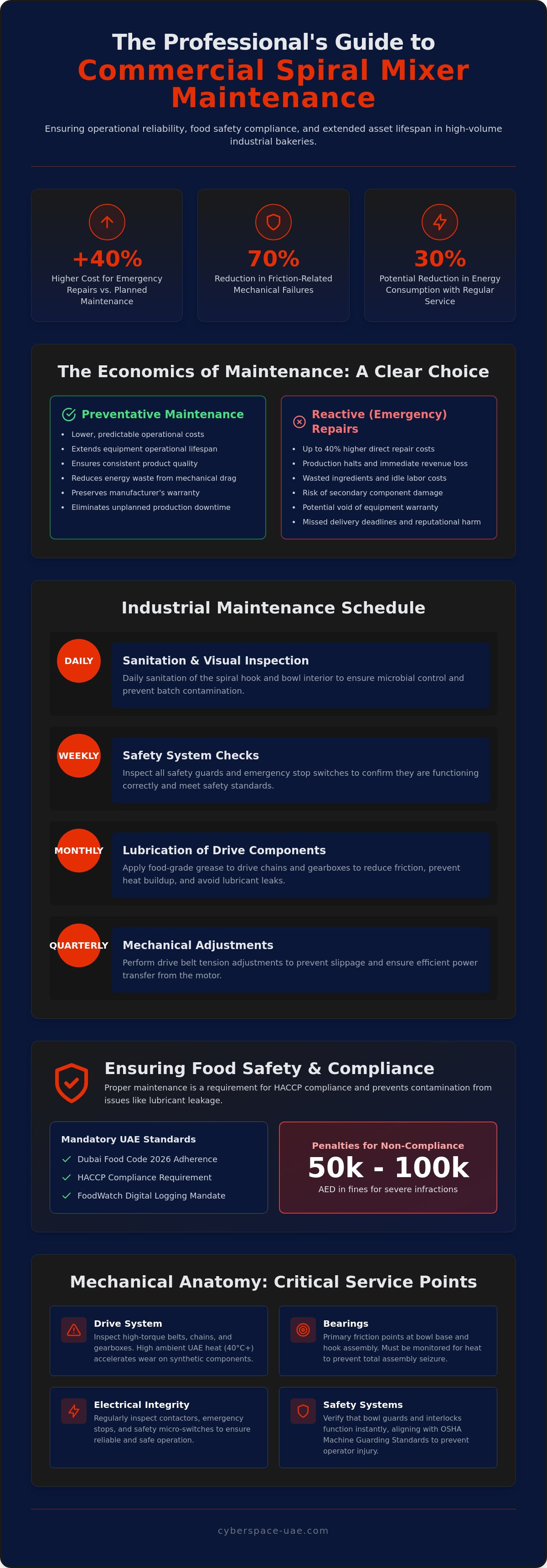
Emergency repairs for commercial kitchen equipment can cost up to 40% more than planned maintenance. In the high-pressure environment of an industrial bakery, a mechanical failure during a peak shift halts production and creates immediate financial risk. Implementing a rigorous schedule for commercial spiral mixer maintenance is the primary method for ensuring operational reliability and meeting stringent national food safety and industry standards.
You recognize that consistent dough quality requires precise mechanical calibration. This guide provides professional maintenance protocols designed to eliminate unplanned downtime and extend the operational lifespan of your industrial assets. We detail the technical synchronization of lubrication, belt tensioning, and environmental climate control necessary for peak performance and adherence to industry-standard digital logging requirements. This technical overview ensures your facility maintains the high-performance standards required for industrial dough processing across the national market.
Key Takeaways
- Identify primary friction points in drive systems and bearings to reduce mechanical failures by up to 70%.
- Implement a structured daily and weekly schedule to ensure compliance with the 2026 Dubai Food Code and FoodWatch logging requirements.
- Execute professional commercial spiral mixer maintenance through precise agitator height calibration and drive belt tensioning.
- Optimize industrial workflows by integrating high-reliability spiral mixers with rotary baking oven production lines for 24/7 operational efficiency.
The Economics of Preventative Maintenance for Industrial Mixers
Operational efficiency in UAE industrial bakeries depends on mechanical reliability. Unplanned downtime during a high-volume shift results in immediate revenue loss and wasted ingredients. Emergency repairs for commercial kitchen equipment often cost 40% more than scheduled servicing. Beyond the immediate repair bill, the secondary costs include labor idling and missed delivery deadlines. Implementing a structured commercial spiral mixer maintenance program mitigates these risks by identifying wear before a total system failure occurs.
Technical data indicates that regular servicing reduces friction-related failures by up to 70%. Proper lubrication of the drive system and bearing assemblies prevents heat buildup that leads to seized motors. This mechanical precision directly impacts product quality. Calibrated machinery ensures consistent dough development and optimal gluten structure. When a mixer operates at peak efficiency, the spiral hook maintains a precise clearance from the bowl wall, preventing unmixed flour pockets or over-kneaded sections. Even brand-new industrial assets require a "break-in" maintenance schedule. This involves checking belt tension and fastener torque after the first 100 hours of operation to account for initial mechanical settling.
Operators should understand the various Types of Commercial Mixers and their specific drive mechanisms to apply the correct service protocols. Whether utilizing a belt-driven or chain-driven system, the economic benefit of preventative care remains constant across all industrial dough processing platforms.
Extending Asset Lifespan in Commercial Kitchens
The ROI of preventative care significantly outweighs the cost of emergency motor replacement. Well-maintained machinery also reduces energy consumption by up to 30% by eliminating mechanical drag. Consistent commercial spiral mixer maintenance preserves the manufacturer's warranty, which is vital for protecting expensive industrial assets. Documentation of these service intervals serves as proof of due diligence, ensuring that high-value equipment remains an active asset rather than a liability.
Food Safety and Mechanical Integrity
Mechanical failure poses a direct contamination risk. Worn seals can lead to lubricant leakage into dough batches, resulting in total product loss and potential legal repercussions under the Dubai Food Code 2026. Maintaining mechanical integrity is a requirement for HACCP compliance. Documented logs on the FoodWatch platform are mandatory for Dubai food establishments. These records must track:
- Daily sanitation of the spiral hook and bowl interior.
- Weekly inspections of safety guards and emergency stop switches.
- Monthly lubrication of drive chains and gearboxes using food-grade grease.
- Quarterly belt tension adjustments to prevent slippage.
Strict adherence to these protocols ensures microbial control and prevents fines for food safety violations, which can range from 50,000 to 100,000 dirhams for severe infractions.
Mechanical Anatomy: Critical Service Points for Spiral Mixers
Industrial reliability begins with a granular understanding of the mechanical anatomy of your equipment. The drive system serves as the core of the machine, consisting of high-torque belts, chains, and precision gearboxes. These components convert motor energy into the rotational force required to process heavy dough batches. In the UAE, high ambient kitchen temperatures often exceed 40°C, which significantly stresses motor cooling fans and accelerates the degradation of synthetic drive belts. Proper commercial spiral mixer maintenance must account for these environmental stressors to prevent premature component failure.
Bearings located at the bowl base and spiral hook assembly are the primary friction points. These parts endure constant axial and radial loads during the mixing cycle. If these bearings aren't monitored, they develop heat that can seize the entire assembly. Electrical integrity is equally vital. Beyond the main power supply, technicians must inspect contactors, emergency stops, and micro-switches. Safety systems must align with OSHA Machine Guarding Standards to ensure that the mixer ceases operation immediately when the bowl guard is lifted. For large-scale operations utilizing overturnable spiral mixers, the hydraulic lifting system requires separate inspection of fluid levels and hose integrity to prevent pressure loss during discharge.
Lubrication Protocols for High-Load Components
Selecting the correct food-grade lubricant is mandatory for industrial applications. UAE bakeries must use H1-rated lubricants that maintain viscosity under high-heat conditions. Bowl bearings require greasing every 500 operating hours, while drive chains need a lighter application of food-grade oil monthly to prevent metal-on-metal wear. Signs of lubricant degradation include a darkening of the grease or a thin, watery consistency. If you notice these symptoms, purge the old lubricant immediately to prevent bearing scarring. Maintaining these standards is a critical aspect of commercial spiral mixer maintenance that directly impacts the machine's decibel level and smooth operation.
Drive Belt and Chain Tensioning
Worn or slipping belts are identifiable by a high-pitched squealing sound or a visible "glazing" on the belt's surface. Improper tension reduces motor torque and increases heat generation, which can eventually burn out the motor windings. Technicians should check belt deflection weekly, ensuring it remains within the manufacturer's specified range (typically 10-15mm). Aligning the pulleys is essential; even a slight offset causes uneven belt wear and vibration. Facilities requiring 24/7 reliability should consider upgrading to high-performance Spiral Mixers that feature reinforced drive assemblies designed for regional climate demands. Regular tensioning adjustments prevent the sudden snaps that lead to costly emergency repairs and lost production shifts.
Industrial Maintenance Schedule: Daily, Weekly, and Monthly
A structured maintenance schedule is the foundation of industrial reliability. In Dubai, this schedule is not just a recommendation but a requirement for mandatory FoodWatch digital logging. Systematic commercial spiral mixer maintenance ensures that equipment remains compliant with the 2026 Dubai Food Code while preventing mechanical degradation. Failure to document these checks can result in fines ranging from 50,000 to 100,000 dirhams. Establish a clear chain of responsibility for daily, weekly, and monthly tasks to maintain operational continuity.
Daily Sanitation and Moisture Management
Surface sanitation and bowl interior cleaning are mandatory after every production shift. Operators must remove all flour dust from motor vents. In the UAE's high-ambient temperatures, accumulated flour becomes a dense paste that blocks airflow and causes motor overheating. Use damp cloths for the exterior surfaces. Do not saturate electrical housings or control panels with water. Drying the mixer is as critical as washing it. Residual moisture leads to surface oxidation and microbial growth, which violates HACCP standards for high-risk food operations. Pay specific attention to the area where the spiral hook meets the drive head, as this is a primary site for ingredient buildup.
Weekly Technical Inspections
Weekly checks focus on safety systems and mechanical alignment. Test emergency stops and safety interlock micro-switches at the start of the week. These safety features must comply with OSHA General Requirements for All Machines to protect operators from high-torque moving parts. Monitor the machine for unusual vibrations or rhythmic knocking during the mixing cycle. Such noises often indicate a loosening bowl scraper or a misaligned spiral hook. Inspect the bowl scraper for wear and alignment. An unaligned scraper leaves dough residue on the bowl walls. This impacts batch consistency and complicates the sanitation process.
Monthly protocols require deeper technical intervention. Technicians must verify belt tension and inspect electrical cords for fraying or heat damage. Check the oil levels in the gearbox if applicable. Quarterly, schedule a professional calibration and deep mechanical audit. This audit includes checking the timing belts for hairline cracks and ensuring the bowl-to-hook clearance remains within factory specifications. Professional commercial spiral mixer maintenance at these intervals reduces the risk of emergency repairs, which typically cost 40% more than planned servicing. Consistently updated logs provide the necessary data for risk-based inspections conducted by the Dubai Municipality.
Technical Troubleshooting and Mechanical Adjustments
Mechanical precision requires a systematic approach to technical troubleshooting. Before any intervention, operators must isolate the power supply. Use a lockout-tagout (LOTO) procedure to ensure the machine can't be energized during service. This is a non-negotiable safety standard for commercial spiral mixer maintenance in industrial settings. Once the unit is safely de-energized, technicians can proceed with mechanical calibrations.
Follow these steps for essential mechanical adjustments:
- Adjust agitator height: Verify the clearance between the spiral hook and the bowl bottom. Incorrect clearance leads to unmixed ingredients or physical bowl damage. Adjust the mounting bolts to achieve the manufacturer's specified gap, typically 3mm to 5mm.
- Replace worn seals: Inspect the shaft seals for signs of weeping grease. Degraded seals permit lubricants to enter the food zone, violating Dubai Municipality food safety standards. Replace these components immediately upon detecting any residue.
- Calibrate dual-speed timers: Ensure the transition from low-speed hydration to high-speed development is accurate. Inconsistent timing compromises dough elasticity and final product volume.
- Test motor torque: Run the mixer with a full load to verify torque stability. Listen for RPM fluctuations that indicate electrical phase issues or failing capacitors.
Common Industrial Mixer Issues and Solutions
Motor overheating is a frequent challenge in UAE kitchens during peak summer months. Ensure the rear ventilation grilles are unobstructed. If the motor trips the thermal overload, reduce the batch size or increase the cooling interval between cycles. "Dough climbing" occurs when the spiral hook is misaligned or the dough temperature is too high. Realign the hook and monitor ingredient temperatures to maintain batch integrity. Bowl slippage or inconsistent rotation often points to worn friction wheels or loose drive chains. Tighten the tensioning assembly to restore synchronized movement.
When to Call Professional Technical Support
Certain failures exceed the scope of basic commercial spiral mixer maintenance. Catastrophic gearbox grinding or total motor failure requires certified industrial technicians. Electrical faults, such as burnt-out contactors or erratic PLC behavior, involve high-voltage risks and specialized diagnostic tools. If a specialized component in high-end machinery fails, use only OEM parts to maintain the equipment's industrial rating. For facilities needing immediate upgrades to resolve recurring mechanical issues, browse our selection of Professional Spiral Mixers designed for heavy-duty UAE production environments.
Professional Support and New Equipment Standards in the UAE
Procuring brand-new industrial mixers is a strategic decision for ensuring 24/7 operational reliability in large-scale UAE bakeries. While rigorous commercial spiral mixer maintenance extends the life of existing assets, modern machinery features advanced thermal management and sealed drive assemblies specifically engineered for high-ambient temperatures. These technical improvements reduce the frequency of lubrication cycles and belt adjustments compared to older models. New equipment also ensures full compatibility with digital monitoring platforms like FoodWatch, which is mandatory for compliance under the 2026 Dubai Food Code.
Efficiency in a professional bakery depends on the seamless integration of equipment. High-capacity spiral mixers must synchronize with industrial rotary baking oven workflows to prevent bottlenecks during dough development and proofing stages. For specialized pastry or bread production, the consistency of the dough directly impacts the performance of Rational combi oven for bakery systems. Calibrated machinery ensures that dough hydration and gluten structure meet the precise requirements of multi-stage baking programs.
Reliable professional baking equipment Dubai suppliers offer more than just hardware. They provide the technical infrastructure necessary for national parts availability and rapid response times. In an industry where emergency repairs can cost 40% more than planned upkeep, having a local partner with a stock of OEM belts, bearings, and micro-switches is critical for minimizing downtime. This availability ensures that commercial spiral mixer maintenance remains a proactive task rather than a reactive crisis.
Cyberspace Technical Excellence
We maintain a specialized focus on high-performance, new industrial machinery designed for the rigors of the Middle Eastern climate. Technical support and logistics extend across the UAE, ensuring that facilities from Dubai to Abu Dhabi have access to professional-grade solutions. By providing high-end brands for professional culinary environments, we facilitate the transition from legacy systems to modern, efficient production lines that meet all current municipal regulations.
Next Steps for Facility Managers
Optimizing your dough processing facility requires a commitment to technical oversight. Facility managers should implement the following protocols immediately:
- Establish a formal maintenance logbook for all dough processing tools to track service dates and component replacements.
- Train staff on daily inspection routines, focusing on motor vent cleanliness and safety guard functionality.
- Review current equipment reliability and consider upgrading assets that require frequent emergency interventions.
For professional machinery solutions and technical guidance, Contact Cyberspace Kitchen & Bakery Equipment to discuss your facility's specific requirements.
Maximizing Operational Reliability in UAE Bakeries
Maintaining industrial reliability requires a transition from reactive repairs to proactive technical oversight. Implementing the protocols outlined for commercial spiral mixer maintenance ensures your facility meets the strict 2026 Dubai Food Code standards while protecting high-value assets. By focusing on critical friction points and drive system synchronization, you eliminate the 40% cost premium associated with emergency mechanical failures. Disciplined daily sanitation and monthly mechanical audits are the primary drivers of consistent dough quality.
For facilities requiring the highest standards of durability, upgrading to modern, high-performance equipment provides a foundation for 24/7 production. We provide new industrial-grade machinery only, backed by national UAE delivery and technical support from specialized baking and culinary equipment experts. These systems are engineered to withstand regional climate demands and integrate seamlessly with high-volume production lines.
Explore Professional Spiral Mixers for Your Production Line to secure your facility's operational future. Professional maintenance is the most effective strategy for long-term industrial success in the UAE's competitive food service market.
Frequently Asked Questions
How often should a commercial spiral mixer be lubricated?
Lubricate drive chains monthly and bowl bearings every 500 operating hours. Use H1-rated food-grade grease to maintain compliance with Dubai Food Code 2026. High-load components in UAE kitchens require consistent monitoring to prevent heat-related seizing. Document each application in your maintenance log for FoodWatch verification to ensure full regulatory compliance during inspections.
What is the best way to clean an industrial dough mixer without damaging the motor?
Use a damp cloth and food-safe sanitizer to clean the exterior and bowl interior. Never spray water directly onto the motor housing or control panel to avoid electrical shorts or component corrosion. Remove flour dust from cooling vents daily using a vacuum or dry brush. Proper moisture management is essential for commercial spiral mixer maintenance and preventing surface oxidation.
Why is my spiral mixer motor getting hot during heavy batches?
Motor overheating typically results from overloading beyond the rated bowl capacity or blocked ventilation grilles. In UAE kitchens, ambient temperatures often exceed 40°C, which reduces cooling efficiency. Check that rear vents are clear of flour buildup. If the thermal overload trips, reduce the batch size or increase the rest period between mixing cycles to protect the motor windings.
How do I know if my spiral mixer drive belt needs replacement?
Inspect belts for high-pitched squealing, surface glazing, or visible hairline cracks. These symptoms indicate the belt has lost its grip or structural integrity. Check belt deflection weekly; it should typically remain between 10mm and 15mm. Replace belts immediately if you observe fraying to prevent sudden mechanical failure during high-volume production shifts in your bakery.
Can I use standard WD-40 for commercial mixer maintenance?
Do not use standard WD-40 or non-rated industrial lubricants in the food zone. All lubricants must be H1-rated food-grade products to prevent batch contamination and meet HACCP requirements. Standard lubricants contain toxic additives that pose a health risk if they leak into the dough. Always verify the NSF certification on the lubricant packaging before application to ensure food safety.
What are the safety requirements for maintaining industrial mixers in the UAE?
Safety protocols must include a Lockout-Tagout procedure to de-energize the machine before any mechanical servicing. Every establishment must have a certified Person in Charge to oversee daily safety checks. Ensure all bowl guards and emergency stop switches function according to municipal regulations. Documenting these safety inspections is mandatory for maintaining a Dubai Municipality Food Safety License.
What is the difference between maintenance for a spiral mixer vs a planetary mixer?
Spiral mixers focus on high-torque drive belts and fixed bowl bearings, whereas planetary mixers require more frequent lubrication of the orbital gear head and attachment hub. Spiral units typically endure higher axial loads during heavy dough processing. Maintenance for spiral mixers emphasizes belt tensioning, while planetary units require checking the clearance of various agitator attachments and gear alignment.
How does dough hydration affect the maintenance needs of a mixer?
Low-hydration doughs increase mechanical resistance and put higher stress on the motor and drive system. This results in faster wear on drive belts and bearings compared to high-hydration batches. If your production focuses on stiff doughs, increase the frequency of commercial spiral mixer maintenance checks. Monitor for belt slippage and heat buildup more closely during these intensive mixing cycles.