
Selecting the Best Commercial Pizza Deck Oven for High-Volume Production
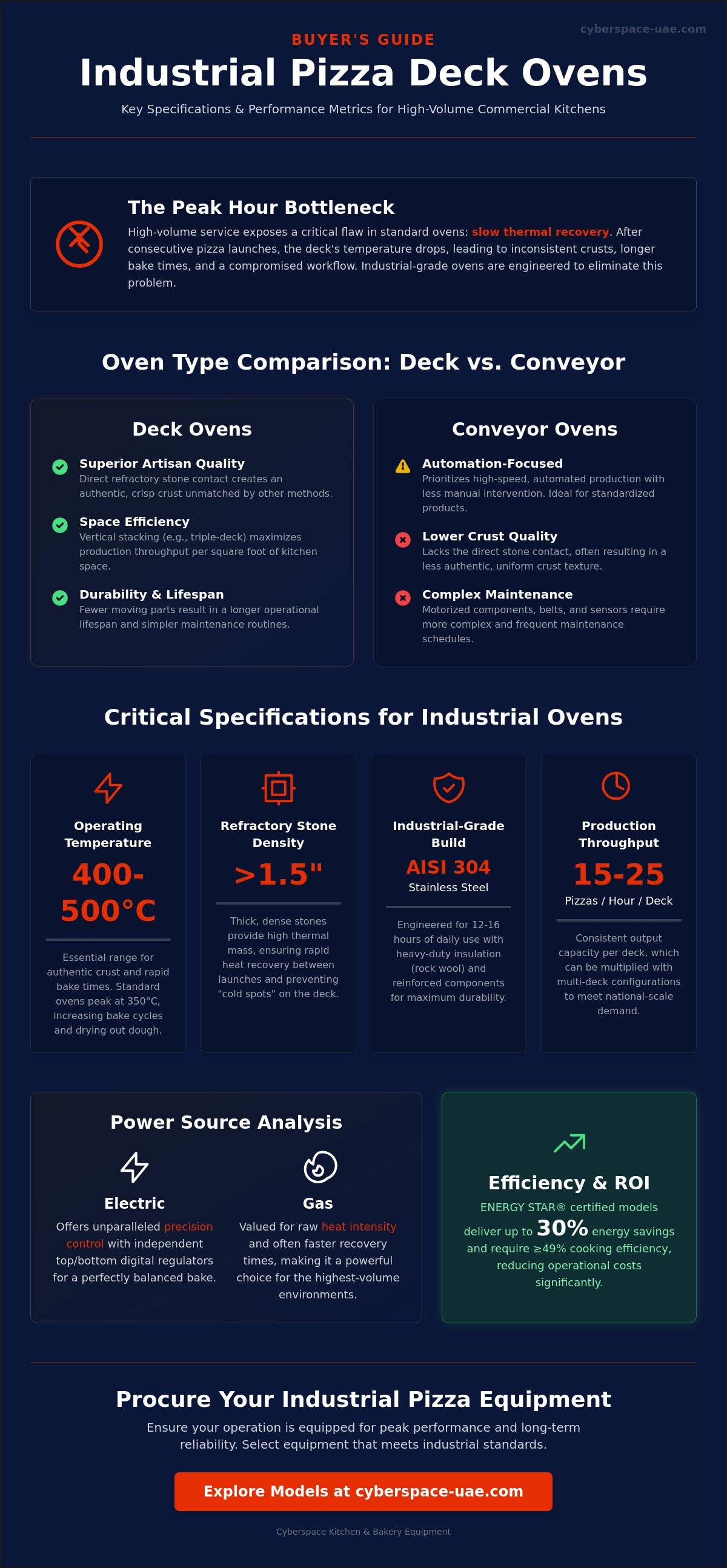
Peak hour performance in high-volume environments depends less on maximum temperature and more on the thermal mass of the stones. When evaluating a pizza deck oven commercial model for industrial throughput, the primary metric is recovery time. You've likely experienced the operational bottleneck where the deck floor loses heat after consecutive launches, leading to uneven bakes and inconsistent crust quality. It's a common pain point that compromises both product standards and kitchen efficiency during high-demand periods.
This technical procurement guide details the specific engineering requirements for national-scale pizza operations. You'll learn how to identify equipment that balances high throughput with the 30% energy savings typical of ENERGY STAR certified models. We'll analyze critical specifications including deck material density, heat distribution systems, and NSF/ANSI 4-2025 sanitation standards. This overview ensures your equipment selection prioritizes long-term ROI and operational reliability in harsh industrial environments.
Key Takeaways
- Analyze thermal recovery metrics and refractory stone density to maintain consistent crust quality during peak throughput.
- Evaluate the operational advantages of electric versus gas pizza deck oven commercial models regarding precision control and heat intensity.
- Verify industrial-grade construction standards, including AISI 304 stainless steel specifications and reinforced hinge durability.
- Identify critical temperature thresholds between 400°C and 500°C required for authentic high-volume pizza production.
- Streamline procurement by focusing on brand-new equipment specifications that align with national food service safety standards.
Defining the Commercial Pizza Deck Oven for Industrial Use
Industrial pizza production relies on conductive heat transfer. A pizza deck oven commercial unit utilizes refractory stone to transfer heat directly to the dough. This is the primary mechanism for achieving specific crust characteristics. Unlike standard bakery decks designed for bread, pizza decks operate at higher temperature thresholds. They require specialized insulation to maintain these levels during continuous operation. The distinction lies in the thermal recovery speed and the ability to withstand extreme heat cycles without structural fatigue.
Precision is non-negotiable in high-volume settings. Industrial decks feature independent top and bottom heat regulators. This allows operators to balance the bake. High bottom heat develops the crust. Controlled top heat melts cheese and finishes toppings without scorching. For 2026 operations, the distinction between light and industrial equipment is clear. Industrial units feature AISI 304 stainless steel and heavy-duty insulation. They're built for 12 to 16 hours of daily use. Light-commercial units often fail under these rigorous loads.
The Role of Refractory Stone in Pizza Baking
Material density determines the rate of heat transfer. Thicker stones, often exceeding 1.5 inches in industrial models, provide the necessary thermal mass. This mass prevents the cold spot phenomenon during back-to-back launches. High-performance stones in 2026 must meet rigorous durability standards to avoid cracking under thermal shock. This Pizza oven overview provides additional context on how these materials have evolved for commercial use. Dense stones ensure the crisp factor remains consistent from the first pizza to the last of the shift.
Comparison: Deck Ovens vs. Conveyor Systems
Deck systems offer superior artisan quality through direct stone contact. They occupy less floor space through vertical stacking. A triple-deck configuration maximizes throughput per square foot. While conveyor ovens prioritize automation, they often lack the crust texture produced by stone decks. Maintenance for deck ovens involves stone cleaning and burner or element inspection. It's less complex than the motorized components and belt tensioning required for conveyor systems. The operational lifespan of a well-maintained pizza deck oven commercial unit typically exceeds that of automated alternatives due to fewer moving parts.
Selecting the right classification depends on your specific throughput targets. Industrial-grade decks are the standard for national chains requiring a balance of quality and volume. They provide the reliability needed to minimize operational downtime.
Technical Specifications for High-Volume Pizza Production
Authentic crust development requires precise thermal thresholds. While retail-grade units peak at 350°C, a pizza deck oven commercial configuration for industrial use must target a range of 400°C to 500°C. Operating at these higher temperatures reduces bake times and ensures immediate moisture evaporation from the dough. This creates the characteristic "char" and structure expected in professional environments. Lower temperature ceilings result in longer bake cycles, leading to dried-out dough and reduced throughput.
Insulation quality directly impacts operational costs and temperature stability. High-density rock wool is the industrial standard for 2026. It offers superior thermal resistance compared to standard fiberglass. This material choice is critical for meeting energy efficiency targets. According to ENERGY STAR data from May 2026, certified gas models must maintain a cooking energy efficiency of 49% or more. High-grade insulation prevents heat bleed into the kitchen, reducing the load on HVAC systems and improving long-term ROI.
Deck dimensions must accommodate national food service standards. Standard industrial decks typically measure 60 inches by 36 inches. This allows for the simultaneous baking of multiple large pies or various tray configurations. When selecting equipment, verify the stone thickness. Stones under 1.5 inches often lack the thermal mass required for continuous high-volume cycles. For operations prioritizing these technical benchmarks, exploring professional deck ovens ensures compliance with industrial performance requirements.
Thermal Recovery and Production Throughput
Recovery time is the most critical metric for high-volume sites. It defines the interval required for the stone to return to its set temperature after a pizza launch. A standard industrial deck produces 15 to 25 pizzas per hour. Frequent door openings cause internal temperature drift. Multi-deck configurations mitigate this by distributing the load across independent chambers. This allows one deck to recover while others remain in active bake cycles, maintaining a consistent output stream without sacrificing quality.
Control Systems and Precision Baking
Industrial precision requires digital thermostats. Manual dials often have a variance of 10°C to 20°C, which is unacceptable for standardized national operations. Digital systems provide 1°C accuracy and independent management of top and bottom heat zones. Integrated timers with audible alerts are essential for noisy kitchen environments. These systems ensure consistent results regardless of staff experience levels, protecting the brand's product quality across multiple locations.
Power Source Analysis: Electric vs. Gas Pizza Deck Ovens
Energy source selection dictates the infrastructure requirements and long-term utility overhead of a high-volume facility. Choosing a pizza deck oven commercial unit requires an evaluation of available site utilities against production goals. Electric models prioritize precision and modularity. Gas models deliver high-intensity heat and traditional baking profiles. As of May 2026, both configurations must meet updated energy efficiency benchmarks to ensure operational sustainability.
Utility infrastructure often determines the feasible power source. Gas units require dedicated gas lines and robust Type I ventilation hoods to manage combustion byproducts. Electric units eliminate the need for gas plumbing but demand significant electrical capacity, typically requiring 3-phase power for industrial-scale decks. National operators must calculate the total cost of ownership by factoring in local utility rates and the initial cost of ventilation installation.
Operational Efficiency of Electric Systems
Electric systems provide superior precision through independently controlled heating elements. These elements are positioned above and below the deck, allowing for micro-adjustments in heat distribution. This level of control is essential for operations with diverse dough formulations. For a detailed breakdown of these metrics, refer to our technical performance guide for electric deck ovens. Modern electric units are also highly modular. Operators can stack additional decks as volume increases without modifying the primary energy supply infrastructure.
Efficiency standards for 2026 are stringent. ENERGY STAR certified full-size electric ovens must achieve a cooking energy efficiency of 76% or more. This reduces peak load demands and minimizes heat waste. The absence of an open flame also results in a cooler kitchen environment, further reducing the load on HVAC systems during peak summer months.
Performance Characteristics of Gas Ovens
Gas-powered decks are favored for their high heat intensity and rapid initial heat-up times. They utilize atmospheric or infrared burners to heat the refractory stones. This creates a specific heat profile that many high-volume artisan brands prefer. However, gas systems require strict adherence to safety protocols. Regular inspection of gas lines and pilot assemblies is mandatory to prevent operational downtime. Heat distribution in large-format gas decks relies on engineered airflow patterns to ensure the stones remain at a uniform temperature across the entire surface.
Energy standards for gas-fired equipment have also evolved. As of May 2026, ENERGY STAR certified gas units must maintain a cooking energy efficiency of at least 49% and an idle energy rate of 9,500 Btu/h or less. While the upfront installation for gas infrastructure is often higher, the long-term fuel costs in many regions remain lower than electricity, providing a faster ROI for 24-hour production facilities.
Structural Durability and Maintenance for Professional Ovens
Industrial environments demand materials that resist oxidation and structural fatigue. AISI 304 stainless steel is the technical benchmark for a pizza deck oven commercial unit. This grade contains higher chromium and nickel levels than 430-grade alternatives, providing superior corrosion resistance. It ensures the chassis remains rigid during the constant thermal expansion cycles required for high-volume production. Equipment constructed with lower-grade steels often warps or discolors after prolonged exposure to the 400°C+ temperatures necessary for industrial throughput.
Sanitation standards for 2026, specifically NSF/ANSI 4-2025, dictate the design and construction materials of professional food service equipment. Compliance requires smooth, non-porous surfaces that prevent debris accumulation. Cleaning protocols for refractory stones involve high-heat pyrolytic cycles to carbonize food residue, followed by brushing with specialized natural-fiber tools. Stainless interiors should be maintained with pH-neutral industrial cleaners to preserve the protective oxide layer of the metal.
Visibility and door integrity are critical for operational speed. High-volume shifts involve hundreds of door cycles. This necessitates reinforced, heavy-duty hinges with high cycle-life ratings. Viewing glass must be dual-pane tempered ceramic or borosilicate to withstand extreme thermal shock. Integrated, heat-shielded internal lighting allows operators to monitor bakes without opening the door. This preserves the internal temperature stability and protects the recovery times established in the technical specifications. For reliable industrial builds, you can view professional deck oven specifications here.
Minimizing Operational Downtime
Modern deck systems prioritize modular component replacement to ensure continuous uptime. Slide-out burner drawers in gas units and front-accessible heating elements in electric models allow for rapid technical servicing. Technical access points should be positioned to permit maintenance without relocating the entire oven stack. Preventative maintenance schedules must include monthly inspections of heating elements and quarterly calibration of digital thermostats. These steps prevent catastrophic failures during peak demand hours.
Heat Retention and Safety Features
Safety and efficiency are technically linked through insulation and seal integrity. High-temperature gaskets must maintain a hermetic seal to prevent heat bleed. A compromised seal increases energy consumption and places additional load on kitchen ventilation systems. Cool-touch exterior surfaces are achieved through high-density insulation, protecting staff in tight kitchen footprints. Standard safety features for 2026 industrial machinery include:
- Automatic overheat protection and emergency shut-off mechanisms.
- High-limit safety thermostats to prevent runaway heating.
- Reinforced handles designed for low heat conductivity.
Procurement of Industrial Pizza Equipment from Cyberspace
Strategic procurement for national food service operations focuses on equipment reliability and technical compliance. Cyberspace supplies brand-new, high-performance machinery to meet the rigorous demands of the industrial sector. Selecting a pizza deck oven commercial model through professional baking deck oven suppliers ensures that your facility operates with the latest thermal engineering. This approach eliminates the inconsistencies and high maintenance costs associated with refurbished or second-hand units.
Technical support is a core component of industrial machinery selection. Our team assists in evaluating equipment specifications against projected throughput targets and site utility constraints. This ensures every installation meets national safety and operational standards, including the NSF/ANSI 4-2025 requirements for sanitation. By prioritizing new equipment, operators secure a predictable ROI through reduced energy consumption and minimal operational downtime. It's a calculation that favors long-term stability over short-term savings on used assets.
The Advantage of New Industrial Machinery
New machinery provides immediate access to 2026 energy efficiency benchmarks. ENERGY STAR certified gas models offer 49% cooking energy efficiency, while electric models reach up to 76%. These performance levels are rarely achievable with used equipment that often features degraded insulation or compromised heating elements. Full manufacturer warranties protect the investment, providing a layer of security for national kitchen managers. Procurement through Cyberspace also guarantees direct access to original spare parts and comprehensive technical documentation. This documentation is essential for maintaining strict preventative maintenance schedules and ensuring long-term structural durability.
Customizing Your Baking Infrastructure
Scaling production requires a modular approach to kitchen design. Stackable deck units allow for vertical expansion as order volume increases without expanding the kitchen's horizontal footprint. For operations with diverse menus, integrating these decks with industrial rotary baking ovens provides the versatility needed for high-volume bread and pastry production alongside pizza. This combination optimizes floor space and diversifies output capabilities while maintaining consistent quality across product lines.
Cyberspace facilitates the selection of specialized equipment tailored to specific industrial requirements. Whether your facility utilizes 3-phase electrical infrastructure or high-pressure gas lines, our inventory aligns with professional standards. Contact Cyberspace to discuss your machinery requirements and secure the tools necessary for operational excellence in the modern food service landscape. We focus on providing high-end tools that value your professional requirements and time.
Optimizing Industrial Pizza Throughput
Success in high-volume environments depends on thermal recovery speeds and stone density. Prioritizing AISI 304 stainless steel and dense refractory materials ensures equipment longevity during continuous production cycles. New industrial machinery provides essential compliance with 2026 energy standards. This reduces operational overhead and protects product consistency across national kitchen networks. Reliable production requires these specific technical benchmarks.
Cyberspace is a specialized supplier of professional-grade machinery. We offer brand-new, high-performance industrial solutions designed for harsh kitchen environments. Our national supply chain and technical support teams provide the expertise needed for strategic pizza deck oven commercial selection. Don't risk operational downtime with refurbished assets that lack modern efficiency ratings. Secure your facility's long-term ROI with precision-engineered tools today.
Request a Technical Specification Quote for Commercial Pizza Ovens
Build a foundation for operational excellence with equipment designed for industrial-scale performance.
Frequently Asked Questions
What is the difference between a pizza deck oven and a standard bakery oven?
Pizza deck ovens differ from bakery ovens primarily in temperature capability and stone thickness. A pizza deck oven commercial unit operates at higher thresholds, often reaching 500°C, while bakery ovens typically peak at lower temperatures for bread. The refractory stones in pizza units are denser to facilitate rapid heat transfer to the dough. This ensures the crust develops the necessary structure before the toppings overcook.
Can I bake different types of pizza in a single deck oven?
Independent heat controls allow for baking multiple pizza styles in one unit. Operators can adjust top and bottom heat intensities to accommodate thin crust, deep dish, or tray pizzas. However, high-volume consistency is easier to maintain when dedicated decks are set to specific parameters. For varied menus, a multi-deck configuration provides the most reliable thermal stability across different dough formulations.
How often should I clean the stone deck in a commercial oven?
Daily maintenance involves scraping flour and food debris using a long-handled stone brush. This prevents carbonization and smoke during high-temperature cycles. Weekly deep cleaning may include a pyrolytic cycle where the oven is run at maximum temperature to incinerate organic matter. Never use water or liquid chemicals on refractory stones; this causes thermal shock and structural cracking.
What is the ideal temperature for a commercial pizza deck oven?
Industrial production targets a range between 400°C and 500°C. This specific threshold is necessary to achieve rapid moisture evaporation and the characteristic char of professional pizza. Operating below 400°C increases bake times significantly. This leads to dough dehydration and reduced hourly throughput, which compromises the efficiency of high-volume commercial kitchens during peak demand periods.
Do I need a special ventilation system for an electric deck oven?
Most jurisdictions require a Type II ventilation hood for electric deck ovens to manage heat and steam. While electric units don't produce combustion byproducts like gas models, the high ambient heat output can impact kitchen HVAC systems. Local building codes and NSF standards dictate the specific extraction rates. Always consult a certified HVAC professional to ensure compliance with regional safety regulations.
How long does a commercial pizza deck oven take to preheat?
Industrial deck ovens require 60 to 90 minutes to reach full thermal saturation. While the air temperature may reach the set point quickly, the refractory stones take longer to absorb and store heat. Launching pizzas before the stone is fully saturated results in uneven bakes and poor bottom crust development. Consistent throughput depends on this initial heat-soak period.
Is it better to buy a single deck or a double deck oven for a new pizzeria?
A double-deck configuration is the standard for high-volume startups. It provides a production safety net and allows for simultaneous baking at two different temperature settings. If one deck requires maintenance, the second remains operational to prevent total downtime. Modular stackable units are preferred; they allow for future expansion without replacing the primary infrastructure or energy supply.
What are the power requirements for a 3-phase electric pizza oven?
3-phase power is the technical requirement for most industrial electric ovens. This usually involves a 380V to 415V supply to support the high-wattage heating elements. Using a pizza deck oven commercial model on a single-phase supply is often inefficient for high-volume recovery. Verify that your facility's electrical panel can support the specific amperage draw listed in the manufacturer technical data sheet.