
The Benefits of Stone Deck Ovens for Industrial Artisan Baking in 2026
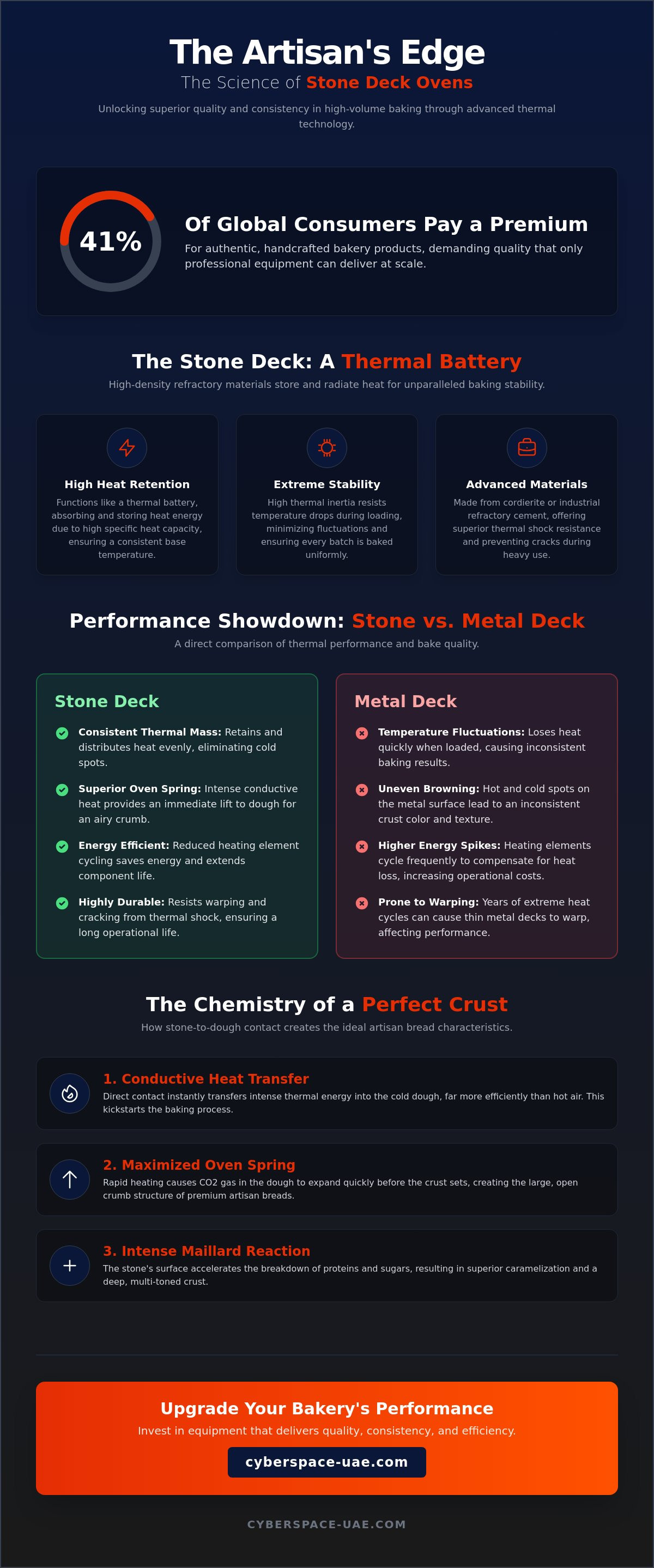
Over 41% of global bakery consumers now pay a premium for authentic, handcrafted products according to 2026 market research. Maintaining this quality at scale requires equipment that eliminates heat loss and uneven baking across large batches. Understanding the functional benefits of stone deck oven technology is essential for high-volume artisan production. These systems act as thermal batteries, providing the conductive heat necessary for superior oven spring and consistent crust texture.
This technical analysis details how stone-lined decks improve thermal stability and operational efficiency. It covers the impact of high-density materials on thermal recovery times and batch uniformity. You will also find information on compliance with the NSF/ANSI 4-2025 sanitation standard for commercial cooking equipment. This guide assists in the selection of professional deck ovens to optimize bakery output.
Key Takeaways
- Identify how high-density refractory materials function as thermal batteries to stabilize internal temperatures during continuous loading.
- Analyze the technical benefits of stone deck oven systems for maximizing conductive heat transfer and initial dough expansion.
- Review thermal recovery performance data comparing stone and metal surfaces to improve operational throughput and consistency.
- Examine the integration of precision steam injection and stone-stored heat to control crust chemistry and product uniformity.
- Coordinate deck capacity and power source selection with commercial infrastructure requirements and industrial artisan production scales.
Defining Thermal Mass in Professional Stone Deck Ovens
Industrial artisan baking requires equipment that manages thermal energy with precision. Stone deck ovens use high-density refractory materials to create a stable baking environment. These materials, often including cordierite or industrial-grade refractory cement, possess a high specific heat capacity. This allows the deck to function as a thermal battery. The stone absorbs heat during the preheating cycle and stores it within its molecular structure. One of the fundamental benefits of stone deck oven design is this ability to maintain a consistent base temperature regardless of external variables.
Stone thickness directly influences heat storage capacity. In industrial settings, decks typically range from 20mm to 40mm in thickness. Thicker stones provide more ballast against temperature drops. When a baker loads a full batch of cold dough, the stone transfers energy immediately without a significant drop in surface temperature. This stability is a core component of the thermal mass in masonry ovens that modern commercial units emulate. High material density also contributes to equipment longevity. While metal decks may warp or thin over years of extreme heat, high-quality refractory stone maintains its structural integrity and flat profile.
The Physics of Heat Retention
Thermal inertia defines the stone's resistance to temperature change. Refractory stone has a significantly higher mass than thin-gauge steel, which prevents the rapid cooling seen in entry-level ovens. This stability minimizes temperature fluctuations during high-volume loading. Because the stone retains heat so effectively, the oven's heating elements don't need to cycle as frequently to maintain the set point. This reduced workload extends the operational life of the electrical components and lowers energy spikes during the baking process. It's a critical factor for bakeries targeting consistent results across multiple shifts.
Refractory Materials vs. Standard Ceramic
Industrial-grade ovens utilize specialized materials to withstand 24/7 production cycles. Standard ceramic is often too brittle for heavy industrial use. Manufacturers prefer refractory cement or cordierite due to their superior thermal shock resistance. This property is vital when loading high-moisture dough onto a hot surface. High-quality refractory materials prevent the microscopic fractures that lead to deck cracking. Choosing the right material ensures the oven handles extreme temperature cycling without degrading. This reliability is another one of the long-term benefits of stone deck oven technology for commercial facilities that prioritize uptime and low maintenance costs.
Conductive Heat Transfer and Crust Chemistry
Direct energy transfer from a heated stone surface to the dough base triggers immediate biochemical changes. While convection ovens rely on air movement, stone-lined deck ovens utilize conduction. This direct contact is the most efficient method for transferring high-intensity thermal energy into a cold dough mass. One of the primary benefits of stone deck oven systems is this rapid energy exchange. It ensures the dough base reaches critical temperatures within seconds of loading. Implementing these systems provides the specific benefits of stone deck oven performance required for national-scale production.
This intense bottom heat is essential for maximizing oven spring. As the dough hits the stone, CO2 gases expand rapidly before the crust sets. This creates the open, airy crumb structure required for premium artisan breads. Simultaneously, the porous nature of the refractory material facilitates rapid moisture evaporation at the contact point. This process leads to the development of a thicker, more resilient bottom crust. Because stone distributes heat evenly across its entire surface area, it eliminates the cold spots often found in metal-deck alternatives.
The Maillard Reaction on Stone Surfaces
Conductive heat accelerates the breakdown of proteins and sugars on the dough surface. This chemical process, known as the Maillard reaction, occurs more intensely on a stone surface than through hot air alone. The result is superior caramelization and a deep, multi-toned crust color. Modern industrial decks often feature stone-lined ceilings to provide radiant heat. This mimics the hearth environment of traditional ovens. It ensures a natural finish on the top and sides of the loaf without the need for excessive air circulation.
Crumb Structure and Internal Moisture
Rapid base heating is critical for setting the internal structure of high-hydration products. Sourdough and ciabatta often have hydration levels exceeding 75%. Without immediate conductive heat, these doughs can collapse or develop a gummy texture. The stone surface provides the necessary thermal hit to initiate starch gelatinization quickly. This stabilizes the crumb. Understanding how masonry ovens work clarifies why this direct energy transfer is irreplaceable for crumb stabilization. It ensures the loaf maintains its volume and internal moisture balance throughout the baking cycle.
Stone Deck vs. Metal Deck: Thermal Performance Comparison
Selecting the appropriate deck material is a critical decision for high-output industrial facilities. Standard metal decks utilize thin-gauge stainless steel or aluminized steel. These materials offer rapid preheating times but lack the mass required for thermal stability. In contrast, stone decks provide a high-density alternative that prioritizes heat retention. One of the primary benefits of stone deck oven technology is the ability to maintain surface temperatures during high-volume, back-to-back baking cycles. While metal surfaces cool rapidly upon contact with cold dough, stone surfaces remain stable.
Maintenance and longevity are also key differentiators. Stainless steel decks are susceptible to warping when exposed to the extreme temperature cycling found in 24/7 operations. A warped deck creates uneven contact with the dough, leading to inconsistent bake quality and potential product loss. Refractory stone maintains its structural profile and flatness over years of industrial use. This durability ensures that the conductive heat transfer remains uniform across the entire surface area, supporting long-term product consistency.
Heat Recovery and Throughput
Metal decks lose significant thermal energy every time the oven door is opened for loading. This energy loss results in a "recovery gap" where the baker must wait for the air and surface temperatures to return to the set point. This delay directly reduces the total hourly production capacity of the bakery. Stone decks minimize this gap by storing energy deep within the material. The high thermal inertia allows for immediate heat transfer to the next batch. Consequently, stone decks allow for tighter production schedules by eliminating the idle time required for thermal recovery. This makes them the preferred choice for facilities prioritizing maximum throughput.
Operational Energy Efficiency
Steady-state baking in a stone deck oven is more energy-efficient than in a metal-deck or air-circulated convection system. The stone acts as a thermal flywheel. Once the material reaches the target temperature, it reduces the frequency of heating element activation. Modern electric deck ovens, which held a 58.4% market share in 2025, utilize this effect to lower overall energy consumption. This engineering guide to oven technology explains how high-mass surfaces optimize energy use. By minimizing heat spikes and element cycling, bakeries can achieve an energy reduction of 20-35% compared to older, low-mass equipment. This efficiency provides a significant long-term ROI in high-output industrial environments.
Maximizing Oven Spring through Steam and Stone Synergy
Industrial artisan production requires a precise balance of conductive heat and humidity. The interaction between steam injection and high-density refractory stone is a fundamental technical requirement for premium bread. One of the primary benefits of stone deck oven systems is the ability to manage this synergy within a sealed environment. When dough enters the chamber, the stone provides immediate thermal energy. Simultaneously, the steam injection system coats the dough in a thin layer of moisture. This process is essential for achieving professional-grade results at scale.
Steam performs a dual role in the baking chamber. It condenses on the cold dough surface, keeping the outer layer flexible. This flexibility prevents the crust from setting prematurely, allowing internal gases to expand fully. This expansion, known as oven spring, is maximized when the base heat from the stone is intense. The moisture also facilitates starch gelatinization on the surface. As the bake progresses and the steam is vented, these gelatinized starches dehydrate. This chemical transition creates the glossy, translucent finish and shatter-crisp texture characteristic of high-end artisan products.
Steam Injection Timing and Volume
Precision is required during the first 5-10 minutes of the baking cycle. Industrial decks allow for the programming of specific steam volumes based on dough hydration and flour type. Maintaining high humidity levels in the initial phase ensures the crust remains thin. If the steam volume is insufficient, the crust thickens and becomes dull. Conversely, excessive steam can lead to a leathery texture. Consistent humidity management within stone-lined chambers is a core component of the benefits of stone deck oven technology for commercial bakeries.
Vapor Tube Technology in Modern Decks
Vapor tube systems utilize a network of sealed tubes to transfer heat from the furnace to the baking chambers. This engineering ensures uniform heat distribution across all decks in a vertical stack. Unlike standard heating elements, vapor tubes provide a gentle, consistent radiant heat that complements the conductive heat of the stone. Modern systems offer independent steam control for each deck, allowing for diverse product ranges to be baked simultaneously. For facilities with high-spec requirements, sourcing from established baking deck oven suppliers ensures access to advanced vapor tube and steam injection technology. Select a professional stone deck oven to optimize your bakery's crust development and production efficiency.
Industrial Procurement: Integrating Stone Decks into Commercial Workflows
Procurement managers must align equipment specifications with 2026 production targets. High-volume artisan baking requires a shift from air-circulated convection to conductive stone heat. Integrating these units into a commercial workflow optimizes the benefits of stone deck oven technology for national-scale distribution. The first decision involves energy infrastructure. Electric decks held a 58.4% market share in 2025 because of their precision and sustainability. Gas models remain an option for facilities with high gas capacity; however, they lack the modularity of modern electric stacks. Modern electric units also comply with NSF/ANSI 4-2025 sanitation standards, ensuring food safety at every stage of the baking process.
Transitioning from rotary ovens to stone decks necessitates workflow adjustments. Stone baking requires specific loading techniques and different dough handling protocols. The investment is justified by consumer demand. Over 41% of consumers pay more for authentic stone-baked products. Modular systems facilitate this transition. Bakeries can scale production by adding decks to existing stacks as demand grows. This approach manages capital expenditure while meeting market requirements. It's a strategic move for bakeries looking to enter the artisan market without a complete facility overhaul. It provides a scalable path to professional-grade output.
Evaluating Deck Configuration
Determine deck requirements by analyzing peak hourly throughput. Each chamber must accommodate a specific tray count per cycle. Independent deck control is vital for product diversification. It allows for simultaneous baking of different dough types. One deck can maintain the high temperatures needed for ciabatta while another finishes sourdough at a lower set point. This flexibility eliminates production bottlenecks. It also allows the bakery to respond to changing consumer preferences, such as the growing demand for gluten-free artisan goods. Technical specifications for these systems are detailed in this guide on electric deck ovens for professional bakeries.
Technical Support and Maintenance
Operational efficiency depends on strict cleaning protocols. Stone surfaces are porous. Carbon buildup from flour and seeds interferes with heat transfer. Use high-temperature brushes for daily deck maintenance. Avoid chemical cleaners that compromise the refractory material. Sourcing from reputable suppliers ensures long-term parts availability and technical support. This reliability is one of the operational benefits of stone deck oven systems in 24/7 environments. It prevents extended downtime during peak seasons. Regular inspections, as required by OSHA regulation 1910.263, ensure that all safety devices remain functional. View our professional stone deck ovens to evaluate equipment designed for industrial artisan requirements.
Advancing Industrial Bakery Standards with Stone Technology
Professional stone deck ovens provide the thermal inertia required for continuous, high-volume loading. This stability ensures consistent crust development and superior oven spring across every batch, regardless of production scale. Implementing these systems allows commercial bakeries to meet the 41% consumer demand for premium artisan products while maintaining high operational throughput and energy efficiency. The transition to stone-lined decks represents a shift toward precision and long-term reliability in industrial environments.
We're an authorized distributor of Rational and high-spec industrial machinery, specializing in high-capacity equipment for the national food service sector. Our team provides technical support for multi-deck configurations and advanced vapor tube systems to ensure maximum uptime. Understanding the functional benefits of stone deck oven technology is essential for facility optimization and product consistency. Explore our industrial stone deck oven range to upgrade your production capabilities and achieve superior bake quality. Start optimizing your bakery workflow today.
Frequently Asked Questions
What are the primary benefits of a stone deck oven for artisan bread?
Primary benefits include superior oven spring, consistent crust caramelization, and high thermal stability. The benefits of stone deck oven technology stem from high-density refractory materials that provide intense conductive heat. This ensures that heavy dough masses receive immediate energy for structure setting and rapid moisture evaporation, which is essential for professional artisan results.
How does a stone deck oven differ from a convection oven in bread production?
Convection ovens transfer heat through forced air circulation, while stone deck ovens rely on direct conduction and radiant heat. Convection is suitable for uniform browning of small pastries. Stone decks are required for artisan loaves that need a stable, high-mass base to prevent collapse and develop a thick, resilient crust characteristic of hearth-baked products.
Is a stone deck oven better for pizza than a metal deck?
Stone decks are superior for pizza because they absorb moisture from the dough while providing intense surface heat. Metal decks often lead to soggy bases or uneven charring due to lower thermal mass. High-temperature electric decks available in 2026 can reach 850°F, providing the rapid recovery and crisp base required for high-volume commercial pizzerias.
How long does it take for a stone deck oven to preheat in a commercial setting?
Industrial stone deck ovens typically require 60 to 90 minutes to reach a stable operating temperature. This duration depends on the thickness of the refractory stone and the oven's specific power rating. While preheating takes longer than metal-deck models, the stored energy prevents significant temperature drops during continuous loading cycles in a professional bakery.
Can I bake different types of bread simultaneously in a multi-deck stone oven?
Multi-deck systems with independent temperature and steam controls allow for simultaneous baking of diverse products. You can set the top deck for high-temperature sourdough while using a lower deck for products requiring gentler heat. This modularity is a key feature for bakeries looking to diversify their product lines without increasing their equipment footprint.
What maintenance is required for the stone lining in a commercial oven?
Maintenance involves daily removal of flour and carbon buildup using specialized high-temperature brushes. Don't use water or chemical cleaners on the stone surface, as these can cause cracking or flavor contamination. Regular inspections of heating elements and steam gaskets ensure long-term operational safety and consistent heat distribution across the entire deck surface.
Why is steam injection important when using a stone deck oven?
Steam injection is critical because it keeps the dough surface moist during the initial stages of the baking cycle. This moisture delays crust formation, allowing the loaf to expand fully under the intense conductive heat of the stone. Without steam, the crust sets too early, resulting in restricted oven spring and a dull, matte finish.
Are electric stone deck ovens energy efficient for 24/7 operations?
Electric stone deck ovens are highly efficient for continuous operations due to their high thermal mass. Once the stone reaches the target temperature, it acts as a thermal flywheel, reducing the frequency of heating element activation. Modern systems can reduce energy consumption by 20-35% compared to older, low-mass equipment, providing significant long-term savings.